

Why American Planes Were Painted Silver
YouTube / Premier History
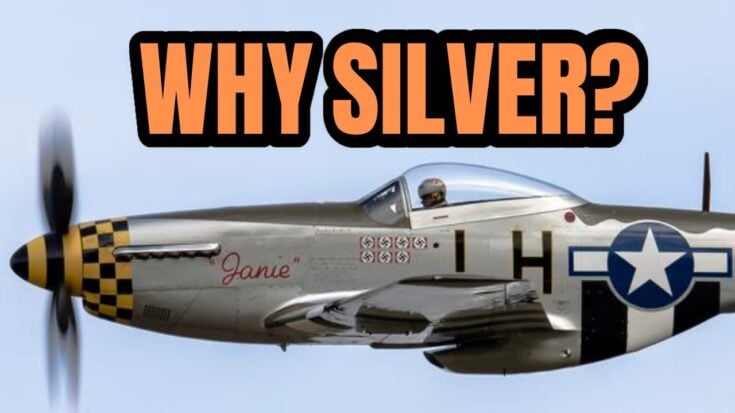
Look at photographs of American aircraft from 1942 and most of them wear green or brown camouflage. Look at photographs from 1944 and the P-51s and B-17s are bare metal, catching the light over Europe. The change wasn’t cosmetic. It was a calculated military decision driven by shifting conditions in the air war.
The Logic Behind Camouflage
Early war camouflage served a specific purpose. Green and brown patterns helped aircraft blend into their surroundings while parked on airfields, reducing visibility during enemy bombing raids and reconnaissance flights. Light blue or gray on the undersides helped against the sky during flight, though with limited effectiveness once aircraft were airborne. The logic held as long as Allied airfields remained under genuine threat.

By late 1943, that threat had largely disappeared over Britain. Allied air superiority around the British Isles had reduced the risk of enemy attack on airfields to near zero. With the primary justification for camouflage gone, military planners began looking at what painting aircraft actually cost them.
What Paint Weighs
Paint is heavy. Applied across a large aircraft like a B-24 Liberator, multiple coats added several hundred pounds of dead weight. Testing on unpainted aircraft showed measurable speed improvements simply from eliminating the drag that paint surfaces created. At a time when American factories were producing thousands of aircraft per month, the hours spent applying paint could be redirected to other manufacturing priorities.

In December 1943, official policy was updated. Aircraft would leave the factory unpainted. What appeared silver in photographs wasn’t silver paint. It was bare aluminum, the metal skin of the aircraft itself.
The Transition
The first natural metal aircraft began arriving in Britain around late February 1944, months before the Normandy invasion. The reaction from pilots and ground crews was not universally enthusiastic. Many worried that bare metal would glisten in sunlight and give away their positions to enemy fighters and ground observers. The concern was understandable but largely overstated. German radar was already tracking Allied formations with precision, and engine noise and condensation trails were far more reliable indicators of position than surface reflectivity.

The policy change applied to factories but was also extended to maintenance crews, who received instructions for stripping paint from existing aircraft. Compliance was inconsistent. Some units operating close to enemy territory received exemptions and kept their painted schemes, particularly transport and troop carrier aircraft. As 1944 progressed, a mix of painted and unpainted aircraft flew together over Europe, with most B-17 groups eventually transitioning to the natural metal finish by late in the year.

Unit and national insignia were still applied regardless of the new policy. Individual group markings continued to distinguish squadrons, which is why aircraft like the Tuskegee Airmen’s P-51s carried their distinctive red tails on otherwise bare metal airframes.
Maintenance and Other Considerations
Unpainted bare metal required more intensive corrosion management. The manufacturing process applied protective coatings to the aluminum, but aircraft operating in combat conditions endure significant wear. Ground crews carried the additional burden of keeping bare metal surfaces free of the rust and corrosion that painted surfaces would have resisted passively.

The policy extended beyond Europe. American aircraft in the Pacific Theater adopted the same finish, and the most famous example of the natural metal scheme is among the most recognizable aircraft in history. The Enola Gay, the B-29 that dropped the first atomic bomb on Hiroshima, wore no camouflage. The British largely declined to follow the American approach, continuing to paint their aircraft in standard service colors throughout the war.

A decision made in December 1943 to skip a paint job changed the visual identity of American air power for the remainder of the conflict, and the unpainted P-51 became one of the defining images of the air war over Europe.







