The 1945 Flight Where Lt. Raymundo da Costa Canário Landed a Crippled P-47 Thunderbolt

SANBORNE123, CC BY-SA 4.0, via Wikimedia Commons
A Rough Mission Over Italy
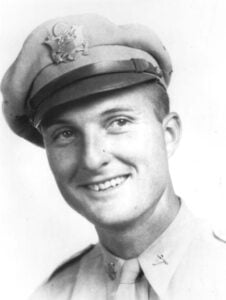
On January 27, 1945, a young P-47 Thunderbolt pilot from the Brazilian Air Force found himself in a situation few others experienced in World War II. Lieutenant Raymundo da Costa Canário was only 20 years old and flying his first combat missions in northern Italy with the Mediterranean Allied Air Forces when the incident happened. That day’s mission was an attack on German-held ground targets, including Tiger I tanks, which were some of the heaviest tanks fielded by German forces on the Italian front.
The P-47 Thunderbolt, known as the “Jug,” was a large and powerful aircraft used by the United States Army Air Forces and many allied nations in World War II. It was originally designed as a high-altitude escort fighter, but its rugged construction also made it ideal for ground attack missions at low altitudes. Its wide fuselage, strong radial engine, and robust wing structure helped it absorb heavy fire and still fly. Many stories from the Italian and European campaigns tell of Thunderbolts returning to base with heavy battle damage, including large holes in the wings or fuselage from flak fire.

Multiple Attacks and Then a Crash
On this winter morning Canário made three attack runs against the targets. He was able to knock out two tanks on his first pass, but his aircraft took damage from ground-based fire. On the second pass he destroyed another tank, yet again his plane was hit and its fuselage was damaged. Even so, he pushed on to make a third run. It was during this final low-level attack that visibility and terrain worked against him.
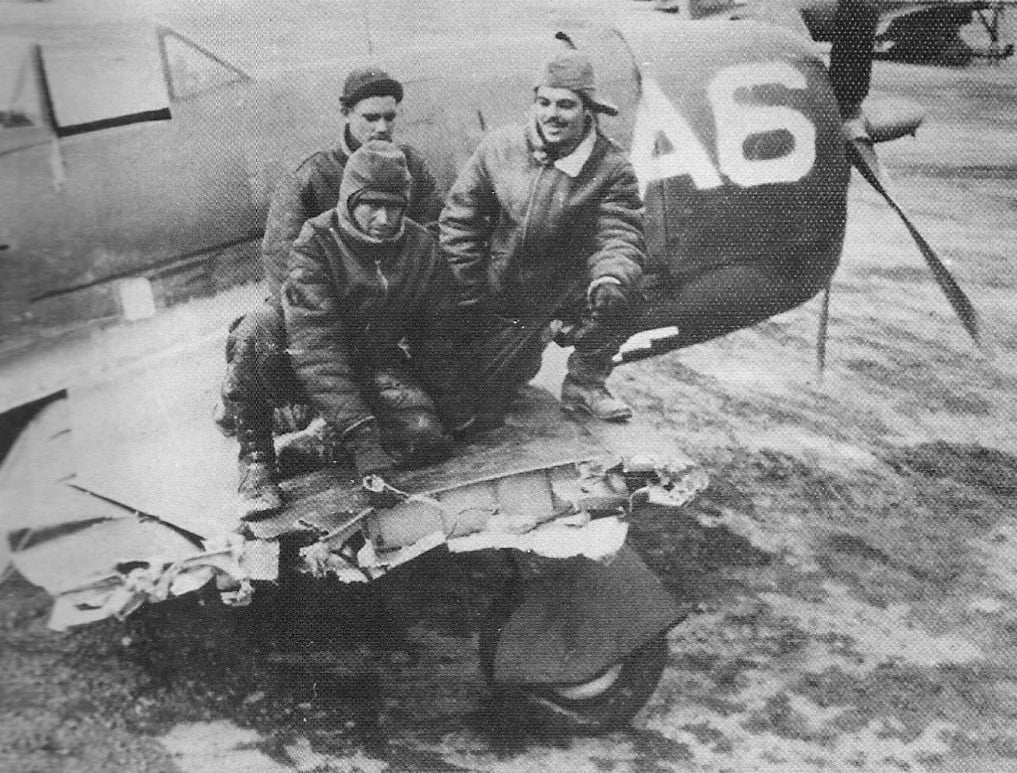
Flying very close to an industrial area in poor visibility, Canário’s right wing struck a tall factory chimney. Witnesses say the impact sheared off roughly 128 cm (just over four feet) of the wing. Amazingly, the P-47 did not immediately crash. Canário pulled up sharply, gained some altitude, and managed to keep control of an aircraft that most others would have expected to fall from the sky.

Misidentification and Friendly Fire
With the right wing badly damaged, the bomber proceeded to find safety. At first, Canário sought the protection of friendly patrol aircraft, in this case British Supermarine Spitfires flying nearby. Unfortunately, his radio had been knocked out by the impact, so he could not communicate with the Spitfire pilots. Because his damaged Thunderbolt looked unusual, those pilots briefly mistook him for an enemy aircraft and fired upon him. Once they realized the mistake, they stopped, but not before the P-47’s tail had suffered additional damage.
After the friendly fire incident, Canário and his squadron leader, Captain Dorneles, guided the damaged aircraft toward the Allied airfield at Pisa. To avoid further anti-aircraft fire, they diverted the longer route over the Adriatic Sea before turning inland toward the base. This careful navigation helped them reach friendly territory without further attacks.
Safe Return Against All Odds
Against all expectations, Canário landed his crippled Thunderbolt back at Pisa. Engineering crews expected the badly damaged aircraft to be written off, but Canário believed it could be repaired. His confidence in both his plane and his own skills persuaded the ground crews to restore it. Reports indicate that he flew the repaired aircraft again, completing many more missions after this incident.
The story of Canário’s flight stands out in World War II aviation for the remarkable circumstances and the ability of both pilot and machine to survive extreme damage. The P-47’s strong airframe and radial engine helped it stay aloft even after losing a large portion of a wing, while Canário’s calm handling and careful return path kept him and his plane from becoming another casualty of the Italian campaign.