The “Crazy” Ground Crewman Who Stitched Together a Destroyed P-47 and Sent It Back to War
WW2 Records / YouTube
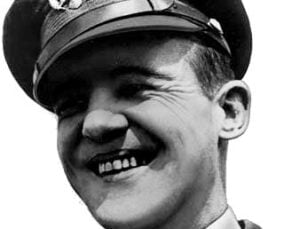
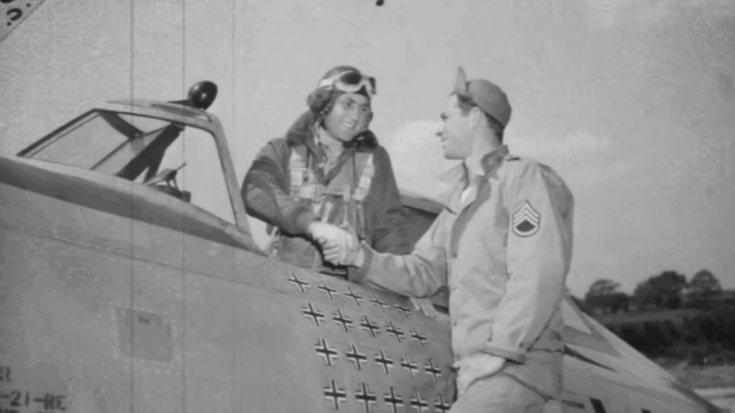
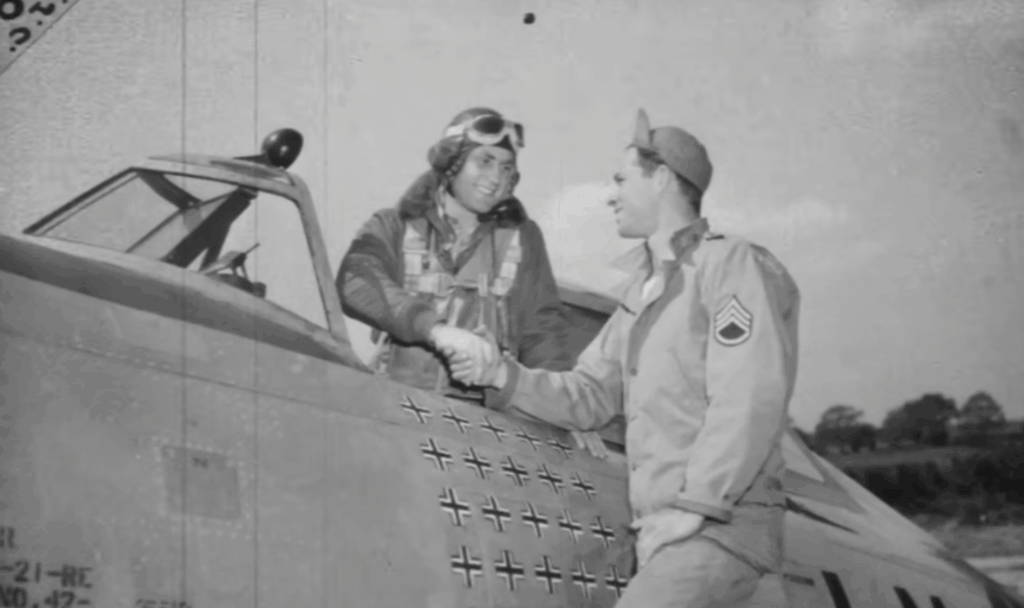
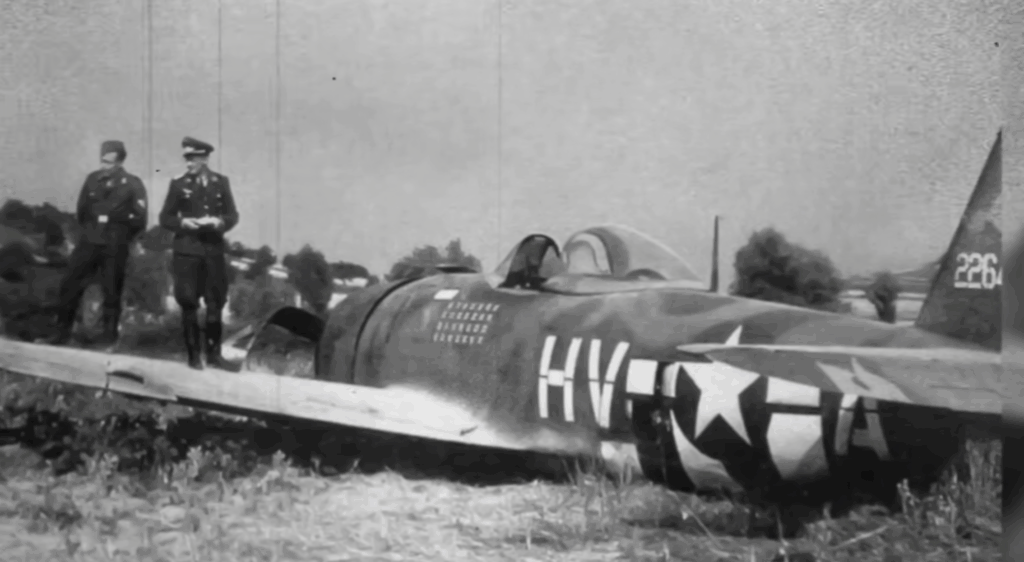
On June 26, 1943, Lieutenant Robert S. Johnson returned from a hard fighter sweep over France with his Republic P-47C Thunderbolt badly damaged. The rugged fighter, meant to escort bombers and sweep enemy skies, had taken 21 hits from German cannon fire and lost part of its tail. Combat engineers marked the aircraft with a white “X,” a sign that it was too damaged to fly again and bound for scrap metal. The fighter, called Half Pint, seemed finished. But one ground crewman saw something different.
Salvage or Something More
Staff Sergeant Ernest Gould served as a mechanic with the 56th Fighter Group of the Eighth Air Force. This unit, flying P-47s from RAF Halesworth in England, was one of the most active fighter groups in the air war over Europe and remained loyal to the Thunderbolt even as many other units switched to the newer P-51 Mustang. The 56th claimed hundreds of aerial victories and continued operating Thunderbolts through the end of the war, using them in bomber escort and ground-attack roles. Wikipedia
Gould watched the battered airframe and refused to accept the scrap order. The Eighth Air Force still needed fighters to escort heavy bombers deep into German territory, and losses were high. Fighters like the P-47 were strong and able to take damage, but the shortage of serviceable aircraft was a serious problem. Gould proposed a daring repair that broke rules and risked severe punishment if it failed.
A Radical Plan
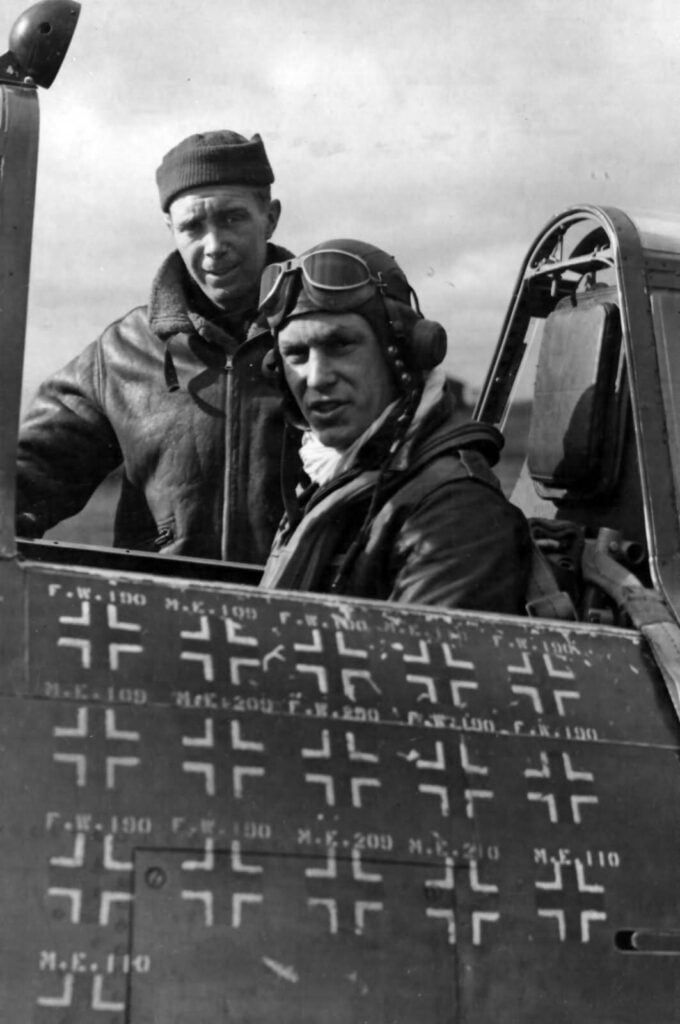
Instead of stripping Half Pint for parts, Gould suggested grafting usable sections from other wrecked Thunderbolts to rebuild it. He located two damaged airframes: one with an intact tail and another with a good nose. His idea was to splice these sections and other parts onto the damaged fuselage to make a complete airframe again.
The work began in a cold hangar at Halesworth. Mechanics had no factory jigs or proper fixtures for such a job, and they operated with only basic hand tools. They measured and aligned parts by eye, adjusting metal to fit within a few thousandths of an inch. Every cut, weld, and rivet mattered because errors could weaken the structure and lead to failure in flight.
Against All Odds
By the time the patched Thunderbolt was ready to roll out for testing, many on the base doubted it would ever fly. Fighters like the P-47 endured high g-forces in combat turns, and one weak weld could fail catastrophically. Pilots and crew chiefs whispered that orders forbade such radical field changes. Ground engineers argued that structural integrity could not be guaranteed.
Despite the skepticism, Johnson agreed to test the aircraft himself. His combat record was already solid. On that June mission that damaged Half Pint, he had managed to control a flaming, leaking fighter and bring it home against all odds, even with a jammed canopy and damaged systems.
Johnson climbed into the rebuilt cockpit, strapped in, and taxied the aircraft to the runway. Mechanics and pilots gathered to watch. The engines started, and the Thunderbolt began its takeoff run. As it lifted off, onlookers held their breath. Would the patchwork structure hold? The repaired airframe climbed steadily into the sky.
Back Into Combat
The test flight went well enough to clear Half Pint for active duty again. The aircraft rejoined the 56th Fighter Group and returned to combat operations, flying escort missions over Western Europe. Its presence filled one more slot in a unit constantly pressed for fighters. Pilots quickly came to respect the Thunderbolt’s rugged build and heavy armament, even if one of their own craft had been pieced together against conventional wisdom.
Gould’s work did not change official repair policy, but it did prove that skilled mechanics could extend the life of valuable machines when the situation demanded it. The rebuilt Half Pint continued to fly, supporting bomber missions and protecting crews on long raids over occupied territory. And every time it climbed into the sky, it carried not just ammunition but the effort and skill of the ground crew who refused to let it die.