Why a History Teacher Turned a Piper Cub Into a Tank Killer and Destroyed Six German Panzers
WW2 Records / YouTube
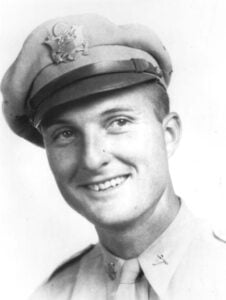
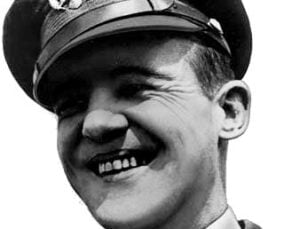
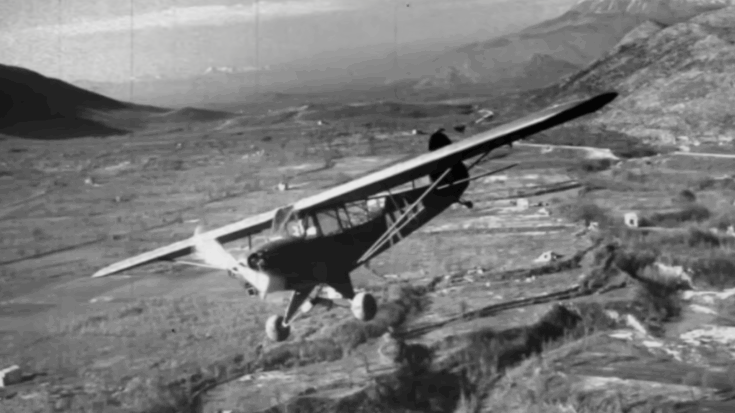
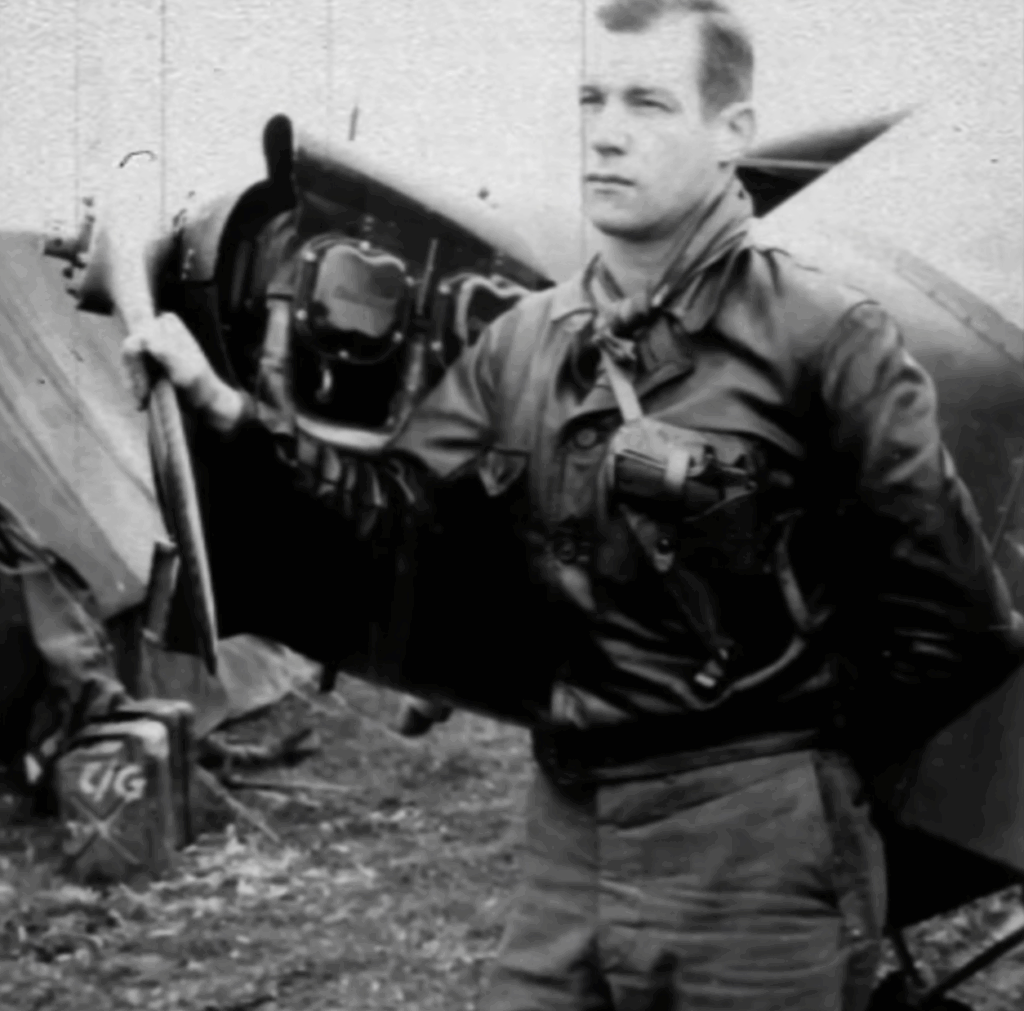
Major Charles “Bazooka Charlie” Carpenter did not look like a man who would change battlefield habits. Before the war, he was a quiet high school history teacher from Illinois. In uniform, he flew a slow, fabric-covered Piper L-4 Grasshopper, an aircraft meant only to observe artillery fire. Yet in the fall of 1944, Carpenter would use that fragile plane to destroy German tanks and force enemy crews to rethink what danger looked like from the sky.
The Piper Cub had no armor, no speed, and no weapons by design. It could barely outrun a truck and was never meant to fly near enemy fire. Carpenter’s role was to circle above the battlefield, spot targets, and radio corrections to American artillery units below. That task alone was dangerous, but Carpenter believed the aircraft could do more.
A Teacher at War
Carpenter joined the Army Air Forces knowing he was unlikely to fly fighters or bombers. His background and age placed him in observation duty, working closely with armored units. Assigned to the Fourth Armored Division, he followed tanks across France after the Normandy breakout, landing on rough fields close to the front.
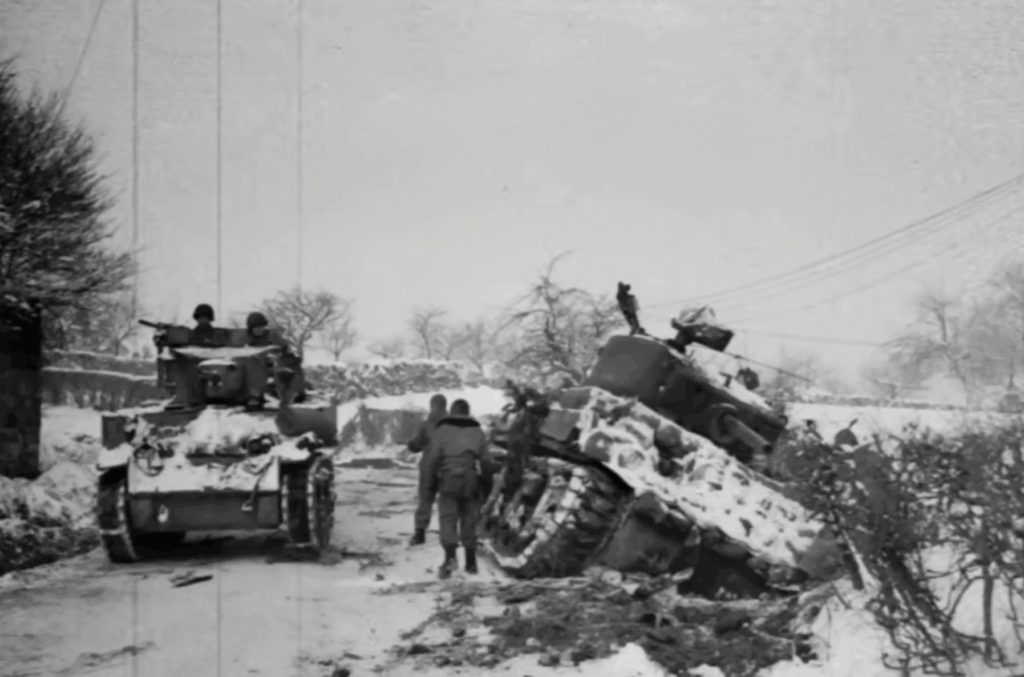
By September 1944, American forces faced stiff resistance near the town of Arracourt. German armored units, including Panthers and heavier tanks, launched repeated counterattacks through fog and low cloud. Carpenter watched these movements from above and grew frustrated. He could see the tanks clearly, but artillery was sometimes slow to respond or unable to reach them in time.
An Unofficial Idea
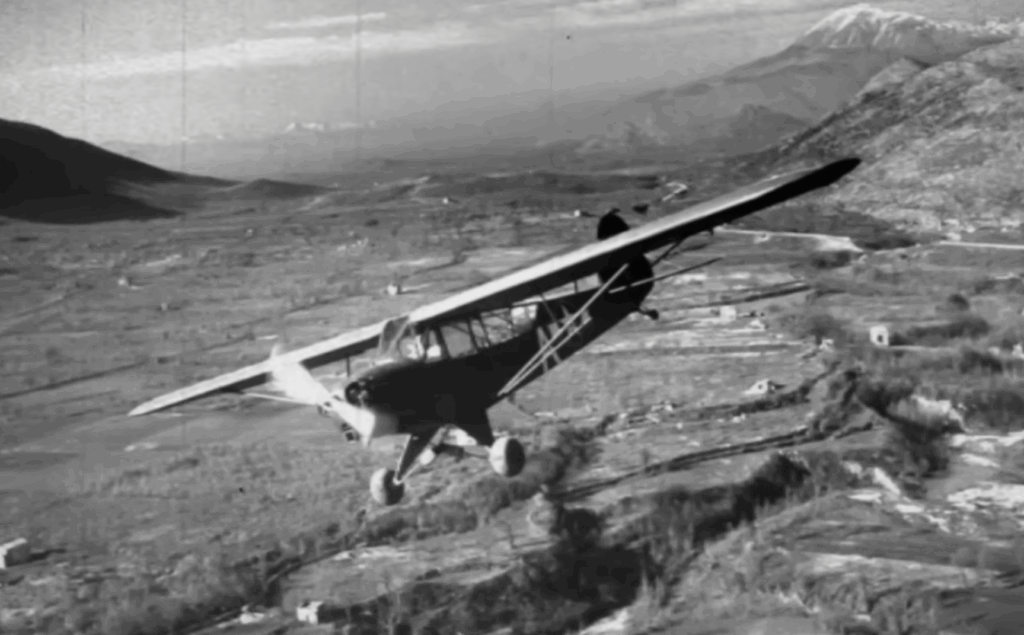
Carpenter decided to act on his own. He mounted M9 bazooka launchers under the wing struts of his L-4, wiring them to a simple firing switch in the cockpit. Each launcher carried a shaped-charge rocket designed to punch through armor from close range. Manuals warned that bazookas were inaccurate and weak against heavy tanks, especially from poor angles.
What Carpenter understood was simple geometry. Tank armor was thickest on the front and sides, but thinner on top. By diving from altitude and firing downward, he could strike the weakest points. The slow speed of the Cub allowed him to aim carefully, something faster aircraft could not do.
Arracourt in the Fog
On September 20, 1944, Carpenter flew into misty skies over advancing German armor. He dropped low, ignoring rifle and machine-gun fire, and released his rockets one by one. At least one struck a tank from above, disabling it. Over repeated missions, Carpenter attacked armored vehicles that were threatening American units on the ground.
These attacks were not always clean or immediate kills. Some tanks were damaged, others abandoned by crews who believed they were under air attack by stronger aircraft. Still, official records later credited Carpenter with the destruction of six German tanks, including two Tigers, along with several armored cars and trucks.
A Reputation Forms
German crews began to notice the small aircraft that refused to stay away. Observation planes were once ignored, considered harmless. After Arracourt, that assumption changed. German units issued warnings about low-flying Cubs, and some opened fire as soon as one appeared.
Among American soldiers, Carpenter became a legend. His aircraft carried the name “Rosie the Rocketer,” painted by ground crews who admired his nerve. Other pilots tried his method, but many stopped after experiencing how exposed they were to ground fire. Carpenter continued, flying dozens of missions with rockets strapped to his wings.
Risks Without Protection
Carpenter’s success did not make his aircraft safer. The L-4 remained unarmored, with no parachute protection and little chance of survival if hit. He was wounded several times by ground fire and crash-landed more than once. Still, he returned to the air whenever he could, believing his actions saved lives on the ground.
His approach was never officially adopted by the Army. It broke rules and depended heavily on individual skill and judgment. Yet commanders tolerated it because results mattered, especially when armor threatened exposed infantry and tank units.
The Man Behind the Legend
By the end of the war, Carpenter had flown over 300 combat missions. He received the Silver Star and several Purple Hearts. After returning home, he went back to teaching, leaving behind a wartime story that sounded improbable even to those who heard it firsthand.
Carpenter’s actions did not change aircraft design or doctrine, but they revealed how adaptation could matter in moments of crisis. A slow observation plane, guided by a teacher’s understanding of angles and timing, became an unexpected weapon against armored forces that never expected danger from above.