The Dogfight the F-15 Couldn’t Win
YouTube / Mustard
In the early days of the Gulf War, coalition aircraft dominated Iraqi airspace. The U.S. Air Force’s premier air superiority fighter, the McDonnell Douglas F-15 Eagle, had already built a fearsome reputation. Designed for total control of the skies, the F-15 combined powerful radar, advanced missiles, and unmatched pilot training.
Most encounters ended the same way: Iraqi aircraft were detected at long range and destroyed before they could even see their attackers. Coalition pilots had overwhelming advantages in technology, coordination, and experience. Air dominance seemed absolute. But one engagement would challenge that assumption.
Enter the Foxbat
Opposing the Eagle that day was the Mikoyan-Gurevich MiG-25, known to NATO as the Foxbat. Built by the Soviet Union during the Cold War, the MiG-25 was designed for speed and altitude. It could climb rapidly and exceed Mach 2.8, making it one of the fastest combat aircraft ever built.
By 1991, the Foxbat was considered outdated in many respects. Its avionics were primitive compared to Western systems, and its maneuverability at lower altitudes was limited. On paper, it seemed no match for the F-15. Yet in air combat, circumstances can shift in seconds.
A Sudden Turn
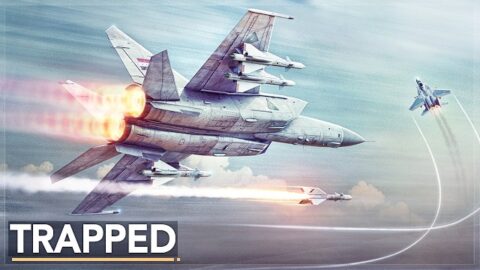
As coalition patrols swept Iraqi airspace, an Iraqi MiG-25 pilot launched in what many believed would be a desperate attempt to challenge superior forces. Instead of fleeing, he turned toward the threat. In the chaos of the engagement, the Foxbat managed to exploit speed, timing, and positioning. Using high velocity and aggressive maneuvering, the Iraqi pilot closed the distance and launched a missile at a pursuing F-15.
The unexpected happened. An F-15 was hit. It was one of the rare instances during the conflict where an Iraqi fighter successfully struck a coalition aircraft in air-to-air combat.
Technology Versus Tactics
The F-15 was built around radar dominance and beyond visual range engagements. Its systems were superior, its pilots extensively trained. But air combat is not won by machines alone. Split-second decisions, angles of approach, and the element of surprise can tilt the balance.
The MiG-25 lacked sophistication, but it possessed tremendous speed and a powerful missile. In the hands of a determined pilot, even an aging interceptor could become lethal. The encounter served as a reminder that no aircraft is invincible. Even the most advanced fighter can be vulnerable when conditions align against it.
A Rare Outcome
Despite this moment, coalition air superiority remained overwhelming throughout the war. The F-15 would go on to achieve an extraordinary combat record with dozens of confirmed victories.
Yet the dogfight the F-15 could not win stands as a rare exception in a campaign defined by dominance. It highlights a timeless truth of aerial warfare: technology matters, but human skill and opportunity can still shape history in a single, unexpected burst of fire.