The Real Story of the Focke-Wulf 190
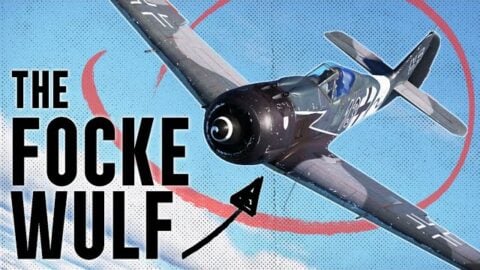
YouTube / TJ3 History
When the Focke-Wulf Fw 190 first roared into the skies over Europe, it stunned the Allies. It was fast, heavily armed, and brutally effective; it was unlike anything they had faced before. Some would come to call it Germany’s greatest fighter of the Second World War.
This is the story of the aircraft that became the backbone of the Luftwaffe. From Kurt Tank’s bold and unconventional design choices to its devastating debut over the English Channel, the Fw 190 reshaped the air war at a critical moment. It would evolve into a versatile warrior-fighter, bomber-interceptor, and ground attacker, fighting on every front from the frozen Eastern Front to the burning skies over Germany itself. But like the regime it served, the Fw 190’s story is also one of desperate adaptation, overwhelming opposition, and ultimate defeat. This is the complete history of the Focke-Wulf Fw 190, from conception to combat, from dominance to downfall.
A Fighter Born from Doubt
In the late 1930s, the Luftwaffe was confident in the Messerschmitt Bf 109. It was fast, modern, and already proven in combat. Few believed Germany needed another frontline fighter. But engineer Kurt Tank thought differently. He believed the Luftwaffe required a tougher, more versatile aircraft- one that could absorb damage, operate from rough fields, and give pilots better visibility and handling.
What emerged from Focke-Wulf’s design team was unconventional. Instead of the liquid-cooled inline engines common to European fighters, Tank chose the BMW 801 radial engine. It was bulkier but more durable, less vulnerable to battle damage, and capable of delivering tremendous power. Many doubted the choice. Tank pressed on.
A Shock Over the Channel
When the Fw 190A entered combat in 1941 over the English Channel, it stunned the Royal Air Force. At low and medium altitudes, it outperformed the Spitfire Mk V in speed, roll rate, dive, and firepower. British pilots suddenly found themselves facing a fighter that could dictate the terms of engagement.
The Fw 190’s wide landing gear made it easier to handle on the ground than the narrow-tracked Bf 109. Its heavy armament, typically four cannons and two machine guns, gave it a devastating punch. It was stable as a gun platform and brutally effective in short bursts. For a time, the balance of air power tilted. The RAF rushed development of the Spitfire Mk IX largely in response to the Fw 190 threat. That alone speaks to its impact.
The Backbone of the Luftwaffe
The Fw 190 quickly became the Luftwaffe’s workhorse. It was adaptable in ways the Bf 109 never fully achieved. Variants were developed for bomber interception, ground attack, night fighting, and even torpedo missions.
On the Eastern Front, it proved rugged and lethal in low-altitude combat. On the Western Front, it tore into Allied bomber formations. Heavily armed Fw 190s equipped with additional cannons and armor attacked American B-17 and B-24 bombers head-on, often at terrifyingly close range.
Pilots respected it. Many preferred it to the Bf 109, praising its handling, visibility, and survivability.
Evolution into the “Dora”
By 1943, however, the air war was changing. Allied aircraft were improving rapidly, and high-altitude performance became increasingly critical. The radial-engined Fw 190A struggled above 20,000 feet against newer Allied fighters.
The answer was radical. Focke-Wulf fitted the airframe with the liquid-cooled Junkers Jumo 213 inline engine, creating the Fw 190D, nicknamed the “Dora.” With its long nose and improved high-altitude capability, the Dora restored competitiveness against late-war Spitfires and P-51 Mustangs. Some of the most skilled German pilots flew the Fw 190D in the final months of the war, defending the Reich against overwhelming Allied air power. In the right hands, it was still deadly.
A Fighter in a Losing War
Despite its strengths, the Fw 190 could not change Germany’s strategic reality. By 1944, the Luftwaffe faced crippling fuel shortages, inexperienced pilots, and relentless Allied bombing. Even superior machines could not compensate for dwindling resources and collapsing infrastructure.
Production continued in large numbers; over 20,000 Fw 190s were built, but many never had properly trained pilots to fly them. Others were destroyed on the ground.
The aircraft remained formidable to the end, but it was fighting a war that had already been lost. Still, the Focke-Wulf 190’s story is not simply one of dominance or defeat, but of evolution, impact, and endurance in the most brutal air war in history.