The soviet tomcat that baffled the west
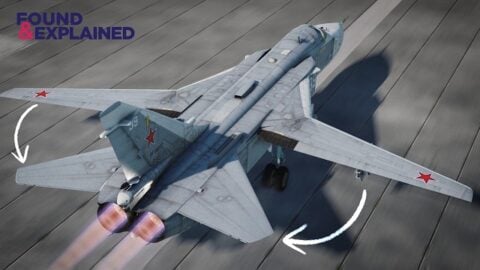
YouTube / Found And Explained
At the height of the Cold War, speed, range, and survivability became the holy trinity of military aviation. The Soviet Union faced a daunting challenge: how to build an aircraft that could take off from short, rough runways, fly fast at low altitude to evade radar, and still dash at supersonic speed when needed.
The answer would be a swing-wing design- an aircraft with variable-geometry wings. But the story of how the Soviets perfected this concept is not just one of engineering brilliance; it is also a tale of espionage, stolen secrets, and intelligence gathering that helped shape one of the most formidable strike aircraft of its era.
The Problem the Soviets Needed to Solve
By the late 1950s and early 1960s, Western air forces were deploying advanced surface-to-air missiles and radar networks. High-altitude bombers were no longer safe. The Soviets needed a new generation of strike aircraft capable of penetrating enemy defenses at very low altitude, hugging the terrain at high speed. Fixed-wing designs struggled to balance short takeoff performance with supersonic flight. Variable-sweep wings, however, promised the best of both worlds.
Swing-wing technology allowed an aircraft to extend its wings for takeoff and landing, providing lift and stability, then sweep them back in flight to reduce drag at high speeds. Western aircraft such as the American F-111 and later the F-14 demonstrated the enormous potential of this concept. Soviet engineers at Sukhoi and other design bureaus were already experimenting with variable geometry, but the complexity of the mechanism made it one of the most challenging aviation technologies of the era.
Espionage and Intelligence Gathering
The Cold War was not only fought in the skies- it was fought in shadows. Soviet intelligence agencies closely monitored Western aerospace programs, collecting data through a mix of open sources, human intelligence, and covert operations. Information about the F-111’s swing-wing mechanism, terrain-following radar concepts, and low-level penetration doctrine proved especially valuable.
While Soviet engineers did not simply copy Western designs, access to foreign research shortened development cycles and helped them avoid costly dead ends. Technical reports, performance data, and even industrial practices filtered back to Moscow, where they were analyzed and adapted to Soviet needs.
The Sukhoi Solution
Armed with both domestic innovation and foreign insights, Sukhoi engineers began shaping what would eventually become the Su-24. Early prototypes experimented with different wing sweep angles, engine placements, and avionics layouts. The design emphasized ruggedness and simplicity, reflecting Soviet doctrine that expected aircraft to operate from austere airfields under combat conditions.
The final aircraft combined a robust swing-wing mechanism with powerful engines and advanced navigation and attack systems. Its terrain-following radar allowed it to fly at treetop level, day or night, in almost any weather, exactly the capability Soviet planners demanded.
Why the Su-24 Became the “Ultimate” Swing-Wing Aircraft
The Su-24 was not sleek or elegant, but it was brutally effective. It could carry heavy payloads over long distances, penetrate dense air defenses, and strike with precision. Unlike some Western counterparts, it was designed with maintainability and mass production in mind, allowing the Soviet Union to field it in large numbers.
Its success lay in the synthesis of many influences: Soviet engineering culture, lessons learned from previous aircraft, and intelligence gathered from rival nations. The result was a swing-wing strike aircraft uniquely tailored to the realities of Cold War combat.
The story of the Su-24 and Soviet swing-wing development is a reminder that aviation history is rarely just about metal and machines. It is also about information- who has it, who steals it, and how it is used. Through a blend of innovation and espionage, the Soviets managed to build one of the most capable variable-geometry aircraft of its time, proving that in the Cold War, even wings could be shaped by secrets.