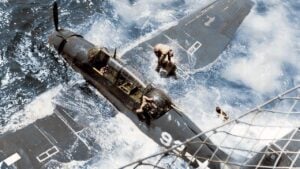
The Story of a Captured Pilot in WWII, Bob Hoover Stole a German Fighter and Escaped to Freedom
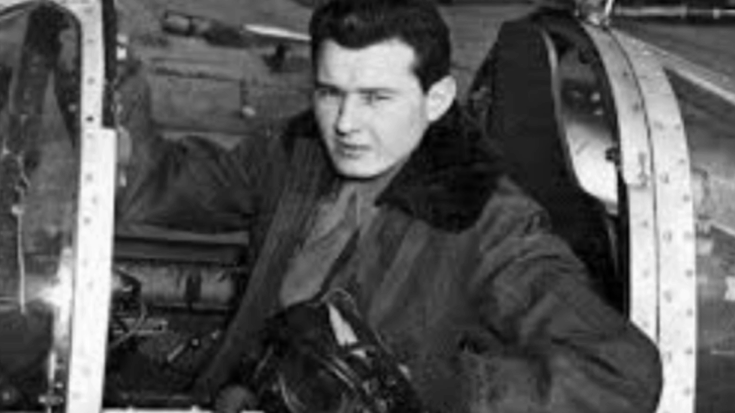
WWl OF tales / YouTube
During World War II, many airmen faced capture far from home. Few responded with the kind of resolve shown by Bob Hoover. His escape from a German prison camp in 1945 stands as one of the most unusual episodes of the air war, shaped by skill, patience, and timing rather than luck alone.
Early Life and Love of Flight
Bob Hoover grew up in Nashville, Tennessee, during the 1930s, a time when flying still felt new and uncertain. As a teenager, he spent hours at local airfields, helping pilots clean planes or sweep hangars in exchange for time near aircraft. One short ride in a cockpit convinced him that flying would shape his life.
By 1943, Hoover had joined the U.S. Army Air Forces. Training was demanding and unforgiving, but instructors quickly noticed his natural control and calm judgment. He absorbed lessons quickly and showed a deep understanding of how aircraft behaved under stress.

Combat Over Europe
In early 1944, Hoover arrived in Europe flying the P-38 Lightning. His unit escorted bombers over occupied territory, facing heavy resistance from German fighters. These missions were dangerous, with little margin for error, and losses were common on both sides.
On February 9, 1944, Hoover’s aircraft was hit during a fight near the French coast. Smoke filled the cockpit, and the plane began to fail. With no safe landing possible, he bailed out and parachuted into occupied France, where German troops soon captured him.
Life as a Prisoner
Hoover was sent to a prison camp for Allied airmen in northern Germany. Conditions were harsh. Food was scarce, winters were severe, and disease spread easily. Many prisoners struggled to keep hope as months passed with little news from outside.
Rather than accept confinement, Hoover began to plan. He watched guard routines, studied nearby terrain, and memorized the shapes of German aircraft that flew overhead. Fellow prisoners doubted his ideas, especially his belief that escape would only work by air.
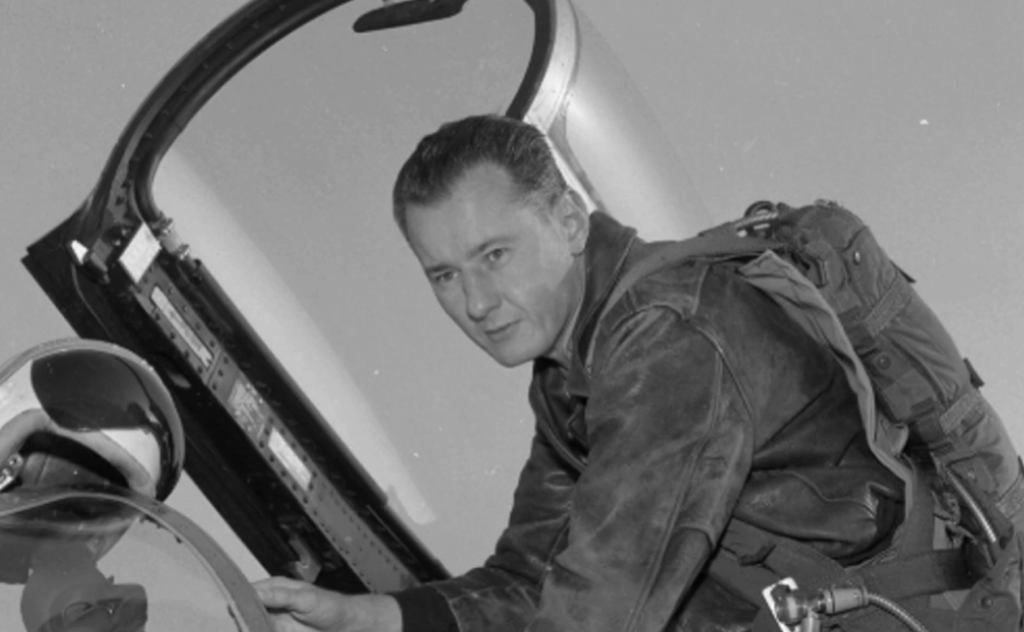
The Chance to Run
By April 1945, the war was collapsing around Germany. Guard discipline weakened, and confusion spread as Allied and Soviet forces closed in. During a work detail near the camp perimeter, Hoover saw his opportunity and slipped away from supervision.
Moving carefully across the countryside, he avoided roads and villages until he reached a nearby airfield. There, a German Focke-Wulf fighter sat unattended. Despite his weakness from months of poor food, Hoover climbed into the cockpit and began the start sequence.
Flight to Freedom
The engine came to life just as alarms sounded across the base. Gunfire followed as he pushed the throttle forward and lifted off, barely clearing the fence. Flying low to avoid detection, Hoover headed west with no maps and limited fuel.
Crossing into Allied-held territory brought new danger, as friendly gunners might mistake him for the enemy. He rocked the wings to signal distress and finally landed safely at an American airfield. Thin, exhausted, and still in prison clothes, Bob Hoover had returned from captivity by stealing a German fighter aircraft.