

The Worst Possible Fate For a B-29 Crew
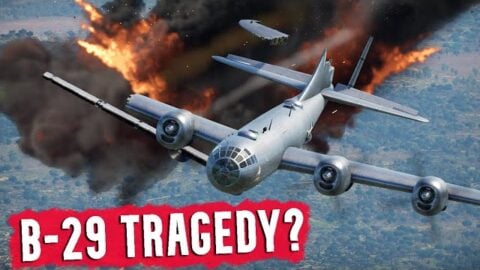
YouTube / TJ3 History
In the final months of World War II, the skies above Japan were among the most heavily defended in the world. American B-29 Superfortress crews were tasked with long-range bombing missions aimed at crippling Japan’s war industry. These operations pushed both men and machines to their limits. Among those who flew into this danger was Frederick Allen Stearns, a young airman whose story would end far from home.
The Power of the B-29 Superfortress
The B-29 was one of the most advanced bombers of its time, capable of flying higher and farther than earlier aircraft. Crews relied on its pressurized cabins, remote-controlled gun turrets, and heavy bomb load to survive deep missions over enemy territory. Yet, despite its technological edge, the aircraft was far from invincible, especially against concentrated anti-aircraft fire and determined fighter attacks.
A Mission Turns Catastrophic
Stearns and his crew were part of the broader American strategy to weaken Japan through sustained aerial bombardment. Operating from bases in the Pacific, B-29 crews flew vast distances to reach their targets. These missions were physically exhausting and mentally demanding. Crews faced oxygen deprivation at high altitudes, unpredictable weather, and increasingly effective Japanese air defenses. By the time Stearns flew his final mission, Japanese forces had adapted, making every raid more dangerous than the last.
On what would become their final mission, Stearns and his crew departed with a clear objective. As they neared their target, the sky erupted with anti-aircraft explosions, and enemy fighters moved in to intercept. The B-29 was struck, suffering severe damage. Systems began to fail, and the crew fought desperately to maintain control of the aircraft. With the situation rapidly deteriorating, they had no choice but to abandon the bomber.
Descent Into Enemy Territory
Details of Stearns’ last mission are limited, but the circumstances were all too familiar for B-29 crews. As the aircraft approached its target, it likely encountered intense anti-aircraft fire, known as flak, along with possible fighter interception. Even a single direct hit could cripple a B-29. When their aircraft was struck, the crew would have quickly followed emergency procedures, attempting to control the damage, extinguish fires, and maintain altitude. Eventually, the damage became too severe, forcing them to abandon the aircraft and parachute into enemy territory.
Parachuting into hostile ground was only the beginning of their ordeal. Separated and vulnerable, the crew members were soon captured by Japanese forces. For downed airmen, survival often depended on circumstances beyond their control. Capture meant uncertainty, fear, and the possibility of harsh treatment as prisoners of war.
As the war intensified, conditions for captured airmen grew increasingly severe. Tragically, Frederick Allen Stearns and his crew did not survive their captivity. Their deaths reflect one of the harsher realities of the Pacific War, where not all who were captured lived to see the conflict’s end.






