

The WWII Aircraft that Totally Fooled the Luftwaffe
YouTube / Dark Skies
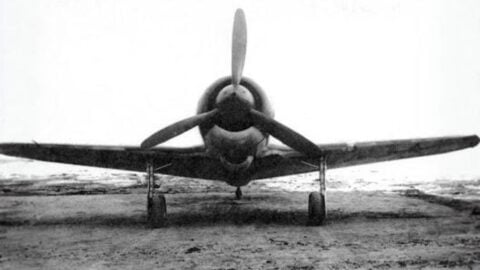
In the critical years of World War II, the Soviet Union needed a fighter that could quickly counter the growing threat of German air superiority. The result was the Lavochkin La-5, an aircraft developed rapidly from the earlier LaGG-3. At first glance, it didn’t seem revolutionary. Built partly from wood and rushed into service, it appeared to be another stopgap solution rather than a serious contender in the skies.
German pilots initially underestimated the La-5. They mockingly referred to it as the “Neue Rata,” believing it was just an updated version of the outdated Polikarpov I-16. This misjudgment would soon prove costly.
First Encounters and a Harsh Surprise
When the La-5 entered combat in 1943, particularly during the battles around Kursk, it quickly shattered German assumptions. Powered by a strong radial engine, the aircraft performed far better at low and medium altitudes than many of its adversaries expected.
Luftwaffe pilots, accustomed to dominating Soviet fighters, suddenly faced an aircraft that could match and sometimes outperform their own. The La-5’s speed, climb rate, and agility allowed Soviet pilots to engage more confidently in dogfights, especially against the Messerschmitt Bf 109 and Focke-Wulf Fw 190. Within days, German pilots realized they had been fooled. What they had dismissed as obsolete turned out to be a formidable opponent.
Strength in Simplicity
One of the La-5’s greatest advantages was its simplicity. Unlike more complex aircraft, it was relatively easy to produce and maintain under wartime conditions. Soviet factories, often operating under extreme pressure and limited resources, could quickly build and repair the La-5.
Its radial engine also made it more durable in combat. It could absorb damage better than many liquid-cooled engines, giving Soviet pilots a better chance of returning home after being hit. This ruggedness made the aircraft especially effective on the harsh Eastern Front.
Turning the Tide in the East
The La-5 played a crucial role in restoring balance in the air war over the Eastern Front. By 1943, the Soviet Air Force was transitioning from defensive survival to offensive operations, and the La-5 became a key part of that shift.
During major engagements, such as the Battle of Kursk, the aircraft played a crucial role in challenging German air superiority. Soviet pilots could now take the fight to the enemy rather than simply reacting to attacks. The La-5’s presence boosted morale and demonstrated that Soviet aviation was rapidly improving.
A Lesson in Underestimation
The story of the La-5 highlights a timeless lesson in warfare: underestimating an opponent can have serious consequences. The Luftwaffe’s early dismissal of the aircraft gave Soviet forces a crucial psychological and tactical edge.
What began as a hurried design evolved into one of the Soviet Union’s most effective fighters of the war. By the time German pilots fully understood its capabilities, the La-5 had already made its mark. In the end, the aircraft that was once mocked became one that demanded respect, proving that appearances can be dangerously deceiving in war.







