U.S. F-35 Crashes During Flight in Nevada, Pilot Escapes Safely
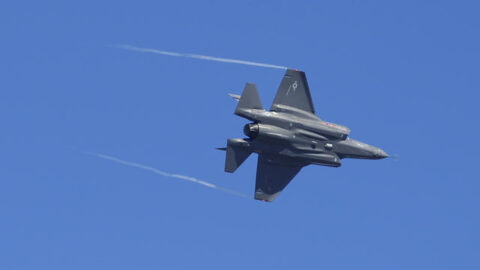
Photo by Senior Airman Julianne Showalter (USAF), Public domain, via Wikimedia Commons
A Sudden Incident Over the Nevada Desert
Military aviation training over the American Southwest is a routine sight, but on March 31, 2026, one mission ended unexpectedly when a U.S. Air Force F-35 Lightning II crashed inside the Nevada Test and Training Range. The aircraft, assigned to Nellis Air Force Base near Las Vegas, went down in restricted airspace used for advanced combat exercises and weapons testing.
Initial reports caused concern when communication with the aircraft was lost. Soon after, officials confirmed that the pilot had safely ejected and survived with minor injuries. Emergency crews quickly reached the remote crash site, and authorities emphasized that no civilian communities were affected. The incident occurred roughly 25 miles northeast of Indian Springs, well within controlled military territory.
Emergency Response and Pilot Survival
According to statements released by Nellis Air Force Base, responders arrived rapidly after the crash alert was triggered. Medical personnel treated the pilot at the scene before transferring him for further evaluation. Officials repeated that public safety remained their highest priority and confirmed there was no danger beyond the training range.
Witness reports and early coverage suggested the aircraft experienced trouble during flight, though exact details remain limited. Some sources indicated the pilot reported maneuvering difficulties before ejecting. The successful escape highlighted the effectiveness of modern ejection systems, which are designed to operate even during high-speed emergencies and low-altitude situations.
The Aircraft and Its Role in Modern Airpower
The Lockheed Martin F-35 Lightning II is one of the most advanced fighter aircraft currently in service. Designed as a multirole platform, it combines stealth features, advanced sensors, and data-sharing technology intended to give pilots greater awareness during missions. The aircraft performs air defense, strike operations, and close air support duties for several allied nations.
Nellis Air Force Base plays a key role in developing tactics for the aircraft. Units stationed there often test new systems and train pilots in complex combat scenarios. Flights within the Nevada Test and Training Range are common because the vast desert airspace allows realistic exercises without risk to populated areas. The location of the crash reflects how such training is intentionally conducted far from civilian zones.
Investigation Into the Cause
As with any military aviation accident, a formal investigation has begun to determine what led to the loss of the aircraft. Investigators will review maintenance records, flight data, pilot reports, and environmental conditions. Until that process is complete, officials have avoided speculation about mechanical failure or human factors.
Past F-35 incidents show that causes can vary widely. Earlier crashes have been linked to issues such as hydraulic contamination or electrical faults, reminding observers that even advanced aircraft remain complex machines operating under demanding conditions. Each investigation typically results in procedural or technical changes aimed at improving safety across the fleet.
Understanding Fighter Jet Mishaps
Incidents involving the F-35 often receive intense attention because of the aircraft’s cost and technological reputation. However, aviation historians note that accidents occur across all generations of military aircraft. As fleets grow and flight hours increase, the number of reported mishaps can also rise, even when overall safety improves.
More than a thousand F-35 aircraft have been delivered worldwide, making it one of the most widely used modern fighters. With expanding training schedules and international deployments, exposure to operational risk naturally increases. Military officials stress that transparency and detailed investigations are essential parts of maintaining trust and improving long-term flight safety.