Why America’s “Ugly” Fighter Terrified Japanese Pilots More Than the P-51 Mustang
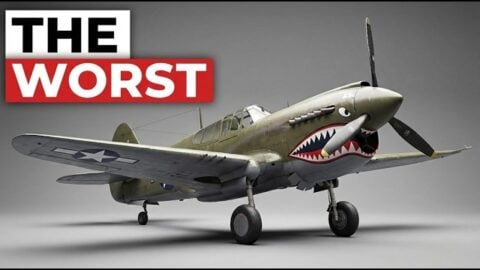
YouTube / Karl Explains War
During World War II, the sleek and powerful North American P-51 Mustang became famous as one of the greatest fighters ever built. Its long-range and high altitude performance helped the Allies dominate the skies over Europe. But in the Pacific theater, another aircraft often faced Japanese pilots first, and it was not nearly as glamorous.
The rugged and somewhat blunt-looking Curtiss P-40 Warhawk was frequently described as unattractive. It lacked the elegant lines of newer fighters and struggled at very high altitudes. Yet despite these limitations, the P-40 gained a fearsome reputation among Japanese pilots who encountered it in combat.
In the early years of the war, the Warhawk was one of the main American fighters holding the line against Japanese expansion.
The Flying Tigers’ Deadly Reputation
The aircraft’s reputation was built largely by the legendary 1st American Volunteer Group, better known as the Flying Tigers. Led by Claire Lee Chennault, this group of American volunteer pilots flew P-40s in China before the United States formally entered the war. Their aircraft carried the famous shark mouth nose art that later became one of the most recognizable images of World War II aviation.
In only about six months of intense fighting, the Flying Tigers claimed nearly 300 Japanese aircraft destroyed while suffering very few combat losses. Their tactics were simple but highly effective. They used the P-40’s strengths such as speed in a dive, heavy armament, and durability, while avoiding turning dogfights with agile Japanese fighters. These victories quickly gave the Warhawk a fearsome reputation across the Pacific.
Built to Survive and Strike Hard
While aircraft like the Mitsubishi A6M Zero were extremely maneuverable, they were also lightly built and poorly armored. The P-40 was the opposite. It was heavier, tougher, and heavily armed with six .50 caliber machine guns. The aircraft could absorb significant battle damage and still return to base. Pilots often described the Warhawk as rugged and dependable, an aircraft that could withstand punishment and continue flying.
This durability gave American pilots a major advantage. They could attack aggressively, dive away from danger, and survive hits that would destroy lighter aircraft.
The Fighter That Held the Line
Before newer aircraft arrived in large numbers, the P-40 served across multiple fronts. It flew in North Africa, China, Southeast Asia, and the Pacific.
Units like the 325th Fighter Group achieved impressive success with the aircraft, destroying large numbers of Axis planes while suffering relatively low losses.
More than 200 pilots from several Allied nations eventually became aces flying the P-40. Despite being overshadowed by later fighters, it proved to be a formidable combat aircraft when used correctly.
Overshadowed by a Legend
When the North American P-51 Mustang entered widespread service, it quickly became the symbol of American air power. Its range allowed it to escort bombers deep into enemy territory, and its performance at altitude made it ideal for the European air war. Compared to the Mustang, the P-40 seemed outdated.
But the Warhawk had already done years of hard fighting before the Mustang became dominant. It protected Allied positions, defended supply routes, and challenged Japanese air superiority at a time when few other aircraft were available.
An “Ugly” Fighter With a Fearsome Legacy
The Curtiss P-40 may not have been the fastest or the most advanced fighter of World War II, but it was one of the most important during the war’s early years.
Its shark-toothed nose became a symbol of resistance in the Pacific. Its rugged design kept pilots alive in brutal combat. Its early victories helped prove that Japanese air power could be defeated.
In the end, the so-called ugly fighter earned something far more important than good looks. It earned the respect and fear of the pilots who had to face it in the sky.