USAF F-16s Seen Carrying AGM-158 JASSMs in Operation Epic Fury Missions Against Iran
@blocksixtynine / X
Long-Range Strikes Expand During Operation Epic Fury
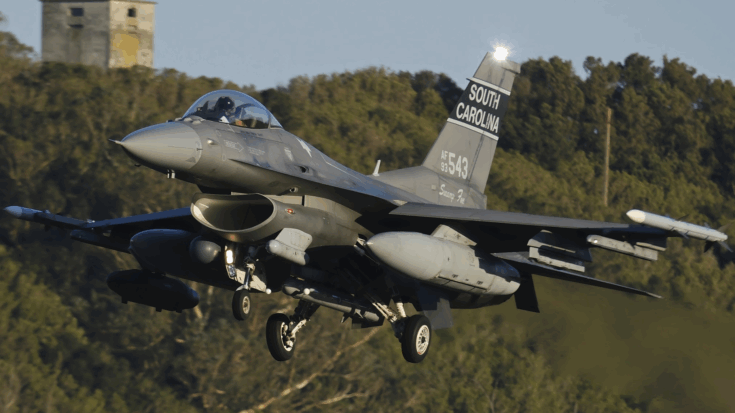
Recent official photographs released through the U.S. military’s Defense Visual Information Distribution Service show U.S. Air Force F-16 fighter jets armed with AGM-158 Joint Air-to-Surface Standoff Missiles, known as JASSMs, departing for combat missions connected to Operation Epic Fury. The images, taken on March 29, 2026, and published several days later, provide one of the clearest views so far of how American aircraft are conducting long-range strikes against Iranian targets, especially missile and drone production facilities.
The aircraft identified in the photos belong to the South Carolina Air National Guard’s 169th Fighter Wing, often called the “Swamp Foxes.” Markings on the vertical stabilizers confirmed their origin. Each F-16CM Block 52 carried two AGM-158 missiles, mounted under the wings. These weapons are designed to strike heavily defended targets from long distances, allowing pilots to launch attacks without entering dense air defense zones. Military analysts view the deployment as part of a broader shift toward stand-off operations intended to reduce risk to aircrews.
Weapons Loadouts Show Multi-Role Preparation
The aircraft shown in the images carried more than just strike weapons. Alongside the JASSMs were two AIM-9X Sidewinder short-range air-to-air missiles and two AIM-120 AMRAAM medium-range missiles, giving the jets defensive capability if enemy aircraft approached. The F-16s also carried several advanced pods, including a Litening targeting pod for precision guidance and a High-speed Anti-Radiation Missile Targeting System, or HTS pod, used to locate hostile radar systems.
Another notable system visible was the “Angry Kitten” electronic warfare pod mounted along the centerline. This device made its combat debut during the current conflict. Earlier transit photos from February showed the same aircraft passing through Lajes Airport in Portugal while deploying toward the U.S. Central Command area of responsibility. Later imagery confirmed the pod’s operational use, signaling an increasing reliance on electronic warfare tools designed to confuse or disrupt enemy sensors and missile guidance systems.
Evolution of Strike Tactics
Earlier in the conflict, F-16 aircraft were observed flying with loads focused mainly on AGM-88 HARM missiles, which target radar installations. Over time, the weapons mix expanded to include heavier guided bombs and now long-range cruise missiles. Photographs also showed other American F-16 units, including Block 40 aircraft from Aviano Air Base in Italy, operating with different payloads such as cluster munitions, indicating varied mission roles across the theater.
The yellow identification bands visible on the weapons confirm they were live munitions rather than training versions. The combination of strike missiles, air-to-air weapons, and sensing equipment suggests the jets were configured for “swing-role” missions. In such operations, pilots can shift between attacking ground targets and defending themselves in the air depending on evolving conditions. This flexibility has become common among multirole aircraft operating in contested environments.
Why JASSMs Are Being Used
The AGM-158 JASSM allows aircraft to launch attacks from hundreds of kilometers away using stealth shaping and precision guidance. Earlier in March, similar missiles were seen carried by B-52 bombers operating from Europe, and fragments believed to be from JASSMs were later discovered near strike locations. While the exact causes of several crashes remain unclear, their presence confirmed active use of the weapon system.
Stand-off strikes require extensive reconnaissance and planning because targets must be identified in advance. However, they keep aircraft outside the range of many surface-to-air missile systems. Reports indicate only part of Iran’s missile capability has been destroyed so far, encouraging continued long-distance attacks against production centers rather than closer penetration missions.
Air Defense Threats Shape Strategy
Threat conditions appear to have influenced the shift toward stand-off operations. Reports claim an E-3 Sentry airborne warning aircraft was lost at Prince Sultan Air Base in Saudi Arabia following an attack by a Shahed-136 one-way drone. Such incidents highlight the growing risk posed by drones and mobile missile systems operating from concealed positions.
The HTS pod carried by the F-16s helps detect radar emissions from systems such as the Sevom Khordad, Raad, Bavar-373, S-300, and HQ-9B air defenses. Meanwhile, analysts have noted attempts to use smaller loitering anti-aircraft drones capable of sudden attacks from hidden launch points. One recorded incident showed a missile approaching an F-35 unexpectedly, forcing an emergency landing. These developments suggest American planners are prioritizing distance, electronic warfare support, and precision weapons to reduce exposure while maintaining sustained pressure on strategic targets.