Watch Boeing C-17 Globemaster Jet Crash Captured on Video
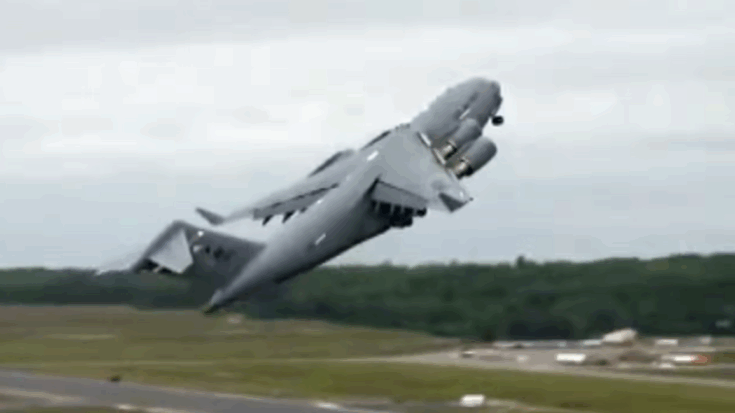
Roy Dawson / YouTube
What Happened in Alaska
In the summer of 2010 a U.S. Air Force Boeing C‑17 Globemaster III cargo aircraft crashed shortly after takeoff from Elmendorf Air Force Base in Alaska while training for an upcoming air show. The aircraft was practicing a display routine that included steep turns and other maneuvers when the accident occurred on July 28.
The aircraft, known by its tail number 00‑0173 and nicknamed Spirit of the Aleutians, lifted off and climbed out normally, followed by a left turn. Almost immediately thereafter the pilot initiated a sharp right turn at low altitude. While this was intended as part of the practice, it brought the aircraft into an unsafe flight attitude.
Stall and Loss of Control
As the C‑17 banked hard to the right, the aircraft’s stall warning system activated. This system alerts crews when the plane is nearing a loss of lift, a condition known as a stall. Instead of using standard recovery procedures to regain safe flight parameters, the crew continued the aggressive turn. The aircraft entered a deep aerodynamic stall from which it could not recover before impact.
The subsequent investigation by the U.S. Air Force attributed the crash to pilot error. The report found that the pilot had placed the aircraft outside of recognized flight limits. Neither the pilot nor the other flight deck crew recognized or addressed the developing situation in time to prevent the stall.

Crew and Crash Details
All four aircrew members on board — including pilots and a loadmaster — were killed in the crash. The aircraft struck woodland roughly two miles from the departure runway and exploded on impact, scattering debris across nearby terrain.
The video of the crash that circulates online captures only the moments leading up to the loss of controlled flight. Official releases from the Air Force and accident investigation board note that footage available to the public ends just before the plane hits the ground out of respect for the families of those who died.
Safety and Training Context
The C‑17 Globemaster III is a four‑engine military transport designed for short takeoff, landing, and heavy airlift roles. It has a strong safety record overall, and this crash remains the only fatal incident involving the type in U.S. Air Force service as of 2025.
Investigators noted that training for aerial shows and aggressive flight profiles requires strict adherence to established flight parameters. When those parameters are exceeded at low altitude, recovery space is limited. The Alaska accident reinforced the importance of procedural compliance, especially when practicing non‑standard maneuvers at low heights.
Record and Public Footage
Footage from the event has been shared widely because it shows the C‑17’s behavior shortly before the stall took it out of controlled flight. While such material can spark debate about pilot actions and aircraft limits, official records remain the best source for understanding what occurred that day.
The 2010 Alaska C‑17 crash remains a stark reminder of how quickly well‑intended training flights can turn into tragedy when aircraft performance limits are exceeded without room to recover.