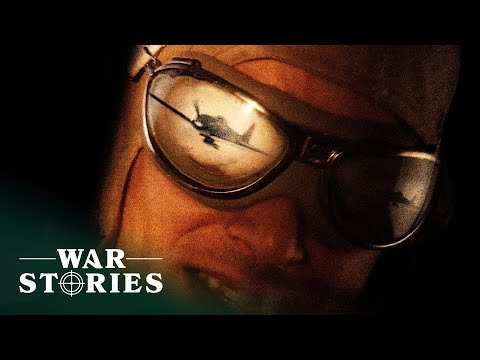
Wildcat v. Zero: The Legendary Battle Of Two Flying Aces
YouTube / War Stories
On August 7, 1942, the skies above Guadalcanal became the stage for one of World War II’s most extraordinary aerial encounters. In the chaos of a brutal dogfight, two legendary pilots- America’s James “Pug” Southerland and Japan’s Saburō Sakai found themselves locked in combat where a single trigger pull could have ended it all.
Yet neither delivered the final blow. In a war defined by survival and destruction, this fleeting moment of restraint defied every rule of aerial combat. Why did two enemies, trained to kill without hesitation, choose mercy instead? More than eight decades later, their decision remains one of the most haunting and fascinating mysteries of the Second World War.
A Clash Over Guadalcanal
On August 7, 1942, as U.S. Marines stormed ashore at Guadalcanal, the skies above the island erupted into chaos. Among the swirling dogfights was one extraordinary encounter that would echo through aviation history- a duel between two elite fighter pilots flying vastly different machines: the American Grumman F4F Wildcat and the Japanese Mitsubishi A6M Zero.
At the controls of the Wildcat was Lieutenant James “Pug” Southerland, a determined U.S. Navy pilot facing the harsh reality of the Pacific air war. Opposing him was Saburō Sakai, already a feared and highly experienced Japanese ace whose reputation preceded him. Both men were products of intense training, national pride, and the unforgiving logic of aerial combat.
Wildcat vs. Zero: Unequal Rivals
On paper, the matchup favored the Zero. It was lighter, faster, and astonishingly agile, able to outturn almost any Allied fighter in the sky. The Wildcat, by contrast, was heavier and less nimble. But it had strengths of its own- rugged construction, self-sealing fuel tanks, and a pilot who understood its limits. This battle was never just about speed or maneuverability; it was about discipline, tactics, and survival.
As Southerland and Sakai tangled above Guadalcanal, each gained fleeting moments of advantage. Gunsights crossed. Shots were fired. Yet again and again, neither pilot delivered a killing blow. In the middle of one of the war’s bloodiest campaigns, something remarkable happened- hesitation, restraint, or perhaps mutual respect intervened.
Mercy in the Midst of War
Why didn’t either ace go in for the kill when the opportunity arose? Some believe it was a split-second moral choice. Others argue that mechanical issues, positioning, or battlefield confusion played a role. Sakai himself would later reflect on moments of humanity even amid relentless combat. Whatever the reason, the encounter stood in stark contrast to the brutal nature of the Pacific War.
The Wildcat-versus-Zero duel between Southerland and Sakai remains one of World War II’s most compelling aerial mysteries. It reminds us that behind every aircraft was a human being- capable not only of destruction, but of restraint. In a war defined by extremes, this brief moment over Guadalcanal continues to captivate historians, pilots, and aviation enthusiasts alike.