USS Yorktown: What Life Was Like Onboard an Aircraft Carrier During WWII
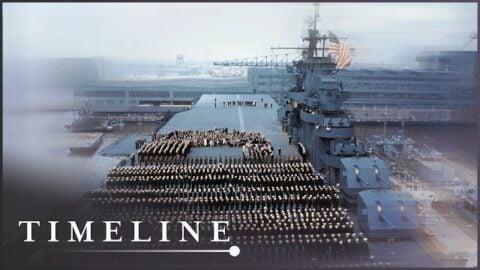
YouTube / Timeline - World History Documentaries
In 1944, at the height of the Pacific War, American audiences were offered a rare and powerful glimpse into life aboard a U.S. Navy aircraft carrier through the documentary The Fighting Lady.
Directed by renowned photographer Edward Steichen and produced by the U.S. Navy, the film went beyond combat footage to capture the exhausting, dangerous, and emotionally taxing routines of sailors operating far from home. At a time when most Americans only saw the war through headlines and radio reports, The Fighting Lady brought the front lines of the Pacific directly to the screen.
A Carrier Hidden in Plain Sight
For security reasons, the aircraft carrier featured in the film was never identified by name. Instead, it was referred to simply as “The Fighting Lady.” Wartime censorship demanded secrecy, especially for front-line warships that were constantly under threat from enemy submarines and aircraft. Only after the war did it become public knowledge that the ship was the USS Yorktown (CV-10), one of the U.S. Navy’s most important Essex-class carriers operating in the Pacific Theater.
The Yorktown was a massive floating airbase, capable of projecting American airpower hundreds of miles across the open ocean. She played a key role in some of the most intense carrier battles of the war, supporting strikes against Japanese-held islands and enemy fleets. Yet the documentary deliberately avoided discussing strategy, instead focusing on the human experience aboard the ship.
Daily Life at Sea
Life aboard the Yorktown was crowded, noisy, and unrelenting. Nearly 3,000 men lived and worked within the steel hull, sleeping in stacked bunks crammed into poorly ventilated compartments. Privacy was virtually nonexistent, and personal possessions were limited to what could fit in a small locker. The constant vibration of engines, the roar of aircraft, and the clanging of machinery meant true silence was almost unknown.
Every sailor had a specific role, and the smooth operation of the carrier depended on absolute coordination. Deck crews launched and recovered aircraft, mechanics worked around the clock to keep planes combat-ready, ordnance crews armed bombs and torpedoes, and bridge officers navigated through hostile waters. The ship never truly rested, as flight operations continued day and night, often in shifting weather and under the threat of enemy attack.
The Danger of Flight Operations
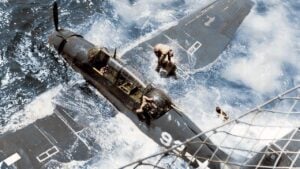
The flight deck was the most dangerous place on the ship and the heart of its mission. Aircraft were launched and recovered in rapid succession, sometimes every few minutes, leaving no margin for error. Sailors worked just feet from spinning propellers, roaring engines, live bombs, and arresting cables snapping under enormous tension. One slip, a mistimed signal, or mechanical failure could result in serious injury or death.
Enemy air attacks added another layer of danger. Japanese aircraft often targeted carriers directly, forcing flight crews to continue working while alarms blared and anti-aircraft guns thundered. Even when no enemy was present, rough seas and poor visibility could turn routine landings into deadly challenges. The documentary captures the constant tension that defined flight deck life.
Brotherhood Under Fire
Despite the danger and exhaustion, strong bonds formed among the crew. Shared hardships, long deployments, and the constant risk of combat created a powerful sense of brotherhood. Sailors relied on one another not only for survival but also for emotional support. Brief moments of laughter, letter-writing, or quiet reflection offered relief from the strain of war.
The Fighting Lady highlights these human moments alongside scenes of intense combat operations. It reminds viewers that behind every mission were young men, many barely out of their teens, who carried the weight of responsibility, fear, and duty while separated from their families for months at a time.
A Rare Look Into WWII Naval Life
Today, The Fighting Lady remains one of the most authentic visual records of aircraft carrier life during World War II. Rather than glorifying battle, it focuses on endurance, discipline, and teamwork, preserving the lived reality of sailors aboard the USS Yorktown.
The documentary stands as a powerful tribute to the men who lived, fought, and endured aboard America’s floating airfields, helping secure victory in the Pacific through their daily sacrifices at sea.