How One Mechanic’s “Stupid” Wire Trick Made P-38s Outmaneuver Every Zero
YouTube / WW2 Records
A Fighter That Could Not Turn Fast Enough
By mid 1943, the Lockheed P-38 Lightning was one of the most capable American fighters in the Pacific. It was fast, heavily armed, and effective at altitude. In close combat against the Mitsubishi A6M Zero, it carried a critical disadvantage.
Japanese pilots repeatedly forced P-38s into turning fights. Once there, the Lightning could not roll or reverse quickly enough to escape. Losses mounted, and official reports blamed pilot error rather than mechanical limitations.

The Problem Pilots Could Feel but Could Not Prove
Pilots returning from combat described the same issue. In hard maneuvering, the aircraft felt slow to respond. There was a noticeable delay between stick movement and aircraft reaction.
Maintenance inspections found nothing wrong. Control cables were within factory specifications. The aircraft was considered airworthy, even as pilots continued to die in turning engagements.
A Mechanic Who Knew the Aircraft Too Well
Technical Sergeant James McKenna had spent months maintaining P-38s in New Guinea. He handled the control cables daily and understood their behavior by feel and sound.
The aileron control system allowed a small amount of slack. Roughly three eighths of an inch was considered acceptable under factory tolerances. At low speeds in high stress turns, that slack created a delay that Zero pilots exploited.

An Unauthorized Fix Made in the Dark
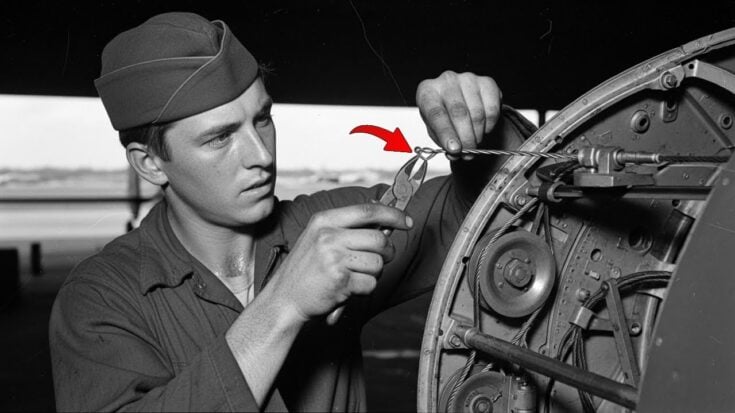
On the night of August 16, 1943, McKenna acted without approval. Using a six inch piece of piano wire salvaged from a damaged aircraft, he bent a Z shaped tensioner and installed it inline on a P-38 aileron control cable.
The modification added less than half a pound of tension. It removed the slack entirely. The work took eight minutes and violated multiple maintenance regulations.
The First Test Over the Huon Gulf
The next morning, Lieutenant Robert Hayes flew the modified P-38 into combat. During a brief engagement, he shot down three Japanese fighters in turning maneuvers that previously would have been fatal.
Hayes reported immediate control response. The aircraft rolled and reversed without delay. Other pilots observed the engagement and recognized that the aircraft was behaving differently.

A Quiet Spread Across the Squadron
Pilots began asking for the modification. Some crew chiefs refused. Others quietly copied the fix. Piano wire tensioners appeared across multiple squadrons without paperwork or official acknowledgment.
Kill ratios shifted. By September 1943, P-38 units in New Guinea were destroying Zeros at rates that matched or exceeded Japanese losses. Mechanics removed the tensioners before inspections and reinstalled them afterward.
Japanese Pilots Notice the Change
Japanese combat reports noted that P-38s were rolling faster and reversing inside previously reliable maneuvers. Veteran pilots found their timing no longer worked.
Examinations of wreckage revealed no visible changes. Engines and armament were identical. The critical difference was hidden inside the control system.

Recognition That Came Too Late
Lockheed engineers evaluated similar tensioning solutions later in 1943 and incorporated improved cable systems into newer P-38 variants. The field modification itself was never officially credited.
McKenna returned home after the war and resumed civilian life. He never received formal recognition for the fix.