Which Were the WORST Designed Planes of WW2
YouTube / The Front
Aircraft design in 1939 was still a young science. The first powered flight had happened only 36 years earlier, and no one fully understood what the next generation of combat aircraft would look like. Some of that uncertainty produced remarkable machines. Some of it produced the following.
The Blackburn Botha

The British government issued a specification in 1935 for a twin-engine torpedo bomber and reconnaissance aircraft. Two designs were accepted, then the government changed the requirements mid-development. The new specification called for a four-man crew, which required more powerful engines. The more powerful engines weren’t available. Designers requested cancellation and were overruled.
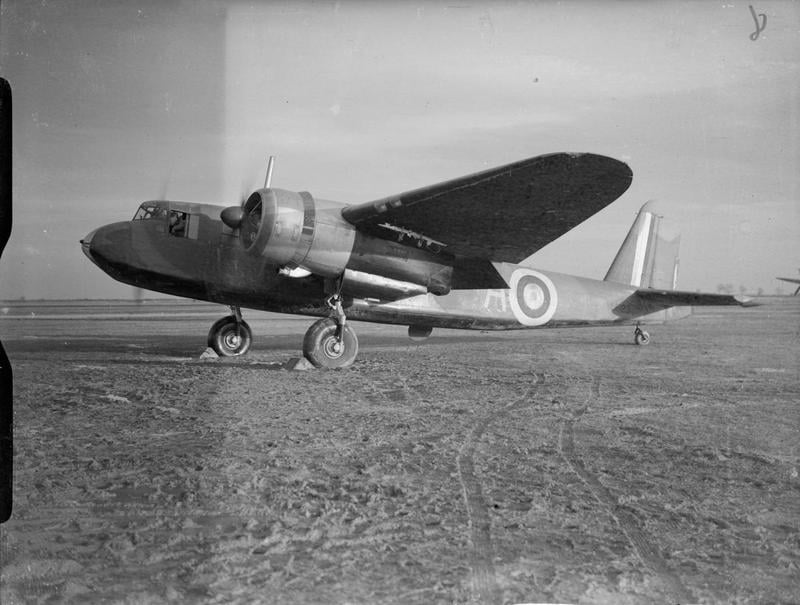
The Botha entered service with two 930-horsepower Perseus engines pulling an airframe too heavy for them, a cruise speed barely above 180 knots, minimal side visibility, and no rear-facing windows. Experienced pilots struggled to control it. Fatal crashes followed. The aircraft was moved to training squadrons, where it killed more people. Of 478 Bothas sent to training units, 24 were lost at sea following engine failures and another 145 crashed on land. The program was scrapped in 1944.
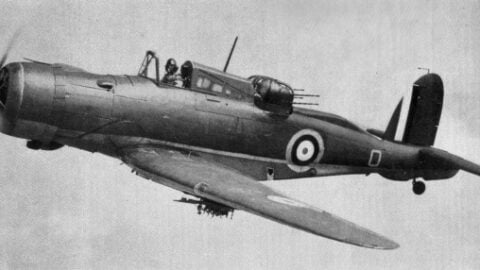
The Blackburn Roc

The Roc emerged from a 1930s enthusiasm for turret fighters, aircraft with rear-facing mobile gun positions designed to intercept bombers with interlocking fire. The concept made sense to officers who had learned warfare in static World War I trenches. It made less sense for air combat. The chief of naval air services attempted to cancel the Roc after its maiden flight in 1938 revealed it was too heavy, too slow, and sluggish in maneuvering. He was overruled.
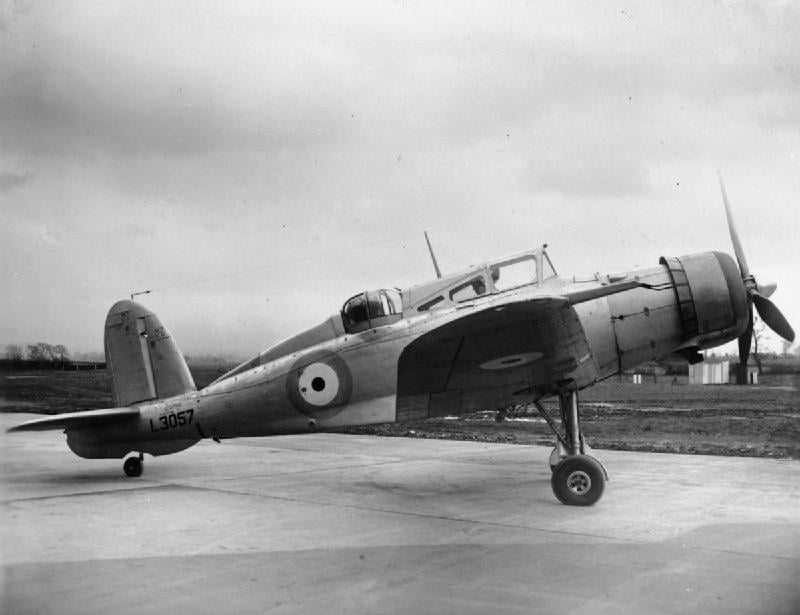
The Roc’s fatal flaw appeared in combat over Norway. It had no forward-facing guns, meaning it could only fire sideways or rearward, and it was slower than every German aircraft it encountered. Operating from HMS Ark Royal, Roc squadrons never shot down a single enemy aircraft independently. By late 1940 the type had been withdrawn from frontline service. Some had their turrets removed and were fixed to the ground as anti-aircraft positions, where they finally proved useful.
The Messerschmitt Me 210

The Me 210 looked promising on paper: two powerful engines, an internal bomb bay to reduce drag, and remote-controlled defensive guns. In the air it shuddered violently, became totally unstable in turns, and had a consistent tendency to stall and enter unrecoverable spins. The second prototype was lost exactly this way, the test pilot bailing out after the spin could not be corrected. Messerschmitt’s own chief test pilot described it as possessing all the least desirable attributes an airplane could have.

Production was rushed regardless. Luftwaffe units began receiving Me 210s in April 1942. Within a month, production was halted and a redesign was underway. The revised aircraft was redesignated the Me 410, partly to convince aircrew they were receiving something different.
The Breda Ba 88
Italy’s Ba 88 held two world speed records before it entered service. In 1937 it averaged 554 km/h over a 100-kilometer stage and 530 km/h over a 1,000-kilometer stage. Fascist propaganda presented it as the future of aerial warfare.

Then the military loaded it with radios, weapons, and ammunition, adding over a ton of weight to a precision racing airframe. When the aircraft arrived in North Africa, technicians fitted sand filters to the air intakes that cut engine power by more than half. Some aircraft couldn’t take off at all. Italian ground crews eventually stripped them for parts and distributed the hulks around decoy airfields.

The Messerschmitt Me 163 Komet
The Komet was genuinely fast, reaching 1,004 km/h in 1941, a record that stood well past the war’s end. Its rocket fuel, a substance called T-Stoff, was so chemically reactive that contact with organic matter caused it to explode.

Ground crews and pilots were killed by the fuel before the aircraft ever reached combat. Once airborne, the Komet had approximately seven seconds of powered flight before becoming a glider, giving the pilot that window to engage Allied bombers before losing all speed advantage.

Komet pilots recorded nine kills across the entire war. Roughly 80 percent of Komet pilots were killed attempting to land the aircraft, which glided so well that small gusts could carry it into trees, hills, or buildings on approach.