How the US Pulled Off One of Its Most Daring Military Operations Inside Iran
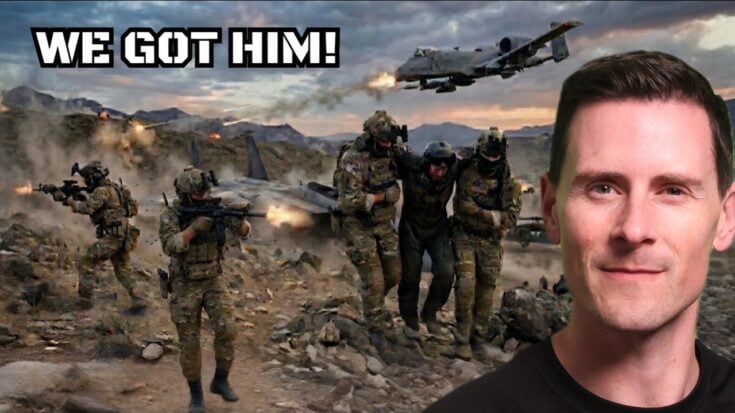
YouTube / Max Afterburner
A US Air Force colonel was rescued from behind enemy lines in Iran on Saturday night after spending more than 24 hours evading Iranian forces in treacherous mountain terrain, President Trump confirmed early Sunday on social media.
The officer was the weapons systems officer (commonly called a “Wizzo”) aboard an F-15E Strike Eagle shot down by Iranian air defenses on Friday over southern Iran. Both crew members ejected from the aircraft, and the pilot was recovered in an earlier operation. The weapons officer, however, could not initially be located, triggering a two-day race between US and Iranian forces to find him first.

Iranian officials credited their air defense systems with downing the jet, believed to have come down in either the Kohgiluyeh and Boyer-Ahmad or Khuzestan provinces in southern Iran.
A Race Against Time
After ejecting, the colonel concealed himself in a mountain crevice and spent more than 24 hours on the move, at one point climbing a 7,000-foot ridgeline to stay hidden and establish communications. He was equipped with a beacon and secure communication device, though he used them sparingly to avoid detection by Iranian forces who were actively searching the area. Iran had also offered rewards to local citizens willing to help locate him.

The F-15E crash occurred in a region with notable opposition to the Iranian government, which may have worked in the airman’s favor. The CIA, which has experience facilitating what is known as “unconventional assisted recovery” — connecting vulnerable troops with sympathetic locals — played a key role, ultimately tracking down his precise location and passing it to the Pentagon.

While the rescue was underway, the agency also ran a disinformation campaign inside Iran, spreading word that the officer had already been found and was being extracted via ground convoy — a move intended to draw Iranian forces away from his actual position.
The Rescue Operation
Navy SEAL Team 6 led the extraction, supported by hundreds of special operations personnel, dozens of warplanes and helicopters, and a wide array of cyber, space, and intelligence assets. US attack aircraft dropped bombs and engaged Iranian convoys to keep them clear of the rescue zone. Commandos fired their weapons to hold Iranian forces back, though officials said no direct firefight took place.

The officer was flown to Kuwait following the rescue for medical treatment. Trump said he “sustained injuries, but will be just fine,” though a later post described his condition as more serious.
A senior US military official called the mission one of the most complex in the history of American special operations, citing the mountainous terrain, the airman’s physical condition, and the speed at which Iranian forces were closing in.
In a final complication, two transport planes meant to carry the rescue team out became disabled at a remote base inside Iran. Commanders flew in three replacement aircraft and destroyed the two grounded planes on-site to prevent them from falling into Iranian hands.