

How America Turned This Fighter Into a Flying Tank Killer
YouTube / Dark Skies
When the P-51 Mustang first entered service, it was never meant to smash tanks or stalk armored columns. Designed to meet an urgent British need in 1940, the early Mustang was a low-altitude performer powered by the Allison V-1710 engine. Below 15,000 feet, it was exceptionally fast and aerodynamically clean. Above that height, its single-stage supercharger left it gasping, unable to compete with Spitfires or Messerschmitts fighting higher in the sky.
The Royal Air Force quickly found a role that suited the Allison Mustang’s strengths. Assigned to tactical reconnaissance and ground attack, Mustangs flew deep into occupied France at treetop height, photographing defenses, strafing trains, and hitting radar sites. Speed and range kept them alive where other fighters would not have survived.
The Merlin Transformation
The airframe’s potential was obvious, and Rolls-Royce confirmed it. When engineers fitted the Mustang with the two-stage, supercharged Merlin engine in late 1942, the aircraft changed completely. High-altitude speed surged past 420 miles per hour, climb rate improved dramatically, and the Mustang could now escort bombers all the way to Berlin.
With the P-51B and later variants, the Mustang became the backbone of the Eighth Air Force’s escort strategy. It broke the Luftwaffe’s grip on the bomber streams and shattered the myth of the self-defending bomber. By early 1944, Mustangs were not only protecting the bombers but hunting German fighters aggressively over their own territory.
From Escort to Ground Hammer
As Allied armies pushed into Western Europe, the Mustang’s mission shifted again. By late 1944, air superiority was largely secured, but German ground forces remained dangerous. Armor, artillery, and supply columns still blocked Allied advances. The Mustang was sent down from altitude to deal with them.
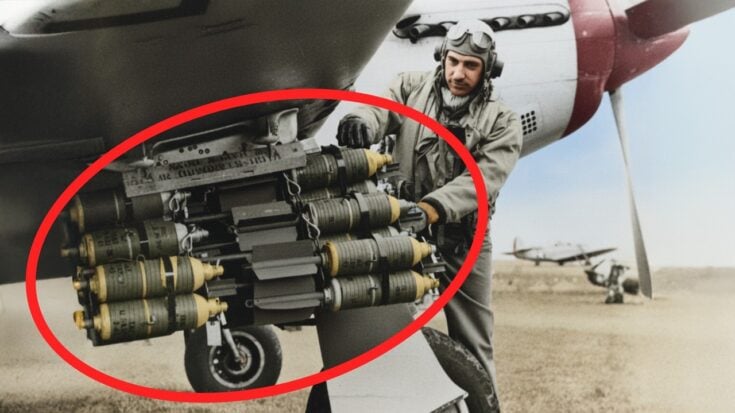
Loaded with 500-pound bombs, rockets, and six .50-caliber machine guns, Mustangs attacked at treetop height. While heavy tanks were difficult to destroy outright, the vehicles that sustained them were not. Fuel trucks, ammunition carriers, and transport columns burned along roads and railways. Cutting supply lines proved as effective as knocking out tanks themselves.
The Cost and the Impact
Low-level attack was brutal work. German flak batteries were dense, well-camouflaged, and pre-sighted. Losses mounted, yet the results were decisive. Mustang units flew more than 213,000 missions, destroying thousands of aircraft in the air and on the ground while crippling German mobility in the final months of the war.
What began as a fast but limited fighter became one of the most versatile combat aircraft of World War II. By the end, the P-51 Mustang was no longer just an escort. It was a flying tank killer, striking where it hurt most and helping bring the war in Europe to its end.







