13 WWII Warbirds Take to the Skies in Stunning Formation at Warbirds Over Scone 2026
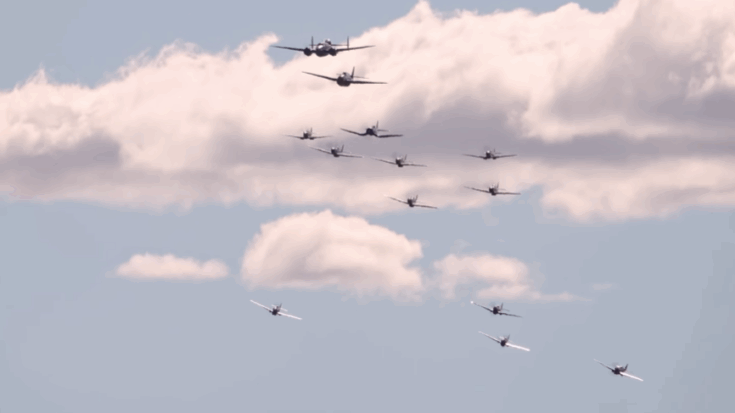
DrBear Aviation / YouTube
In March 2026, aviation history came alive at Scone Memorial Airport in New South Wales, Australia, as Warbirds Over Scone returned with one of its most memorable flying displays. The annual event, known for honoring historic military aircraft, gathered pilots, historians, and families to witness machines from the Second World War era operating once again in open skies. For many spectators, the experience connected modern audiences with aircraft that once shaped global events.
Thirteen restored warbirds formed the centerpiece of the show, carefully prepared by owners and volunteer crews who maintain these aircraft year-round. The display was designed not only as entertainment but also as a living history lesson, showing how wartime aviation technology looked, sounded, and moved during the 1940s.
Historic Aircraft Reunited in Flight
The formation featured a diverse lineup representing several Allied air forces. A Lockheed Hudson, once used for maritime patrol and reconnaissance missions, flew alongside a Grumman TBF Avenger, a torpedo bomber known for its role in naval operations across the Pacific. The deep-engine sound of a Vought F4U Corsair added contrast, recalling carrier-based fighter operations during intense air campaigns.
Two Supermarine Spitfires joined the formation, symbolizing air defense during the war years, while four North American Mustangs demonstrated the long-range escort capability that later helped protect bomber missions over Europe. Completing the group were four Curtiss P-40 Warhawks, aircraft remembered for their service in multiple theaters, including North Africa and the Pacific. Seeing these planes fly together offered a rare comparison of design approaches from different nations and missions.
From Engine Start to Final Landing
The filmed sequence documented the entire operation, beginning with engine start procedures on the apron. Pilots followed coordinated taxi patterns before lining up for takeoff, allowing spectators to observe the careful planning required to safely operate vintage aircraft. Once airborne, the warbirds assembled into tight formation, maintaining spacing through steady communication and precise flying skills.
One of the most memorable elements was the sound produced by the aircraft. Radial and inline piston engines blended into what enthusiasts often call a “piston symphony,” a layered roar that echoed across the airfield. Individual flybys allowed each aircraft to be seen clearly before the group reformed for passes over the runway.