

Watch: U.S. Air Force Deploys More A-10 Warthogs to the Middle East
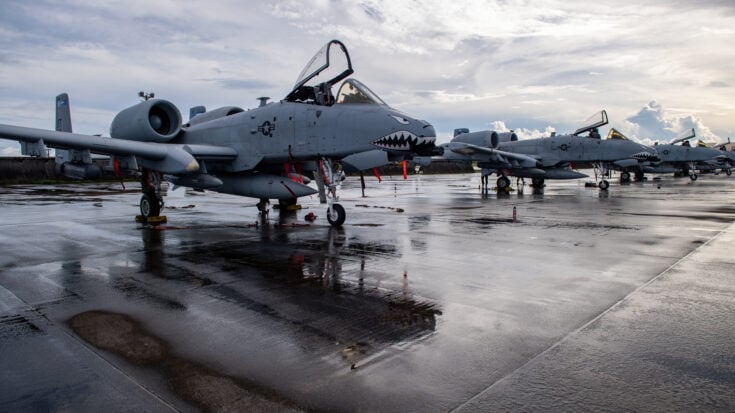
Airman 1st Class Courtney Sebastianelli, CC0, via Wikimedia Commons
The United States Air Force is sending additional A-10 Thunderbolt II aircraft, widely known as Warthogs, to the Middle East as military activity in the region continues to grow. The deployment reflects how older aircraft can still play an important role during modern conflicts, especially when ground forces require direct air support. Though the aircraft first entered service in the 1970s, it remains one of the most recognizable attack planes in American service.
Recent movements show the aircraft traveling across the Atlantic in stages before reaching operational bases. Aviation observers and defense publications have tracked the flights, noting stops in the United Kingdom before the jets continue toward their final destination. These deployments are tied to ongoing operations involving American forces and regional tensions that have intensified in early 2026.
Reinforcements Moving Toward the Region
Around a dozen A-10s were already operating in the Middle East as part of Operation Epic Fury, and new arrivals are expected to nearly double that number. Reports indicate that twelve aircraft from the 107th Fighter Squadron departed the United States and arrived at RAF Lakenheath in England, a common transit point for American combat aircraft crossing into Europe and beyond. Another group of six A-10s assigned to the 190th Fighter Squadron followed shortly afterward along the same route.
Flight-tracking observers noted that at least eighteen A-10s were temporarily on the ground in England before continuing east. Tanker aircraft such as KC-135 refueling planes supported the long journey, allowing the slow-flying attack jets to cross oceans safely. This ferry process has long been standard practice for deployments, ensuring aircraft arrive ready for combat operations without exhausting crews or equipment during transit.
Why the A-10 Still Matters
The A-10 Thunderbolt II was designed specifically for close air support, meaning it operates close to friendly ground troops while targeting vehicles, boats, and fortified positions. Its large 30-millimeter cannon can fire dozens of rounds per second, giving it unmatched effectiveness against lightly armored targets. Because it flies slower and lower than modern fighter jets, pilots can remain over a battlefield longer and respond quickly to changing conditions.
In the current conflict, the aircraft has taken on additional roles. The Air Force has equipped some A-10s with laser-guided APKWS rockets to intercept drones, reflecting how the aircraft continues adapting decades after its introduction. Videos released online have shown the jets striking militia targets in Iraq and engaging fast attack watercraft near key shipping routes, demonstrating flexibility beyond traditional land operations.
Expanding Military Operations
The arrival of more A-10s comes amid a wider buildup of American forces across the Middle East. Naval strike groups, airborne units, and Marine formations have also been repositioned, suggesting preparation for possible expanded missions. Military planners appear focused on securing vital waterways, including the Strait of Hormuz, where shipping disruptions have raised global concerns.
Officials have not confirmed specific objectives, but analysts believe the aircraft could support ground forces or protect maritime routes if operations expand. The A-10’s ability to remain airborne for extended periods makes it useful for overwatch missions, convoy protection, and rapid response against small moving targets. Even as newer aircraft dominate headlines, commanders continue to rely on the Warthog for situations where endurance and precision are more valuable than speed.
An Aircraft Nearing the End of Service
Despite renewed combat activity, the A-10 is approaching the final phase of its operational life. Budget plans indicate that just over one hundred aircraft remain in service, with retirement expected before the end of the decade. For years, debates inside the Air Force questioned whether newer multirole fighters could fully replace the specialized attack jet.
The current deployment shows why the aircraft has endured for so long. In environments where advanced air defenses are limited or suppressed, the A-10 provides steady support that heavier and faster aircraft cannot easily replicate. As operations continue, the aircraft may be experiencing one of its last major periods of frontline use before eventual retirement.







