

Restoring A 1930s MI6 Lockheed Spy Plane
YouTube / History's Greatest Aircraft
A Civilian Aircraft With a Hidden Purpose
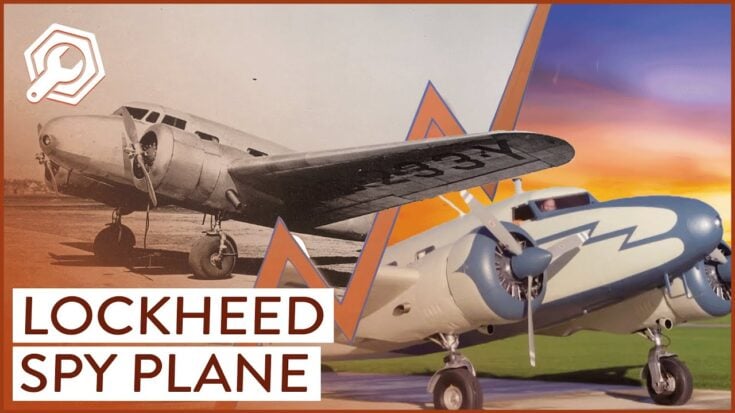
In the late 1930s, Britain needed answers about a rapidly rearming Germany, but traditional intelligence methods could not provide them. The solution came in an unexpected form. A sleek Lockheed 12A Electra Junior, outwardly a civilian executive aircraft, became MI6’s first dedicated spy plane. It carried no weapons and bore no military markings, yet it played a critical role in the years before the war.

The aircraft belonged to Sydney Cotton, an Australian aviator whose career blended aviation, invention, and calculated risk. Officially, Cotton operated charter flights and promoted a European film business. In reality, his aircraft carried concealed cameras capable of capturing high resolution images of German airfields, factories, and naval installations at a time when Britain had few other ways to see beyond its borders.
Espionage Disguised as Business Travel
Cotton’s greatest advantage was invisibility. Flying as a civilian operator allowed him to cross borders and land at major airfields without raising suspicion. He carried German passengers, including senior officials, and subtly altered flight paths under the guise of navigation or sightseeing. While his guests admired the view or handled the controls, Cotton triggered cameras hidden beneath the cabin floor and within modified panels.

The aircraft itself reflected this deception. Its pale paint was chosen to blend into the sky, reducing visibility from the ground. What looked like a comfortable executive transport was in fact one of Britain’s most important intelligence assets in the final years before open conflict.
A Complex Restoration Begins
After decades in the United States, it returned to Britain in pieces, packed into shipping containers and delivered to Sywell Aerodrome. Restoring it proved far more difficult than rebuilding a fighter aircraft. The aircraft was never designed to be dismantled, and many systems had been cut simply to make transport possible.

Engineers were forced to reconstruct wiring, controls, and fittings from scratch, often relying on original Lockheed drawings. As paint was stripped away, physical evidence of its secret role emerged. Camera ports beneath the fuselage, concealed access panels, and modification plates confirmed how Cotton’s aircraft carried out its missions. These discoveries answered long standing questions that historians had debated for decades.
Returning a Forgotten Aircraft to the Air
The restoration aimed to preserve both function and story. Pratt and Whitney radial engines were carefully recommissioned, the innovative retractable landing gear was rebuilt, and the airframe was returned to its original form. Inside, the cabin was recreated in a 1930s Art Deco style that reflected the aircraft’s executive cover rather than a military interior.

When the aircraft finally taxied under its own power in 2022, it represented more than a successful restoration. It marked the revival of a nearly forgotten chapter in British intelligence history.







