The Lost Hurricane: Restoring a True Battle of Britain Fighter
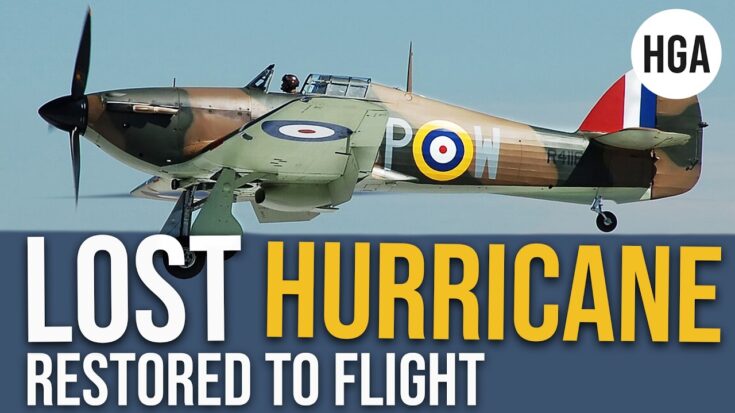
YouTube / History's Greatest Aircraft
A Wreck Behind a Wall
The story began with a cockpit visible over a wall in India. Climbing closer revealed a battered aircraft wreck, and beneath its cowling a crucial clue appeared: Rolls-Royce. At the time, no one knew exactly what the aircraft was. Identifying it became the first challenge in a restoration that would take years.

The answer was eventually found stamped in an obscure section of the airframe and confirmed through engine records held by the Air Ministry in London. The aircraft was Hawker Hurricane R4118, a genuine Battle of Britain fighter with a documented combat history.
A Fighter With a Long War
RAF records showed that R4118 flew during the height of the Battle of Britain in September and October 1940. Assigned to No. 605 Squadron, it was flown by several aces and credited with five enemy aircraft destroyed. In late October 1940, it was shot down over Kent, repaired at the Austin Motor Company, and returned to service.
The Hurricane continued fighting into 1941, intercepting bombers over northern Britain. As newer fighters took over frontline duties, it became a trainer, suffering multiple crashes and rebuilds. Fully overhauled in Cardiff, it was shipped east in 1944, intended for training Indian pilots bound for Burma.

By the time it arrived, the situation had changed. Many crated Hurricanes were dumped at sea near Bombay. R4118 survived only because it was sent to Benares Hindu University as an instructional airframe. There it sat, largely untouched, from 1944 until its rediscovery in 1995.
Unharmed Hurricane
Recovering the aircraft from India was only the beginning. Once back in Britain, it was dismantled down to the last nut and bolt. Hawker Restorations undertook the rebuild, working from original drawings and period manufacturing methods. This Hurricane proved exceptional because it had never been heavily modified. It remained a true Mark I, offering rare insight into how these fighters were originally built.

Recreating components required skills that had nearly vanished. The main spars demanded a 7 percent nickel steel no longer produced, forcing engineers to recreate both the metallurgy and the manufacturing process. Even European steelmakers struggled to match the original specifications.
Keeping the Past Alive
The restoration aimed for absolute authenticity. Unlike most surviving Hurricanes, R4118 retained its original 12 volt electrical system rather than being converted to 24 volt. Tactile items such as rudder pedals and hand grips were preserved whenever possible, maintaining a physical connection to the young pilots who once flew it into combat.

The Merlin III engine posed its own challenges. Years of exposure had ruined major components, but much of the original engine was saved. With help from the RAF Museum and specialist engineers, the Merlin was rebuilt and run extensively before flight.
In December 2004, the Hurricane flew again. As the only surviving Hurricane known to have fought in the Battle of Britain, R4118 returned not just as an aircraft, but as a living record of the men, machines, and urgency of Britain’s darkest hours.