

1945 Tragedy: Tuskegee Airmen of the 332nd Fighter Group Fly Heroic Mission Over Germany and Austria, Three Go Missing in Action
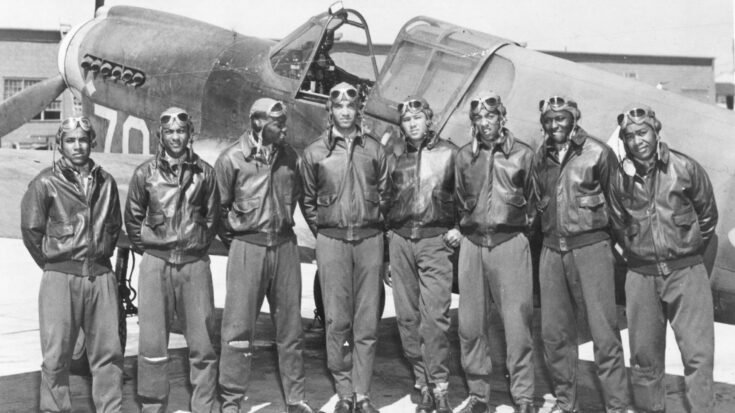
The original uploader was Signaleer at English Wikipedia., Public domain, via Wikimedia Commons
A Dangerous Assignment in the Final Months
By February 1945, the air war over Europe had entered its final phase. Allied bombers struck deep into German territory almost daily, aiming at rail lines, oil plants, and military factories. Fighter groups were tasked with escorting these heavy bombers and protecting them from attack. Among those units was the 332nd Fighter Group, known widely as the Tuskegee Airmen.
The 332nd Fighter Group was made up of African American pilots, many of whom had trained at Tuskegee Army Air Field in Alabama. Despite facing segregation at home, they had built a strong record in combat. By early 1945, they were flying long-range escort missions in the North American P-51 Mustang, recognized for its speed, range, and ability to defend bomber formations far into enemy airspace.

Missions Over Germany and Austria
On February 25, 1945, the group was ordered to carry out escort and ground-attack missions east of Munich and over parts of Austria. These assignments were demanding. Escort duty required pilots to stay close to bomber formations, scanning the sky for German fighters. Ground-attack missions meant diving low to strike targets such as rail yards, supply convoys, and airfields, often under heavy anti-aircraft fire.
The skies over southern Germany and Austria were still dangerous. Although German air power had declined, resistance had not disappeared. Flak batteries guarded key locations, and remaining fighter units continued to challenge Allied aircraft when possible. During the February 25 operations, the Tuskegee Airmen encountered both ground fire and aerial opposition as they carried out their orders.
Three Pilots Go Missing
By the end of the day’s missions, three pilots from the 332nd Fighter Group were reported missing in action. In wartime records, “missing in action” could mean several outcomes. An aircraft might have been shot down by enemy fire, forced to crash-land, or lost due to mechanical failure. Sometimes pilots were captured. In other cases, they were never found.
The loss weighed heavily on the unit. Fighter groups operated as tight communities. Pilots trained together, ate together, and flew side by side in combat. When one did not return, the absence was felt immediately. For the Tuskegee Airmen, each mission carried not only the risk of combat but also the knowledge that they were proving their ability under intense scrutiny from a segregated military system.
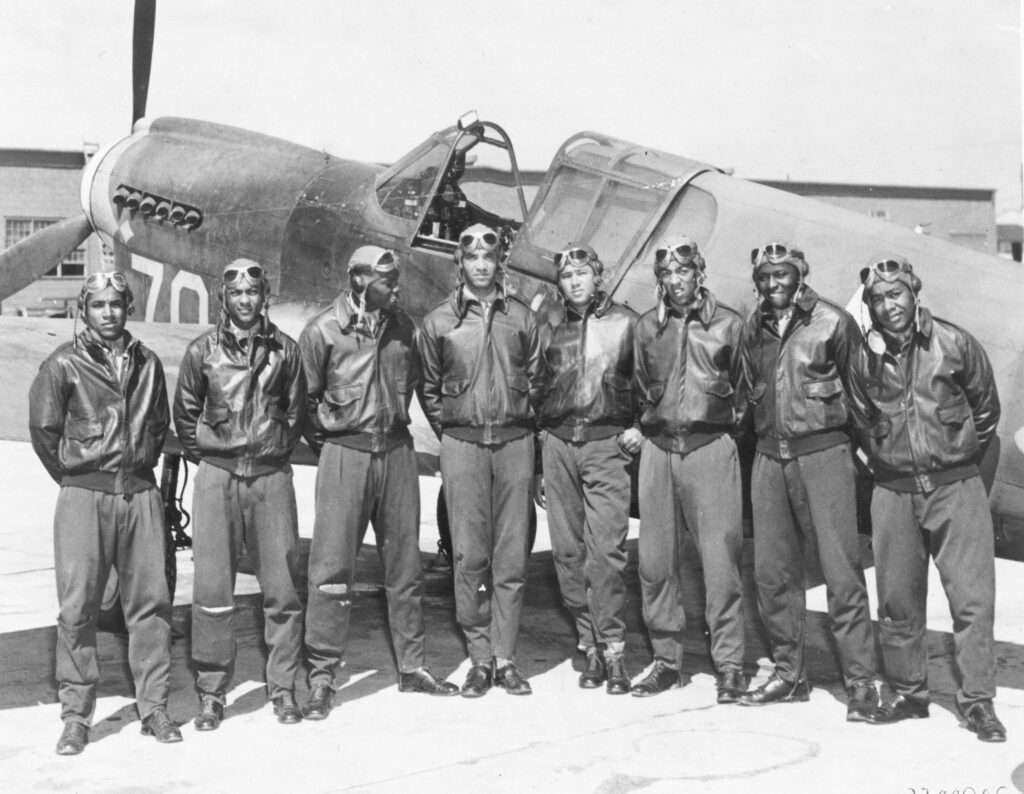
Service and Sacrifice in a Segregated Force
The 332nd Fighter Group had already earned respect for its discipline and escort record. Bomber crews often noted the group’s focus on protecting assigned aircraft rather than chasing enemy fighters. This approach reduced bomber losses and strengthened trust between units. By February 1945, the Tuskegee Airmen had completed many successful missions across Italy, Germany, and Central Europe.
The events of February 25 stand as a reminder of the cost of those operations. As Allied forces advanced on the ground and air superiority grew, dangers in the sky remained real. The three missing pilots joined a long list of airmen who did not return from missions over Europe. Their service formed part of a broader effort that helped bring the war in Europe toward its final months, even as families at home waited for news that did not always come.







