WWII Milestone: B-29 Superfortresses Launch Massive Incendiary Raid on Tokyo, Destroying 28,000 Buildings
United States Army Air Forces, Public domain, via Wikimedia Commons
A New Phase in the Air War Over Japan
In late February 1945, the air war against Japan entered a new and troubling phase. American leaders were searching for ways to weaken Japan’s war production and bring the conflict closer to an end. Up to that point, many bombing missions had focused on high-altitude attacks against specific industrial targets. Results were mixed, as weather, cloud cover, and strong winds often reduced accuracy.
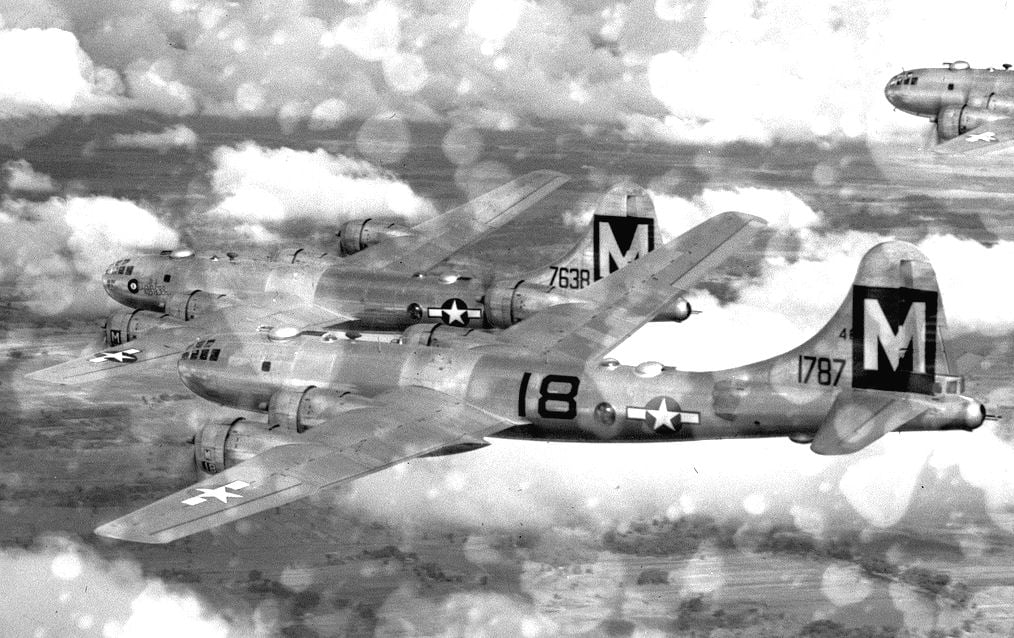
On February 25, 1945, the United States Army Air Forces carried out what became the largest and most destructive raid on Japan to date. The mission was led by the XXI Bomber Command using the long-range Boeing B-29 Superfortress. This attack marked a serious test of a new approach: the large-scale use of incendiary bombs against urban areas.
The Daylight Raid on Tokyo
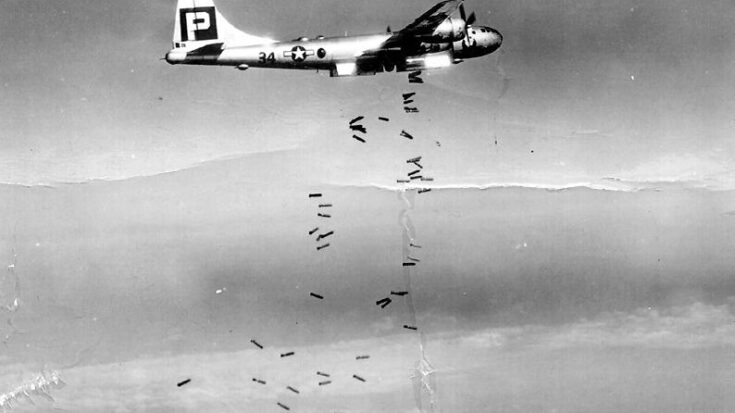
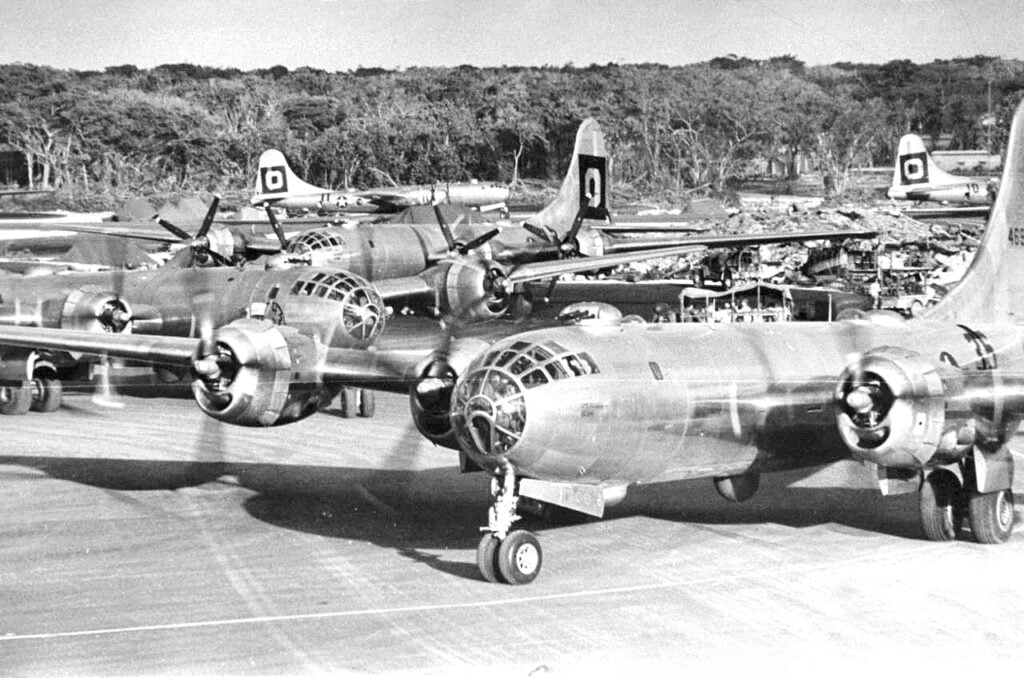
A total of 174 B-29 Superfortresses took off from bases in the Mariana Islands. Their target was Tokyo, the capital and a center of both government and small-scale war production. Unlike later nighttime raids, this mission was conducted in daylight and at high altitude. The aircraft carried a mix of incendiary and fragmentation bombs designed to start fires across wide areas.
Over the city, the bombers released about 450 tons of explosives. Many neighborhoods in Tokyo were built largely of wood and paper, making them highly vulnerable to fire. The bombs ignited numerous blazes that spread quickly through residential and workshop districts. By the end of the attack, an estimated 28,000 buildings had been destroyed, covering roughly one square mile, or about 643 acres, of the city.
Naval Air Support and Air Defenses
At the same time, American naval forces operated off the Japanese coast. Task Force 58 launched carrier-based aircraft to strike airfields around Tokyo. These attacks aimed to limit the ability of Japanese fighters to intercept the B-29 formations. By targeting runways and parked aircraft, naval aviators reduced the pressure on the incoming bombers.
Japanese air defenses still responded, but the combined effort from high altitude and naval suppression helped the mission achieve its objectives. While some American aircraft were damaged or lost, the scale of destruction on the ground drew immediate attention from military planners. The results were studied closely by commanders seeking more effective ways to disrupt Japan’s industrial output.
A Strategy Takes Shape
General Curtis LeMay, who had recently taken command of the XXI Bomber Command, reviewed the outcome of the raid. He believed that Japan’s system of small workshops, often located within residential neighborhoods, made traditional precision bombing less effective. The February 25 attack suggested that incendiary bombing could cause greater disruption by destroying both homes and small production sites at the same time.
The success of this operation influenced future planning. Within weeks, LeMay shifted tactics toward low-altitude nighttime incendiary raids. This change led directly to the massive firebombing of Tokyo on March 9–10, 1945, which caused even greater destruction. The February 25 raid stood as a turning point in how the air war against Japan would be carried out during the final months of the conflict.