

They Said He Was Too Old at 39 but He Shot Down 27 Planes in 7 Days
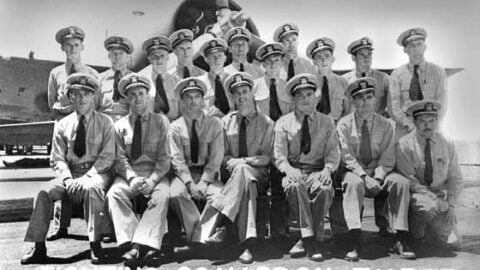
U.S. Navy, Public domain, via Wikimedia Commons
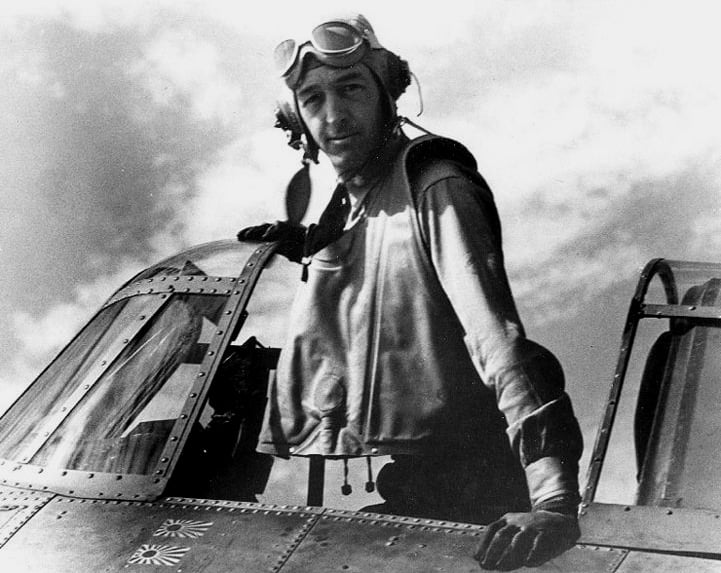
In the early months of World War II, the United States Navy faced a desperate situation in the Pacific. Pilots were stretched thin, aircraft were in short supply, and the Japanese Navy had gained a reputation for skilled aviators and fast fighters. Amid this challenge, one naval aviator stood out for his creativity, resilience, and leadership. Lieutenant Commander John “Jimmy” Thach, a veteran pilot with years of prewar experience, would soon prove that age and physical imperfections were no barriers to skill in aerial combat. On the eve of the Battle of Midway, Thach had 27 F4F Wildcat fighters under his command—but initially, he was the only qualified pilot for the squadron.
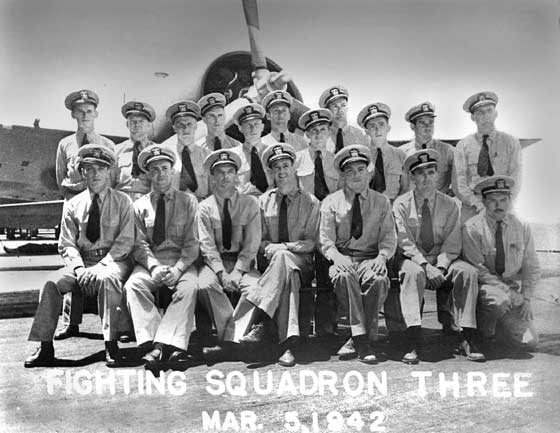
Thach’s situation was unusual. His squadron, Fighting Three, had been nearly dissolved to reinforce another unit at Coral Sea. Despite these setbacks, he remained focused on preparing his squadron for the challenges ahead. With an unmatched mastery of air-to-air gunnery, Thach’s personal experience flying a wide variety of aircraft became a key asset in training his new pilots and readying them for combat.
Early Career and Squadron Leadership
Thach joined Fighting Three in 1939 as the unit’s gunnery officer. His understanding of aerial gunnery allowed him to advise his squadron on precise targeting techniques, which later proved critical during combat. Over the next few years, Thach advanced to operations officer and eventually executive officer under Lieutenant Commander Sid Harvey. When Harvey was detached for overseas duty and later died unexpectedly, Thach assumed command of the squadron as a lieutenant, well before many of his Naval Academy peers reached such positions.
By 1941, Thach had begun studying the Mitsubishi A6M2 Zero, the Japanese fighter that would dominate early battles in the Pacific. Drawing on his experience in sports and combat strategy, he realized that American pilots could not compete in raw speed or maneuverability with the Zero. Instead, he designed a method to neutralize its advantages, focusing on creating opportunities to exploit the enemy’s weaknesses. Thach recognized that even brief moments of accurate firing could determine the outcome of an engagement.
Developing the Thach Weave
Thach’s work culminated in the creation of what would later be known as the Thach Weave, a mutual support tactic designed to protect slower or less maneuverable aircraft from faster opponents. Unlike common myths, Thach developed the strategy before the major battles of 1942, carefully testing and refining it long before it became famous. On his kitchen table in Coronado, California, he sketched angles, firing cones, and relative velocities, turning theoretical maneuvers into practical solutions for combat situations.
The method was simple in concept but difficult to execute in practice. Two American fighters would fly in close formation, turning toward each other in sequence so that one aircraft could always cover the other’s tail. This tactic forced attacking Japanese planes into exposed positions, where American gunners could exploit fleeting opportunities to score hits. Thach’s approach would eventually save hundreds of American lives and influence naval fighter tactics for decades.

Preparing for Midway
In April 1942, Thach faced another challenge: he had 27 aircraft but no pilots. Each plane required careful inspection and test flights to ensure reliability in combat. Thach personally flew all 27 Wildcats, checking for mechanical issues and communicating with maintenance crews about necessary repairs. As replacement pilots slowly arrived from training, Thach adapted quickly, assigning inexperienced lieutenants as wingmen to more experienced ensigns, ensuring a balanced mix of leadership and skill within the squadron.
This period also involved personal hardships. One of Thach’s closest officers, his executive officer Don Lovelace, died in a landing accident aboard the carrier Yorktown just before Midway. Thach had to quickly address the emotional impact on his pilots. He gathered the squadron, reminding them of the importance of focusing on their mission despite the tragedy. His calm and resolute leadership allowed the unit to continue preparing for the coming battle.
Testing and Refining the Squadron
Thach’s leadership extended beyond training; he implemented strict guidelines to build confidence and ensure safety. He emphasized carrier landing experience, telling young pilots that their successful prior landings qualified them for future flights. This mix of encouragement and accountability reinforced discipline and trust, critical components for combat readiness. As more pilots joined Fighting Three, Thach maintained careful oversight of each flight, using his knowledge of gunnery and aircraft handling to ensure operational effectiveness.
By the eve of the Battle of Midway, Thach had a fully operational squadron. Despite having started as the sole pilot capable of flying the 27 aircraft, he had trained, mentored, and integrated a team of inexperienced pilots. This preparation was essential to the squadron’s ability to execute complex maneuvers under fire, including the Thach Weave, which allowed even the youngest pilots to survive against superior Japanese aircraft.
Combat at Midway
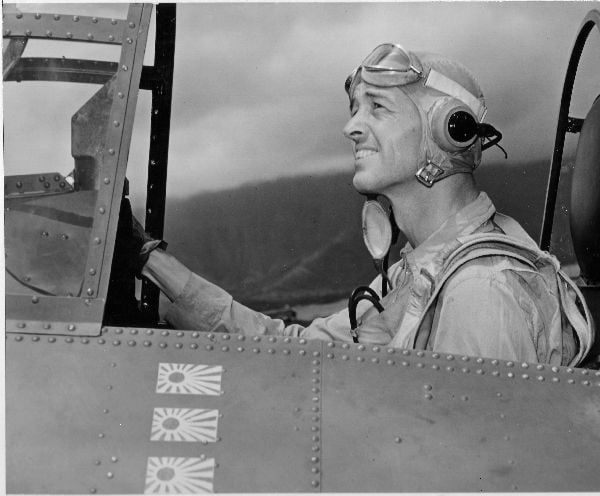
The Battle of Midway tested every aspect of Thach’s leadership and tactical ingenuity. With the threat of Japanese fighters and bombers looming over the fleet, Fighting Three flew missions that demanded precise timing, coordination, and bravery. Thach’s approach emphasized controlled aggression: pilots were taught to lure enemy planes into vulnerable positions and capitalize on the few moments when accurate fire could be delivered.
Despite his age and the physical demands of carrier operations, Thach personally led sorties, demonstrating both skill and courage. His direct involvement ensured that each flight adhered to the tactics he had painstakingly developed. By relying on his experience and observation, he guided new pilots through complex engagements, maintaining cohesion and effectiveness under pressure.
Legacy and Impact
Thach’s contributions during the early Pacific campaigns extended beyond a single battle. His tactics reshaped naval aviation doctrine, emphasizing mutual support, discipline, and strategic use of available advantages. The Thach Weave became a standard formation for carrier-based fighter operations and influenced American air strategy in subsequent conflicts, including the Korean and Vietnam Wars.
Thach’s career is also a story of perseverance and leadership. He overcame the constraints of age, physical challenges, and personnel shortages to transform an underprepared squadron into a highly effective fighting unit. His ability to adapt, innovate, and inspire confidence in younger pilots ensured both the survival of his squadron and the success of the missions they undertook.
Conclusion
On the eve of one of the most significant carrier battles in the Pacific, Lieutenant Commander Jimmy Thach stood ready with a squadron he had rebuilt almost singlehandedly. He had tested every aircraft, trained every pilot, and developed a tactic that would save lives and change aerial combat forever. His story demonstrates that preparation, ingenuity, and leadership can overcome the limits others set, allowing one individual to make an outsized difference in the most challenging circumstances of war.

_on_5_March_1942.jpg)


.jpg)