5 Facts About Japan’s Dominant Early War Fighter
YouTube / Greg's Airplanes and Automobiles
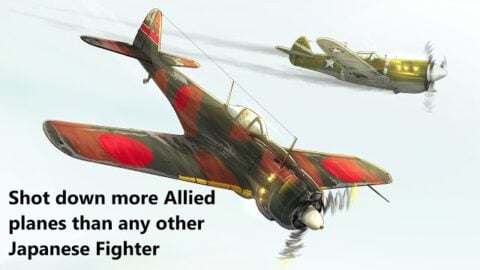
During the early years of World War II, Japan fielded a fighter aircraft that quietly became one of its most effective weapons in the skies. The Nakajima Ki-43, known to the Allies as the “Oscar,” was the backbone of the Imperial Japanese Army Air Force. Although often overshadowed by the famous Mitsubishi A6M Zero, the Ki-43 proved just as deadly in its own right.
5. It Was Japan’s Most Produced Army Fighter
The Nakajima Ki-43 holds the distinction of being the most widely produced Japanese Army fighter of the war. Introduced in 1941, over 5,900 units were built by the end of the conflict. This massive production ensured that the Ki-43 equipped the majority of Japan’s fighter units across multiple theaters, from China to Southeast Asia and the Pacific.
Its widespread use meant that for many Allied pilots, the Ki-43 was not a rare sight but a constant and dangerous presence in the skies.
4. It Was Extremely Maneuverable
One of the Ki-43’s defining strengths was its exceptional agility. Designed with lightweight construction and large wing surfaces, it could outturn almost any Allied fighter it encountered in the early war years. In dogfights, this gave Japanese pilots a significant advantage, allowing them to outmaneuver heavier and less nimble aircraft.
However, this maneuverability came at a cost. The Ki-43 sacrificed armor protection and self-sealing fuel tanks, leaving it highly vulnerable once hit. Despite this weakness, skilled pilots were able to use its agility to devastating effect.
3. It Achieved Remarkable Combat Success
The Ki-43 was responsible for shooting down more Allied aircraft than any other Japanese Army fighter. During the early stages of the war, it dominated the skies over places like Malaya, Burma, and the Dutch East Indies.
Allied pilots initially underestimated the aircraft, often engaging it in turning dogfights where the Ki-43 excelled. This mistake led to heavy losses until new tactics were developed to counter its strengths, such as boom-and-zoom attacks that avoided prolonged turning engagements.
2. It Was Operated by Highly Skilled Pilots
Early in the war, Japan’s pilot training program produced exceptionally skilled aviators. Many Ki-43 pilots were veterans with extensive flight experience, and they knew how to maximize the aircraft’s strengths.
This combination of a highly maneuverable fighter and well-trained pilots made the Ki-43 a formidable opponent. Even when facing more advanced Allied aircraft later in the war, experienced Japanese pilots could still pose a serious threat.
1. It Was Eventually Outclassed
As the war progressed, the Ki-43 began to show its limitations. Newer Allied fighters, such as the P-40 Warhawk and later more advanced designs, brought better speed, firepower, and protection to the battlefield.
The Ki-43’s light armament and lack of durability made it increasingly ineffective against these improved opponents. By the later years of the war, it was largely relegated to secondary roles, including training and even kamikaze missions.
A Fighter in the Shadow of the Zero
Despite its impressive record, the Nakajima Ki-43 remains less well known than the Mitsubishi A6M Zero. This is largely because the Zero served with the Japanese Navy and gained fame in dramatic carrier battles like Pearl Harbor and Midway.
Yet the Ki-43 was just as important, if not more so, in terms of sheer numbers and combat impact. It played a critical role in Japan’s early war successes and left a lasting mark on the history of aerial combat. In many ways, the Ki-43 represents the strengths and weaknesses of Japan’s wartime aviation strategy- brilliant in the early years, but ultimately unable to keep pace with rapidly advancing technology.