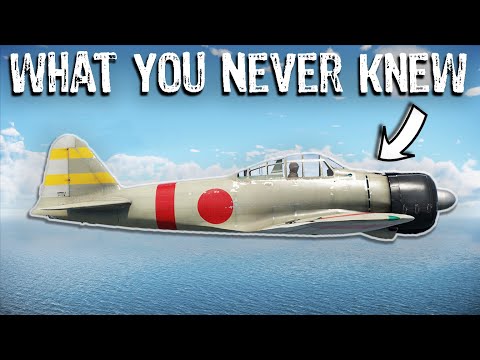
5 Things You Never Knew About the Japanese Zero
YouTube / TJ3 History
The Mitsubishi A6M “Zero” is one of the most iconic fighter aircraft of World War II. Known for its agility and long range, it dominated the skies in the early years of the Pacific War. Yet behind its reputation lies a series of lesser-known facts that reveal just how unique and influential this aircraft truly was. Here are five things you probably never knew about the famous Zero fighter.
5. The Zero’s First Aerial Victory
The Zero’s combat debut came earlier than many people realize. On September 13, 1940, thirteen A6M2 Zeros clashed with around thirty Chinese aircraft over China. These opposing fighters were largely Soviet-supplied Polikarpov I-15 and I-16 planes.
Despite being outnumbered, the Zeros achieved a decisive victory without suffering losses. This first engagement demonstrated the aircraft’s exceptional maneuverability and climb rate. It also served as a warning to Allied forces that Japan had developed a fighter far superior to anything they had yet encountered in the region.
4. A Gamechanger for Aerial Warfare
The Zero fundamentally changed how air combat was fought in the Pacific. At a time when many fighters had to choose between speed, firepower, or maneuverability, the Zero seemed to combine all three.
Its lightweight design allowed for incredible turning ability, giving Japanese pilots a major advantage in dogfights. Early Allied aircraft such as the F4F Wildcat struggled to compete until new tactics were developed. The Zero effectively forced its enemies to rethink aerial combat, introducing hit-and-run strategies rather than traditional turning engagements.
3. It Had an Inefficient Production System
While the Zero was a marvel in the sky, producing it was another story entirely. Unlike the highly streamlined manufacturing systems used by the United States, Japan relied on a more labor-intensive approach.
The Zero required careful craftsmanship, particularly because of its lightweight construction and use of specialized materials. This meant production was slower and less adaptable to mass manufacturing. As the war dragged on, Japan struggled to replace lost aircraft quickly enough, a weakness that became increasingly costly.
2. It’s Forgotten Asset: Incredible Range
One of the Zero’s most overlooked strengths was its extraordinary range. Equipped with drop tanks, it could travel far greater distances than most fighters of its time.
This capability allowed Japanese forces to launch surprise attacks across vast stretches of the Pacific. It played a crucial role in early operations, including long-range bomber escorts and carrier-based strikes. Allied commanders were often caught off guard, underestimating just how far the Zero could reach.
1. It Nearly Fell into U.S. Hands
Perhaps one of the most fascinating stories involves how close the Zero came to being captured early in the war. In several instances, damaged Zeros made emergency landings in remote areas.
The most famous case occurred in 1942 with the capture of an intact Zero in the Aleutian Islands, later known as the Akutan Zero. Once recovered and tested by American engineers, it provided critical insights into the aircraft’s strengths and weaknesses. This intelligence helped Allied pilots develop effective countermeasures, ultimately turning the tide in aerial combat against Japan.