New Launcher Spotted on USS Carl M. Levin Raises Questions
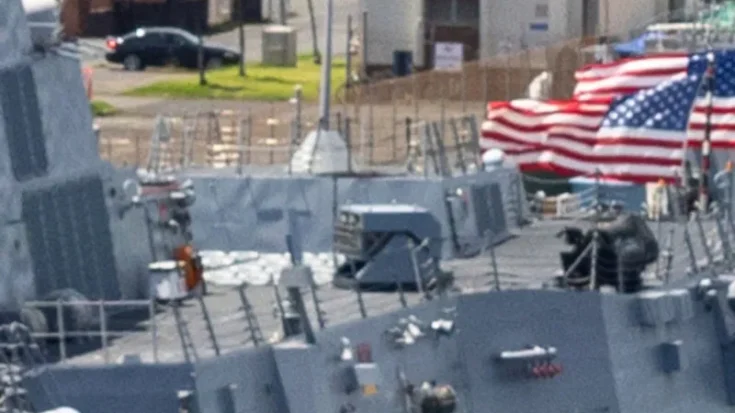
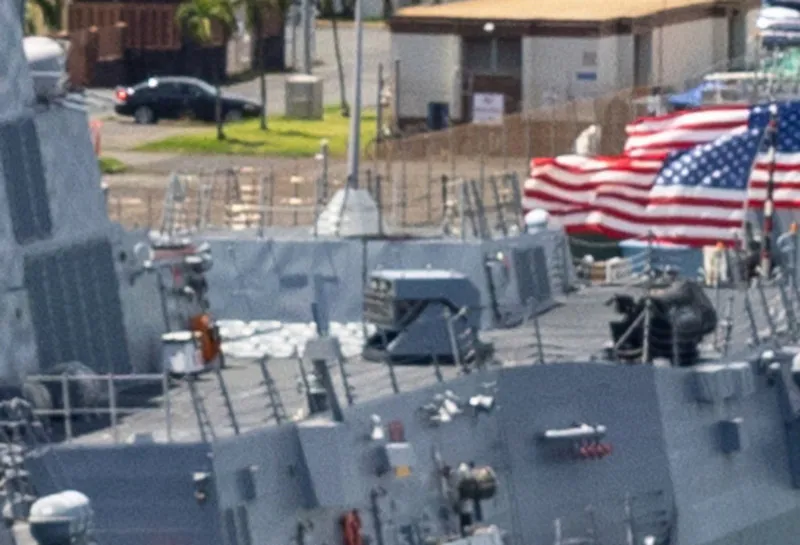
A previously unseen launcher has appeared aboard the Arleigh Burke class destroyer USS Carl M. Levin, signaling another step in the U.S. Navy’s effort to adapt to evolving threats at sea. The system was identified in a U.S. Marine Corps image taken at Pearl Harbor in late March, showing the launcher mounted near the ship’s aft section.
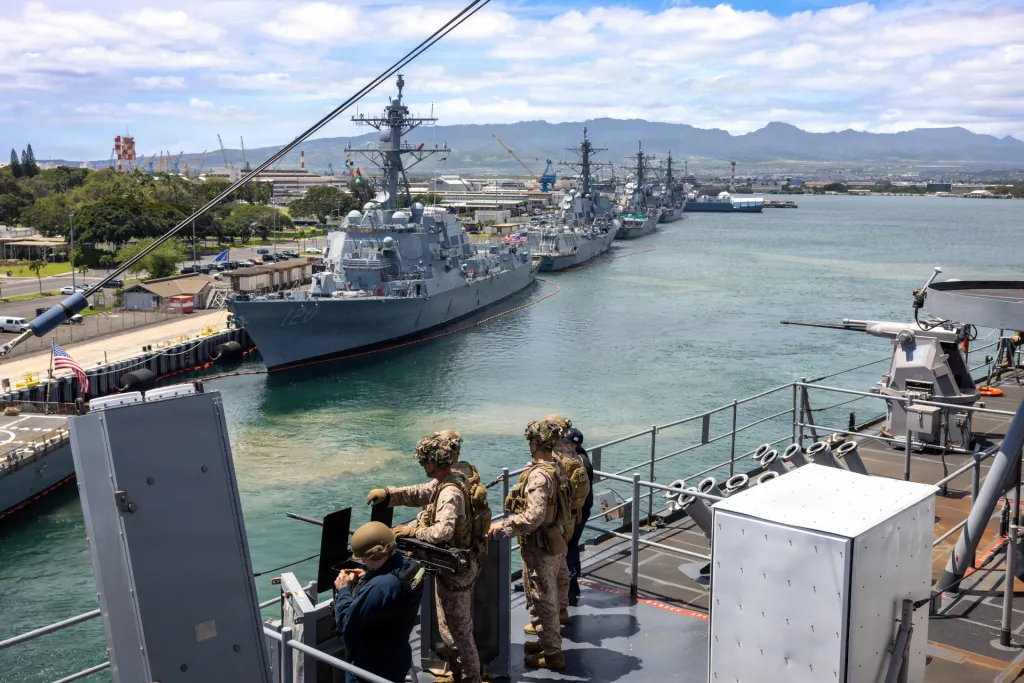
Positioned between the torpedo tubes and the rear vertical launch system, the installation features multiple cells and appears fixed in place. Its exact function has not been disclosed, and the Navy has yet to provide details.
Focus on Counter-Drone Defense
One likely role for the new launcher is countering unmanned aerial threats. Recent operations, particularly in the Red Sea and surrounding regions, have highlighted the growing danger posed by drones to surface ships. In response, the Navy has been testing lower-cost interceptors that can engage these targets without relying solely on larger, more expensive missiles.
USS Carl M. Levin (DDG 120) got a new Hellfire/JAGM launcher improving C-UAS capability.
はてなブログに投稿しました
米海軍DDGへのC-UAS用Hellfire/JAGM発射機搭載 – OSINFO https://t.co/R8hyf4B6L6#はてなブログ— おるか (@hone_hone_bone_) April 8, 2026
Similar launchers for Coyote interceptors were previously installed on other destroyers, including USS Bainbridge and USS Winston S. Churchill. The system on Carl M. Levin appears in a comparable location, suggesting a related purpose, though its design differs.
Another possibility is the White Spike interceptor, currently under evaluation through a Pentagon program focused on countering unmanned systems. Its launcher shares visual similarities with the one now observed, though no confirmation has been made.
More Than One Possible Role
The launcher may not be limited to interceptors. The Navy has been exploring systems capable of deploying drones, decoys, and other countermeasures from surface ships. These could include loitering munitions or electronic decoys designed to mislead incoming missiles.
There is also precedent for adapting existing weapons. Concepts have been proposed to integrate systems like the Joint Air-to-Ground Missile into shipboard roles, including defense against drones and small surface threats.
A Pattern of Incremental Upgrades
The Arleigh Burke class has long served as a testing ground for new capabilities. The Navy often introduces systems on a limited number of ships before expanding them across the fleet. This approach allows rapid adaptation without committing to large-scale changes too early.
With these destroyers expected to remain central to naval operations for years to come, continued upgrades are essential. The emergence of this new launcher reflects an ongoing effort to expand defensive options and respond to modern threats.