



How a 7-Ton Warbird Managed to Out-Dive All German Aircraft in WWII
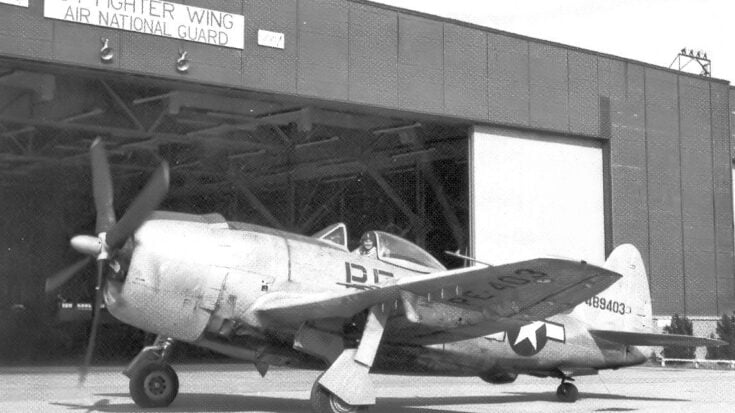
United States Air Force, Public domain, via Wikimedia Commons
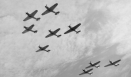
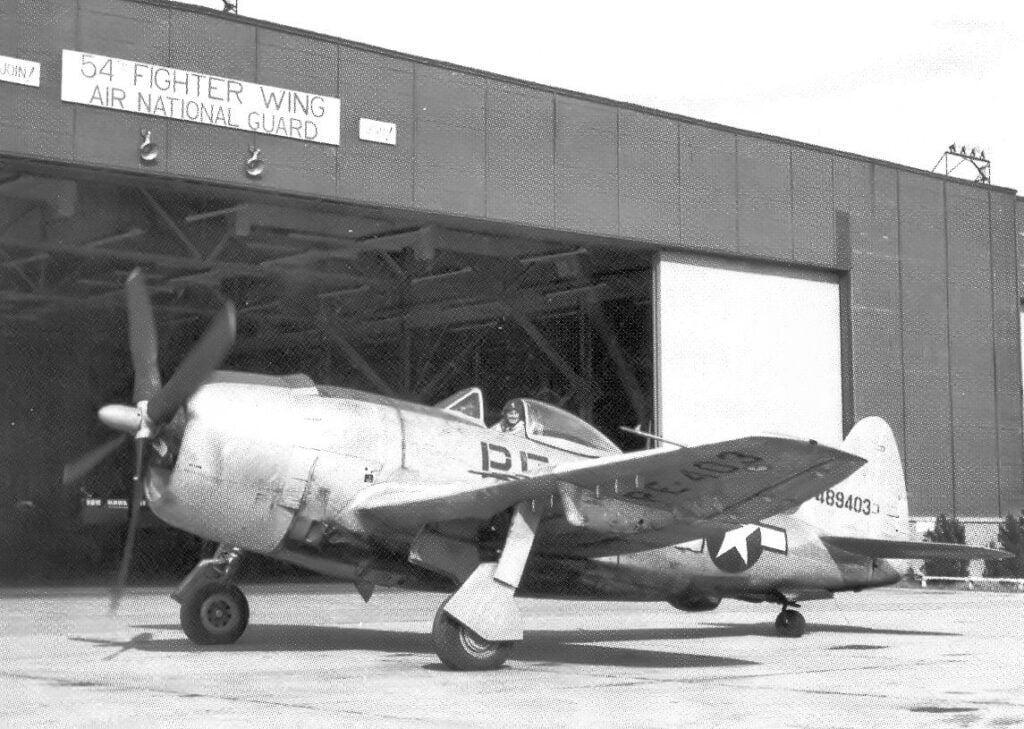
When American pilots first arrived in England in 1943, they heard laughter at their expense. German radio operators mocked the aircraft openly, and even some Allied crews called it the “7-ton milk jug.” At first glance, the P-47 Thunderbolt seemed like it had no business flying. Large, round, and heavy, it looked more like a flying oil drum than a fighter. Observers assumed it could not climb quickly or compete with German fighters at altitude. For months, the German forces dismissed it as slow and cumbersome, confident it posed little threat.
Reports soon began to challenge that perception. German pilots noticed that P-47s were appearing above them at altitudes they were never thought to reach. Some speculated the Americans had secretly redesigned the plane. The reality was simpler but startling: the Thunderbolt’s abilities had been underestimated. In one encounter, a group of German fighters dove on a formation, expecting easy prey. Instead, a single Thunderbolt broke away and began climbing at a rate that seemed impossible for such a large aircraft. Within moments, it reached levels the German planes struggled to attain.
Design Focused on Survival
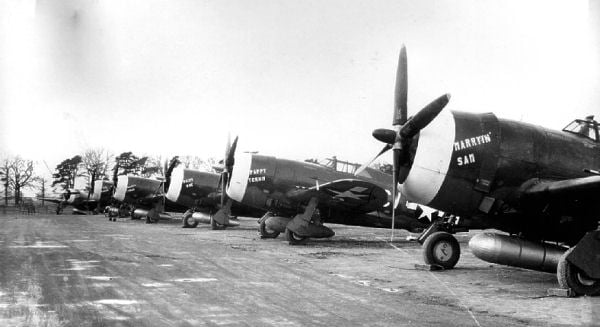
The Thunderbolt was not designed to be elegant. From the start, it prioritized survival over appearance. Early American engineers questioned the concept of such a heavy fighter with a large radial engine. It did not fit the image of the nimble dogfighters common in early air battles. Yet the US Army Air Forces recognized that the war was changing. Low-altitude dogfights were becoming less relevant. What mattered now was the ability to escort bombers, survive anti-aircraft fire, climb to high altitudes, dive quickly, and strike with force.
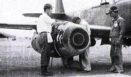
At its core, the Thunderbolt was built around the massive Pratt & Whitney R-2800 engine, capable of over 2,000 horsepower. But the engine alone was not the key to its performance. Attached to it was a turbo-supercharger system that occupied much of the aircraft’s underside. This design allowed the P-47 to compress thin, high-altitude air and maintain engine power where other fighters struggled. While German planes faltered in the thin atmosphere, the Thunderbolt retained its strength, giving it an advantage no one expected.
Learning to Use Its Strength
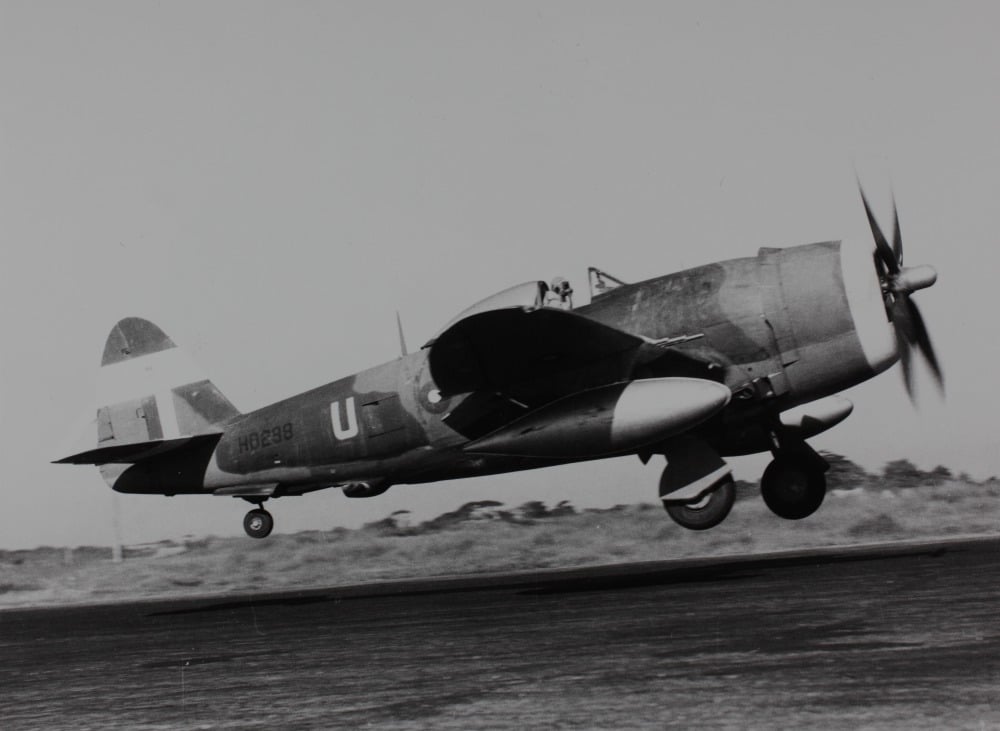
Early American pilots did not initially exploit the Thunderbolt’s advantages. They treated it like previous, lighter fighters, attempting traditional climbs and turns. In these encounters, the German pilots saw exactly what they expected: a slow, heavy plane struggling to compete. The reputation of the P-47 as a lumbering aircraft was born during these early missions. Yet beneath the apparent weakness, the aircraft held potential that would soon redefine aerial combat.
The turning point came during a routine bomber escort mission. Squadron commander Hubert Zimki realized the P-47’s true strength lay in vertical combat. The Thunderbolt was not designed for horizontal dogfights but for climbing rapidly and diving with unmatched speed. On that mission, Zimki instructed his squadron to ascend to altitudes above the German fighters. Pilots hesitated at first, knowing the enemy usually held the high ground. However, once they reached extreme altitudes, the P-47s were able to meet and even surpass their opponents in speed and positioning.
Diving and Striking
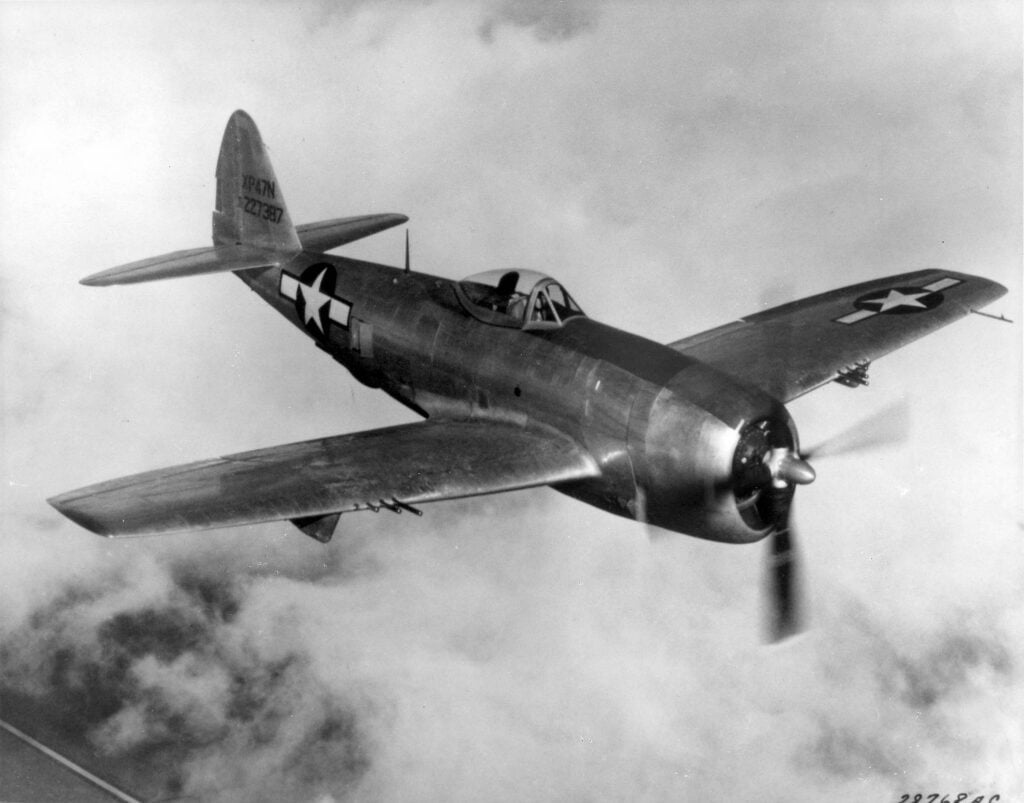
As the Thunderbolts rolled over and dove, they became nearly unstoppable. The heavy frame, once seen as a liability, provided momentum and stability. German fighters attempting to follow were hampered by engines losing power and airframes unable to withstand the descent. The P-47s, with responsive controls and powerful engines, could strike and recover efficiently. Their eight .50 caliber machine guns added decisive force, turning encounters into overwhelming displays of firepower.
The tactical formula of high-altitude climbing, fast diving, and heavy armament left German pilots disoriented. While they could outmaneuver the P-47 in short bursts, they could not match its ability to dictate the fight’s direction. Once American pilots understood this, they were able to control engagements and protect bomber formations effectively. On one critical mission in late 1944, the Thunderbolts awaited German fighters at 30,000 feet. By diving into the enemy formations, they dispersed opponents in minutes, ensuring the bombers reached their target without loss.
Impact in Combat
This combination of altitude capability, diving speed, and firepower fundamentally altered the air war over Europe. German pilots were forced to reconsider every assumption about Allied air power. The P-47, once mocked for its size and weight, became an aircraft capable of surviving extreme conditions while dominating the vertical plane of combat. Pilots and bomber crews alike recognized the value of its performance, often recalling with disbelief how it achieved the seemingly impossible.
Decades later, veterans remembered that day not as a moment of fame, but as proof of the aircraft’s resilience and the pilots’ ability to use its advantages. Restored P-47s today serve as quiet reminders of a fighter built like a tank, capable of climbing, diving, and delivering unmatched firepower when everything was on the line.