

The A-10 Warthog Is Hunting Iran’s Fast Boats in the Strait of Hormuz
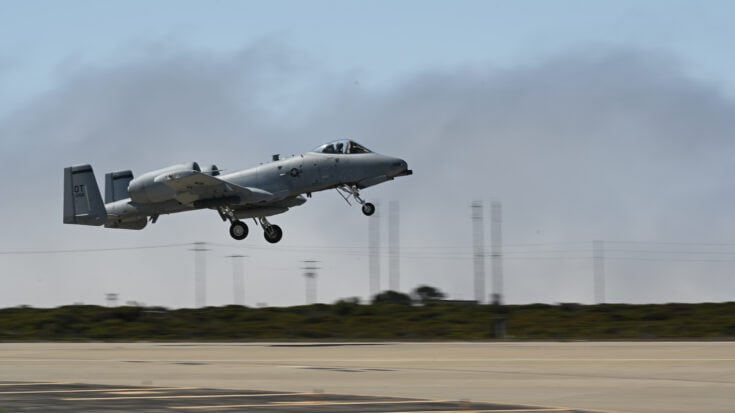
The A-10 Thunderbolt II is now conducting maritime interdiction operations in the Strait of Hormuz, targeting Islamic Revolutionary Guard Corps fast-attack watercraft as part of Operation Epic Fury. Chairman of the Joint Chiefs of Staff General Dan Caine confirmed the expanded role at a Pentagon briefing Thursday, stating the Warthog is hunting and killing fast-attack craft across the operation’s southern flank.
US forces have now destroyed more than 120 Iranian naval vessels and 44 mine-laying craft since operations began. CENTCOM commander Admiral Brad Cooper stated the naval campaign is ongoing and that US forces will continue depleting Iran’s ability to threaten freedom of navigation in and around the strait, through which roughly 20 percent of the world’s daily oil supply transits.
Why the A-10 for This Mission
The A-10’s role in maritime interdiction surprises many observers who associate the aircraft exclusively with close air support over land. That association is misleading. Warthog pilots have trained for decades specifically for the scenario of hunting Iranian fast boats in and around the Strait of Hormuz. Weeks before the current conflict began the US military released imagery of A-10s training alongside USS Santa Barbara, an Independence-class Littoral Combat Ship, in the Persian Gulf, an exercise that specifically highlighted the threat posed by Iranian naval mines and the Warthog’s role in protecting minesweeping vessels.

The A-10’s characteristics make it well suited to the confined littoral environment of the strait. Its GAU-8/A Avenger 30mm cannon fires at 3,900 rounds per minute and is effective against small surface craft. AGM-65 Maverick missiles and APKWS laser-guided rockets extend its engagement options. Most critically, the aircraft can loiter for hours over a target area, maintaining persistent overwatch that faster platforms cannot replicate. Small fast boats are inherently difficult to find and fix. An aircraft that can remain overhead and wait is a different kind of problem for dispersed IRGC naval forces than a strike jet that passes through quickly.
The titanium-armored cockpit and redundant flight systems allow the A-10 to absorb significant damage and continue operating in contested low-altitude environments where other aircraft would be grounded.
The Threat Being Addressed
Iran has invested heavily in fast-boat capabilities for decades. The IRGC Navy operates hundreds of small craft, some armed with short-range anti-ship missiles, artillery rockets, and mine-laying equipment. These vessels don’t require large ports and can disperse across the strait’s geography in ways that make them resistant to conventional naval targeting. They represent the primary mechanism through which Iran has been disrupting commercial shipping and maintaining its threat to the strait’s navigability.

General Caine also confirmed that AH-64 Apache attack helicopters are now operating in a similar role alongside the A-10s, with allied AH-64s additionally being used to intercept incoming Iranian drones across the region.
The Aircraft’s Future
The A-10’s deployment in Epic Fury comes as Congress moved to protect the platform from Air Force retirement plans. The National Defense Authorization Act for Fiscal Year 2026 blocked the service’s proposal to divest the remaining fleet, mandating a minimum inventory of 103 aircraft through September 30 2026. The Air Force has sought to retire the Warthog for years. The aircraft is currently hunting IRGC boats in one of the world’s most strategically significant waterways.







