The B-21 Raider Has Been Photographed From Above for the First Time
CREDITS: USAF
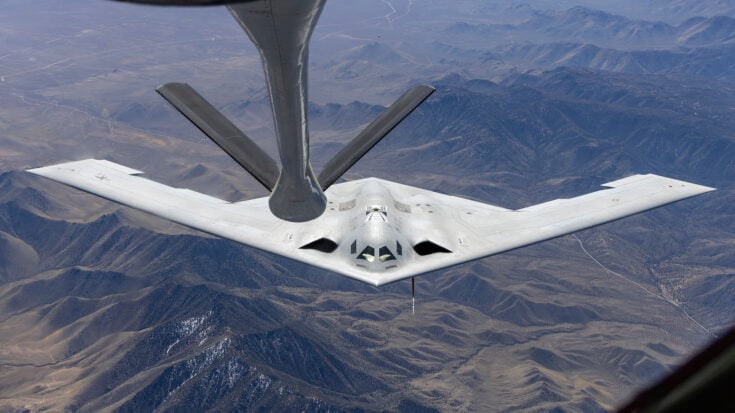
The US Air Force released photographs on April 14 showing the B-21 Raider conducting aerial refueling tests at Edwards Air Force Base, including the first overhead image ever published of the aircraft. The photos were taken during testing with a KC-135 tanker and show the bomber’s upper surface in detail for the first time, revealing features that had never been seen publicly including the exhaust configuration, air inlets, and dorsal refueling receptacle.
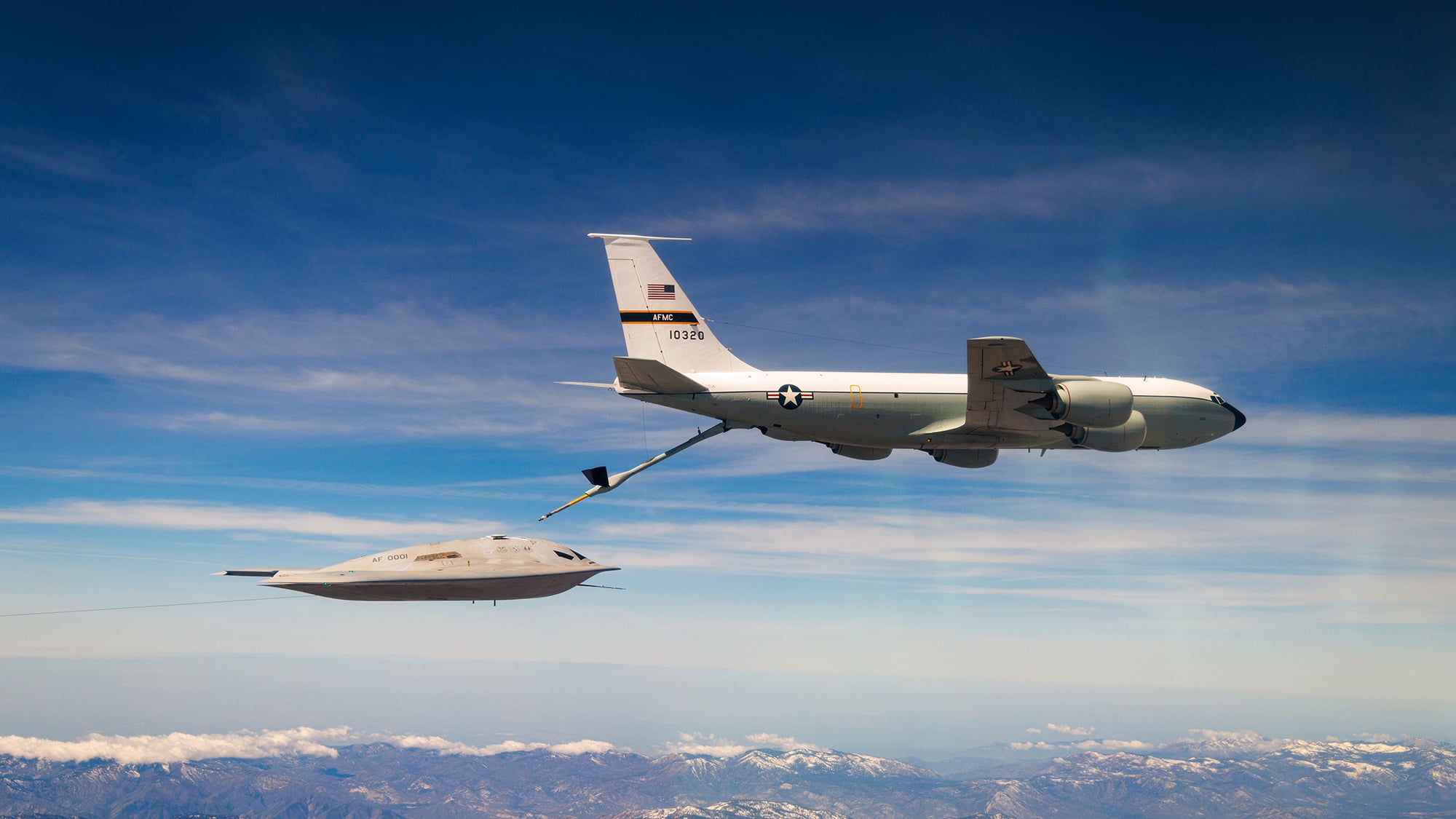
What the New Images Show
The overhead photograph provides the first clear look at several sensitive design elements of America’s next-generation stealth bomber. The B-21’s deeply blended air inlets, one of the most critical components of its low-observable design, are visible along with the chevron-shaped exhausts positioned well forward of the aircraft’s trailing edge. That forward positioning is designed to reduce the aircraft’s infrared signature by keeping hot exhaust gases away from the rear edge of the airframe. Whether the image has been altered to conceal specific exhaust details has not been confirmed, but the overall configuration is now public.
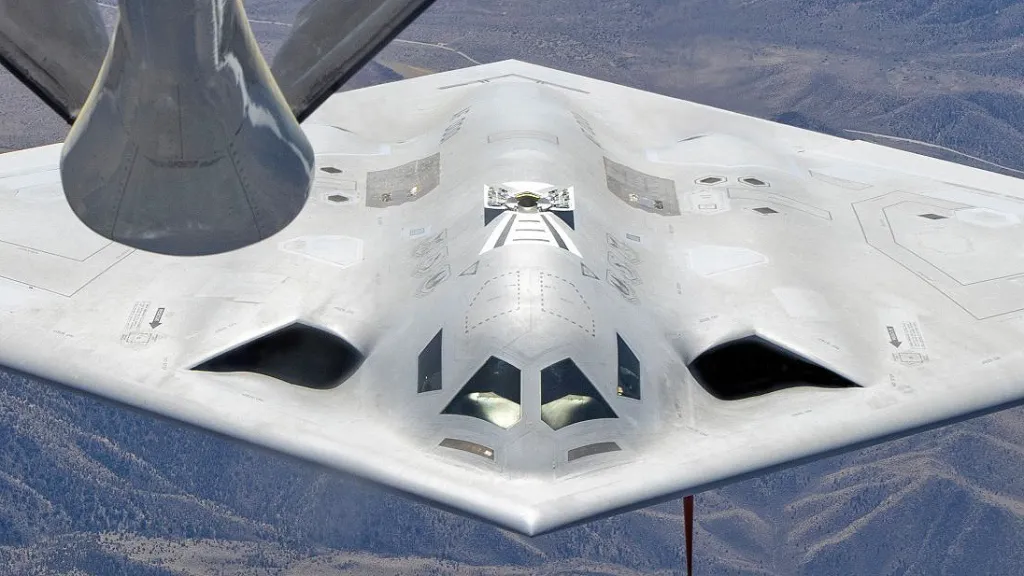
The dorsal aerial refueling receptacle visible in the photos uses a two-piece clamshell door arrangement rather than the rotating receptacle found on the B-2 Spirit. The cockpit windows are notably small, a design choice that appears driven by the need to minimize the aircraft’s forward radar cross-section while retaining sufficient visibility for aerial refueling operations. Walkway markings and air data ports are visible around the cockpit area.
The aircraft involved in the refueling test was the first prototype, nicknamed Cerberus, identifiable by the orange instrumentation probe visible in the imagery. The second prototype, delivered to Edwards in September 2025, does not carry that probe. The tanker supporting the test was Edwards’ specialized test tanker tail number 61-0320.
Performance and Production
The Air Force described the B-21 as the most fuel-efficient bomber ever built, consuming a fraction of the fuel required by legacy aircraft. That efficiency directly reduces the demand placed on the tanker fleet during operations, giving commanders more flexibility in force packaging. The B-21 is smaller than the B-2 and likely uses two engines rather than four, but carries more internal fuel to achieve greater range. Its estimated wingspan is between 145 and 155 feet.
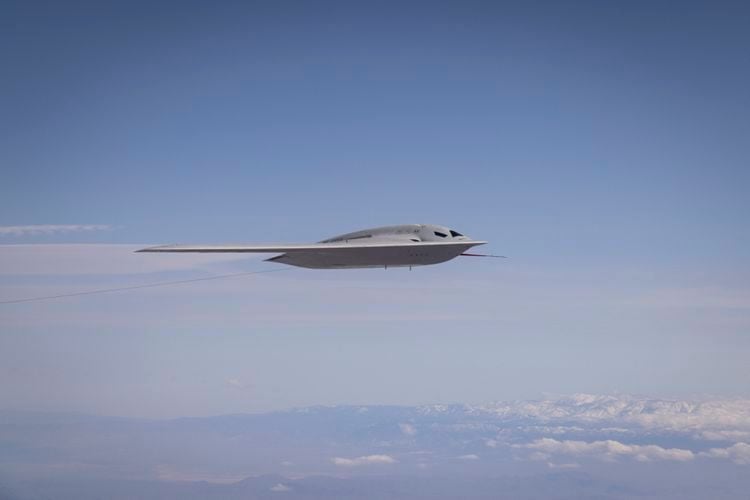
The first aerial refueling mission lasted five hours and 33 minutes over eastern California and was observed by photographers on March 10 before the official release in April.
Northrop Grumman stated that more than $5 billion has been invested in digital technologies and manufacturing infrastructure for the program. Final assembly takes place at the company’s Palmdale facility, the same plant that built the B-2. The program is currently described as on schedule and on budget.
The first operational B-21 is expected to be delivered to Ellsworth Air Force Base in South Dakota in 2027, where infrastructure work including runway expansion is already underway.