Could the P-61 Black Widow Be the Greatest Fighter Ever Built?
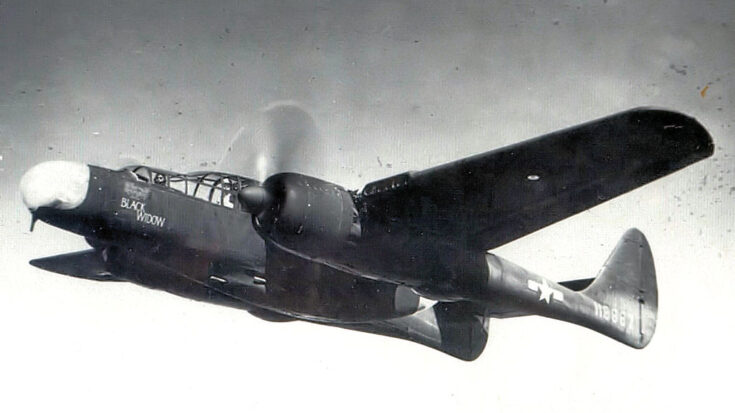
United States Army Air Forces, Public domain, via Wikimedia Commons
During the Second World War, air combat did not stop when the sun went down. Bombers crossed dark skies, cities burned at night, and defending forces struggled to respond. Out of this need came the Northrop P-61 Black Widow, the first American aircraft designed from the start to fight in darkness and poor weather. It was built for a specific role, and it arrived late, yet it left a lasting mark on air warfare. Its story reflects how technology and urgency shaped aircraft design under pressure during one of history’s most demanding periods of global conflict.
America’s First True Night Fighter
The P-61 was created as a dedicated night-fighter at a time when most aircraft were adapted from daylight designs. Earlier wars had seen limited night operations, but large-scale nighttime bombing forced planners to think differently. The United States Army Air Forces needed an aircraft that could find, track, and destroy targets it could not see with the human eye.
Northrop answered this call with a large twin-engine aircraft unlike anything else in American service. Only 706 examples were built, and it entered combat in the final year of the war. Even so, it served in Europe, the Pacific, the China-Burma-India region, and the Mediterranean, proving it could operate across very different environments.
Radar and Design
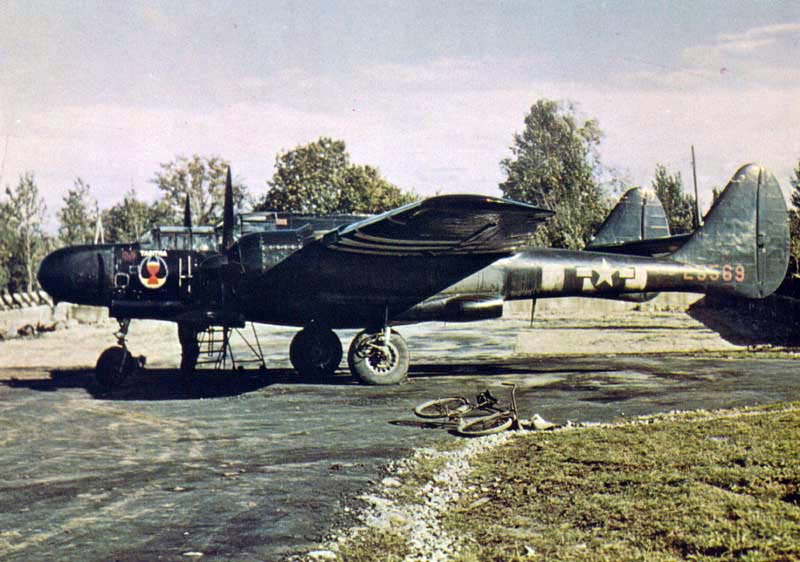
The Black Widow’s most important feature was its onboard radar. The SCR-720 radar system sat in the aircraft’s nose and allowed crews to locate enemy aircraft in total darkness. Developing this system required enormous effort, with thousands of hours spent refining electronics that were still new to aviation.
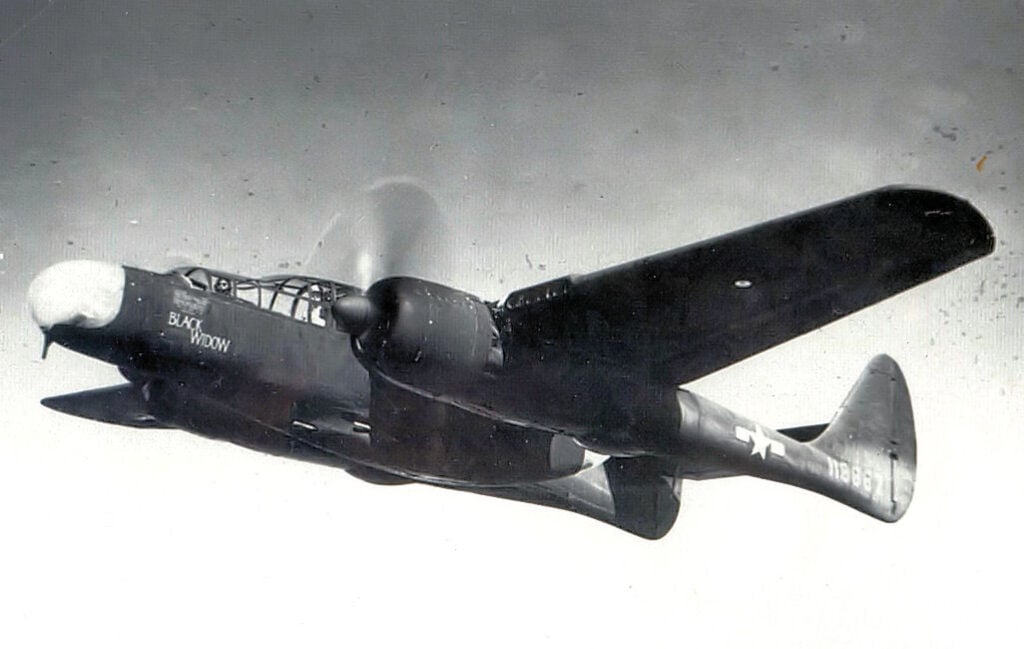
Its twin-boom layout and central crew gondola gave it a shape similar to other twin-engine aircraft of the era, including some German and American designs. Unlike those aircraft, however, the P-61 was built around its radar. This allowed it to approach targets quietly and strike without warning.
Paint, Stealth, and Early Combat
Early P-61s were painted in standard olive drab and gray. Tests soon showed that a black finish applied directly to bare metal reduced visibility under searchlights. From early 1944 onward, Black Widows were painted jet black, and many already in service were repainted.
The aircraft scored its first confirmed victory on July 6, 1944, when a P-61 destroyed a Japanese G4M bomber in the Central Pacific. From that point on, it proved effective against enemy aircraft flying at night, often intercepting them before they reached their targets.
Crew and Firepower
Unlike most fighters, the P-61 carried a crew of three. The pilot flew the aircraft, a radar operator guided interceptions, and a gunner managed the upper turret when fitted. This teamwork allowed the aircraft to function as a complete night-fighting system rather than a single-seat interceptor.
Its weapons were equally serious. Four 20 mm cannons were mounted in the lower fuselage, while four .50 caliber machine guns sat in a dorsal turret. This heavy armament allowed the Black Widow to destroy bombers quickly once contact was made.
Combat Record and Final Victories
During its wartime service, the P-61 was credited with 127 enemy aircraft destroyed. This total included 18 V-1 flying bombs, which were difficult targets due to their speed and small size. Night interception of these weapons helped reduce damage to Allied cities.
One aircraft, Lady in the Dark, became especially well known. Flown by Captain Lee Kendall, it achieved the final two aerial victories of the war. One occurred on the last night of fighting, and another almost a day after official hostilities ended, when two enemy aircraft crashed while being pursued.
Postwar Service and Survivors
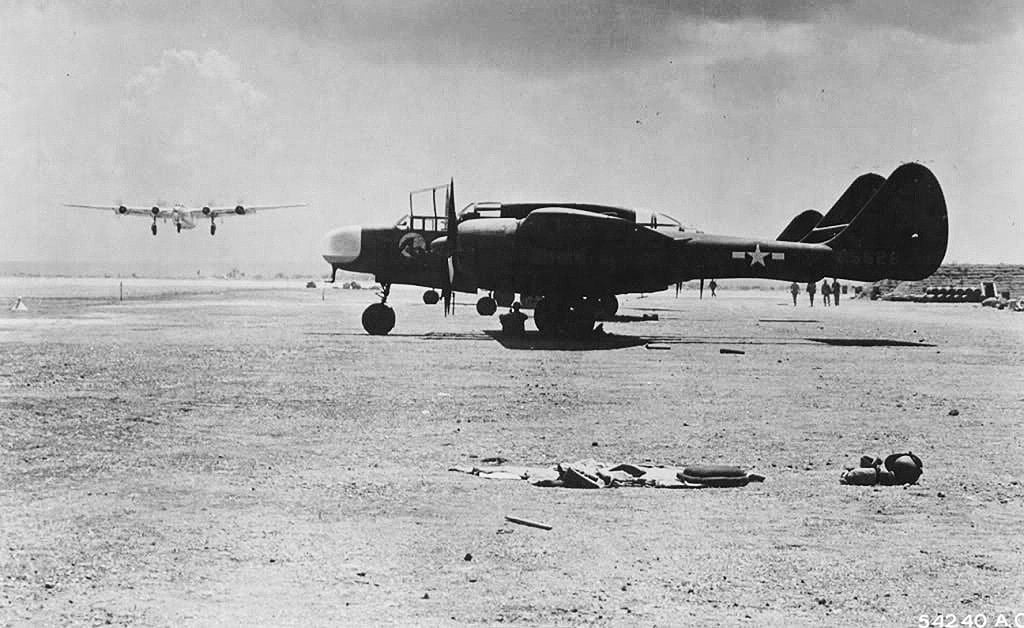
After the war, the P-61 was redesignated and continued service as an all-weather interceptor. It remained in use with American air defense units until the early 1950s, finally retiring in 1954 as jet aircraft took over its role.
Today, only four Black Widows survive. Three are preserved in museums in the United States, while one is displayed in Beijing. These aircraft stand as reminders of a fighter designed for darkness, built to meet a specific need, and remembered for how it changed the way wars were fought at night across several major theaters worldwide.