Why German Soldiers Found Americans More Dangerous Than Professional British Troops
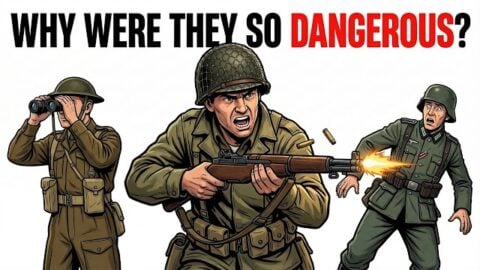
YouTube / WW2 Explained
During World War II, many German soldiers developed an unexpected perception: American forces were often seen as more dangerous than the highly trained and disciplined British Army. This wasn’t a dismissal of British professionalism. The British were respected for their structure, experience, and tactical discipline. However, on the chaotic and rapidly changing battlefield, American troops presented a different kind of threat, one that was harder to predict and counter.
Unpredictability and Aggressive Tactics
One of the key reasons behind this perception was the aggressive and often unpredictable nature of American combat tactics. German units frequently reported that U.S. soldiers did not always follow conventional patterns of engagement. Instead of withdrawing under pressure or waiting for reinforcements, American troops often continued advancing, even in disorganized situations.
This willingness to push forward, regardless of setbacks, made them difficult to anticipate. German commanders, trained to exploit patterns and weaknesses, found it challenging to respond effectively to an enemy that did not behave as expected.
Decentralized Leadership and Initiative
Another major factor was the U.S. Army’s emphasis on decentralized leadership. Junior officers and even non-commissioned officers were encouraged to make decisions independently when situations changed. If a commanding officer was lost, smaller units could continue operating effectively without waiting for orders.
German after-action reports often highlighted this flexibility as a serious concern. While German doctrine also valued initiative, American units seemed especially capable of adapting on the fly, turning chaotic situations into opportunities rather than setbacks.
Superior Firepower at the Squad Level
American infantry units also benefited from significant firepower advantages. The widespread use of the M1 Garand, a semi-automatic rifle, allowed U.S. soldiers to fire more rapidly than their German counterparts, many of whom relied on bolt-action rifles.
This increased rate of fire gave American squads a decisive edge in close combat. Combined with heavy machine guns, mortars, and readily available support weapons, U.S. units could deliver intense bursts of firepower that overwhelmed enemy positions quickly.
Devastating Artillery and Air Support
Perhaps the most feared aspect of American combat capability was its artillery. U.S. forces developed highly efficient coordination systems, including the Time on Target technique, which allowed multiple artillery units to strike simultaneously with devastating precision.
In addition, close air support from fighter-bombers added another layer of pressure. German troops often found themselves under constant threat from above, with little time to regroup or maneuver. These combined arms tactics made American assaults particularly difficult to withstand.
The Power of Industrial Logistics
Behind the fighting force was an immense industrial and logistical system. The United States could produce and deliver vast quantities of weapons, ammunition, vehicles, and supplies. This ensured that American troops remained well-equipped, mobile, and continuously reinforced.
German soldiers recognized that they were not just fighting individual units, but an entire system that could sustain prolonged and relentless operations.
A New Kind of Warfare
Ultimately, the fear of American forces was rooted in a combination of factors: flexibility, firepower, innovation, and logistical strength. While British troops embodied professionalism and discipline, American forces represented a rapidly evolving style of warfare that was dynamic, resource rich, and difficult to counter.
This perception was not about superiority, but about adaptation. On the battlefields of Europe, the U.S. Army demonstrated how modern warfare was changing and why it left such a lasting impression on those who faced it.