The Story of a P-47 Pilot’s Miraculous Escape — Thanks to Two Enemy Luftwaffe Pilots
Sporty's Aviation Gifts / YouTube
Into the Winter Sky
In December 1944, the air war over Western Europe had reached a brutal stage. Allied ground forces were under pressure as German units launched their last major offensive through the Ardennes. To slow armored columns and protect American troops, fighter pilots were sent on dangerous low-level missions where survival often depended on seconds and luck.
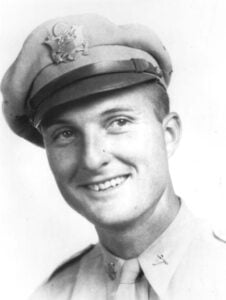
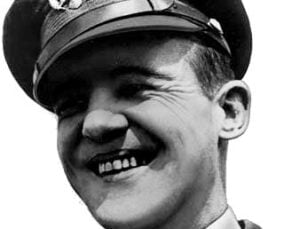
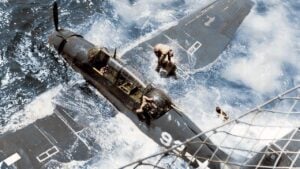
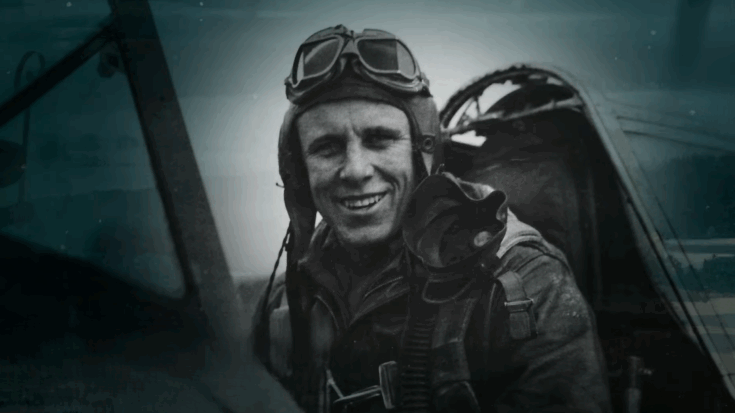
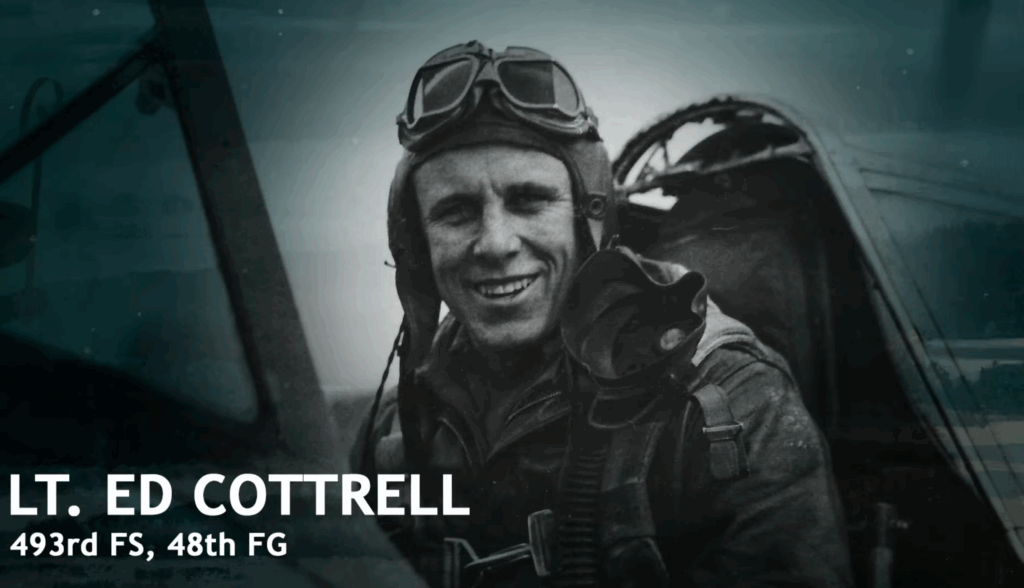
One of those pilots was Second Lieutenant Edwin “Ed” Catrell of the 493rd Fighter Squadron, 48th Fighter Group, part of the Ninth Air Force. Flying a P-47 Thunderbolt named R Mary, Catrell had already learned that ground-attack work was unforgiving. Anti-aircraft fire was often more deadly than enemy fighters, and mistakes left little room for recovery.
The Grim Reapers’ Task
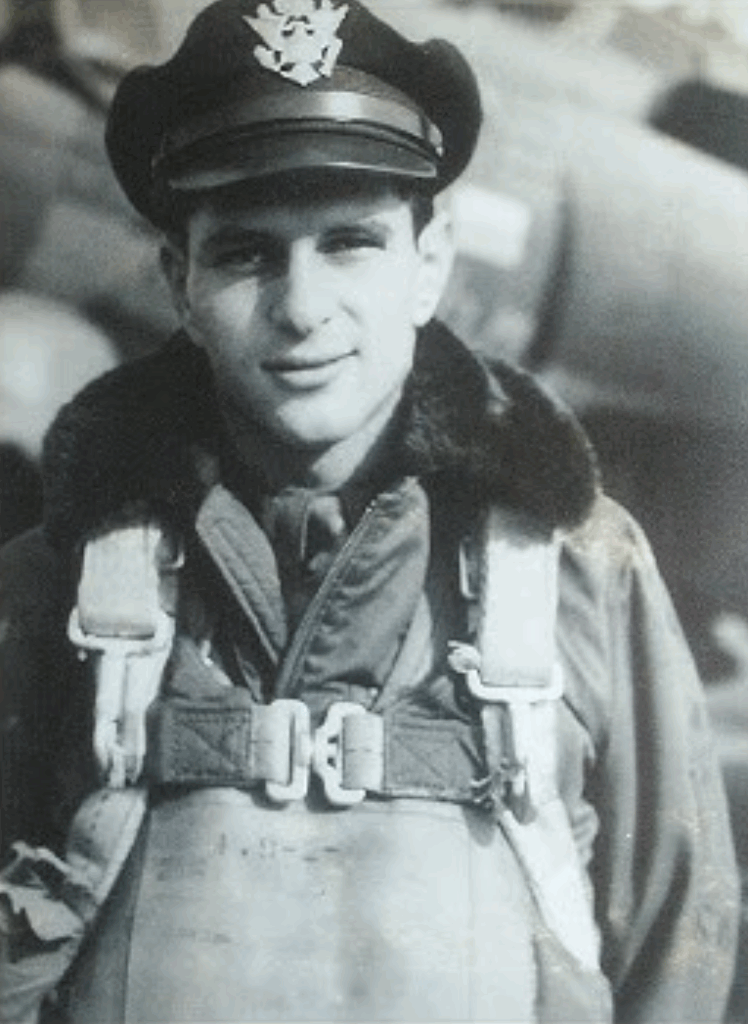
The 493rd Squadron, known as the Grim Reapers, specialized in dive-bombing and strafing. By mid-December, they were flying repeated missions in support of American forces in Belgium. On December 17, twelve P-47s were sent out to attack bridges and moving ground targets believed to support advancing German armor.
The formation was split into groups carrying bombs and top cover. Catrell flew in the lower strike element, assigned to hit targets of opportunity after the bridge attack. The mission followed standard procedure at first, with bombs released near rail lines and roads, but the danger increased once the Thunderbolts dropped to lower altitude.
Ambush Over Belgium
As Catrell and his flight searched for targets, they spotted a column of German tanks near wooded terrain. The attack began immediately. As Catrell pulled up from his run, he saw a Messerschmitt Bf 109 closing in from his right. At that moment, more enemy fighters appeared. Over twenty German aircraft from JG 27 swept down in a coordinated ambush.
Catrell was hit just as he climbed, leaving him slow and exposed. A 20 mm cannon round struck his engine, sending oil across the windshield. Visibility vanished, and power dropped at once. Forced to open the canopy to see, Catrell felt the engine barely running as his aircraft lost altitude.
Losses in the Fight
While Catrell struggled to control his damaged fighter, the air battle continued around him. His flight leader, Lieutenant Jim Watson, was last seen turning back toward the fight and never returned. Another pilot, Lieutenant Arthur Summers, who had been clearly shaken before takeoff, was also lost that day.
With radio contact gone and oil covering the aircraft, Catrell turned west, following standard orders for damaged pilots. He flew low, just above stalling speed, knowing he could not bail out at that height. Every mile back toward friendly lines felt uncertain.
An Unlikely Escort
As Catrell limped along at roughly 130 miles per hour, two Bf 109s appeared, one on each side. Expecting gunfire, he braced for the end. Instead, the fighters slid into formation beside his crippled Thunderbolt. The pilots were young, close enough for Catrell to see their faces.
The German pilots stayed with him as he crossed toward Allied territory. Near the bomb line, one pilot raised a hand, forming a circle with his fingers, then both aircraft peeled away and headed east. No shots were fired. Catrell was left alone, stunned but alive.
A Silent Landing
Guided by radio from friendly units, Catrell reached a nearby airfield. Just as he crossed the runway, the engine seized completely. He landed without power and rolled to a stop. Ground crews later found that eight of the Thunderbolt’s eighteen cylinders were destroyed, yet the engine had kept running long enough to save him.
When Catrell told others what had happened, the story was met with doubt. Without witnesses, his account of the two German pilots was dismissed, and a recommended award was never approved. The same mission had already cost the squadron dearly, and disbelief came easily.
Aftermath of Mercy
Only later did records confirm the scale of losses that day. Lieutenant Watson was killed in combat. Lieutenant Summers survived his bailout but was likely killed on the ground days later. The squadron moved on quickly, as it soon faced urgent missions supporting the defense of Bastogne.
Catrell never forgot the pilots who spared him. He believed they acted out of basic fairness learned long before the war. In a sky filled with violence, their brief decision allowed one damaged fighter and one shaken pilot to return home.