

The Fighter That Decimated Germany’s Superweapons: Hawker Tempest
YouTube / IHYLS
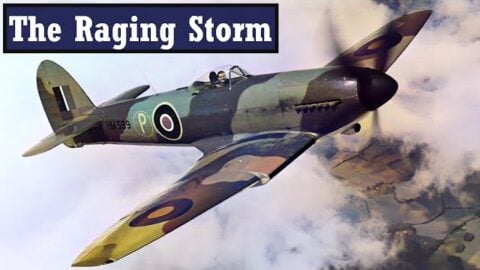
Often overshadowed by the legendary Spitfire, the Hawker Tempest is one of Britain’s most formidable fighters of the Second World War. Developed in the war’s later years, the Tempest emerged from Hawker’s long and sometimes troubled line of combat aircraft, tracing its roots back to the Hurricane, through the Tornado, and the Typhoon. While the Typhoon proved devastating at low altitudes, its early development problems and shortcomings at high altitudes prompted engineers to seek something better.
Originally conceived as the Typhoon II, the Tempest was designed to solve these weaknesses and transform the aircraft into a high-performance interceptor. Influenced in part by lessons learned from the German Focke-Wulf Fw 190, the Tempest evolved into a faster, more refined, and more lethal machine. Although it never fully achieved its intended interceptor role, the Tempest excelled as a powerful fighter-bomber and ground attacker, earning its reputation by hunting V-1 flying bombs and taking on Germany’s last-ditch jet fighters, including the Me 262 and He 162.
From Typhoon Troubles to Tempest Solution
The Tempest’s story begins with the Hawker Typhoon. While devastating as a ground-attack aircraft, the Typhoon suffered from early development issues and poor high-altitude capability. In response, Hawker engineers began work on an improved version known as the Typhoon II. The aim was to correct these flaws and produce a true interceptor without sacrificing the aircraft’s striking power.
As development progressed, the aircraft was renamed the Tempest and underwent significant refinement. A new laminar-flow wing reduced drag and improved handling, while combat experience against the German Focke-Wulf Fw 190 influenced key design choices. Although the Tempest never fully achieved its intended role as a high-altitude interceptor, it emerged as a faster, more capable, and more reliable successor to the Typhoon.
Hunting the V-1 Flying Bomb
The Hawker Tempest found its defining role during Germany’s V-1 flying bomb campaign. Thanks to its exceptional speed at low altitude, the Tempest became one of the most effective aircraft for intercepting and destroying the pilotless missiles before they reached British cities. Its success in this role saved countless lives and cemented its reputation as a superweapon killer.
Facing Germany’s Jet Fighters
The Tempest also confronted Germany’s revolutionary jet aircraft, including the Messerschmitt Me 262 and the Heinkel He 162. While unable to match jet speed at altitude, the Tempest exploited its superior acceleration and low-level performance, often attacking jets during vulnerable phases such as takeoff and landing. In skilled hands, it remained a dangerous opponent even against cutting-edge technology.
By the end of the war, the Hawker Tempest had proven itself as one of the RAF’s most effective late-war fighters. Though it never achieved the fame of the Spitfire, its role in defeating Germany’s last technological gambles secured its place in aviation history. Powerful, versatile, and uncompromising, the Hawker Tempest truly lived up to its reputation as the fighter that decimated Germany’s superweapons.







