Why Germans Desperately Wanted This Heavy Fighter
YouTube / Military Aviation History
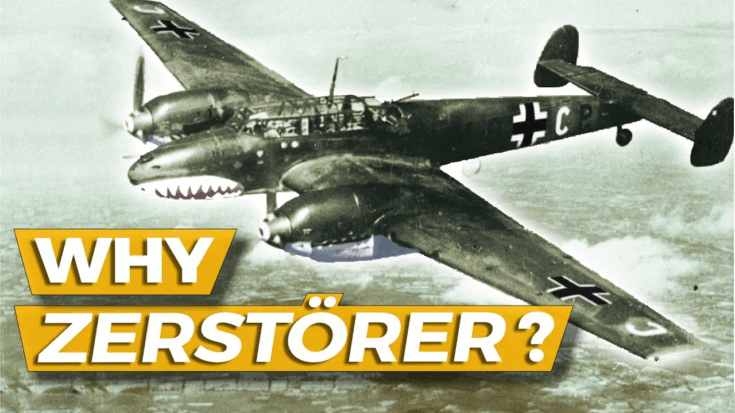
The German heavy fighter concept, known as the Zerstörer, is often remembered through failure. Aircraft like the Bf 110 and the Me 210 are frequently cited as proof that the idea itself was flawed. That judgment ignores why the concept existed in the first place and what the Luftwaffe actually needed in the 1930s.
What the Zerstörer Was Meant to Do
A heavy fighter was defined by two core requirements: long range and heavy firepower. Achieving both required more fuel, more weapons, and therefore more power. The solution was a twin engine aircraft. While this increased size and reduced maneuverability compared to single engine fighters, it also created space for additional roles. Heavy fighters could escort bombers, intercept enemy bomber formations at distance, conduct reconnaissance, attack ground targets, and operate in poor weather or at night.

The Luftwaffe never intended the Zerstörer to replace the single engine fighter. It was designed as a parallel capability with a different mission set.
The Bomber Problem
In the 1930s, bombers were viewed as the primary offensive weapon of air power. Long range strike capability mattered more than short range air defense. German doctrine focused on destroying the enemy’s bomber force and protecting its own bombers while operating deep over hostile territory.

Official Luftwaffe documents make this clear. The primary mission of the Zerstörer was offensive counterair. It was meant to engage enemy aircraft wherever they appeared, including far from Germany, and to escort friendly bomber units. Homeland air defense remained the responsibility of single engine fighters.
Why the Concept Made Sense
At the time, long range single engine escorts were not technically feasible. The heavy fighter was the only practical solution available. German planners understood the tradeoffs. They knew a heavy fighter would struggle against agile interceptors in close combat, but they also recognized that escorting bombers with a heavy fighter was better than providing no escort at all.

Cost and planning reinforce this point. A Bf 110 cost significantly more than a Bf 109, required larger bases, and demanded more logistical support. Germany would not have invested in such an aircraft without a defined role it could not otherwise fill.
Misconceptions and Reality
The failure of the Bf 110 during the Battle of Britain shaped later perceptions, but it does not invalidate the original concept. The Zerstörer was forced into missions it was never designed to perform. That mismatch between doctrine and operational reality explains much of its poor reputation.

The heavy fighter was not a fantasy. It was a rational attempt to solve a real problem with the technology available at the time.