Iranian Missile Nearly Hits US Super Hornet During Low-Level Strafing Run Over Chabahar
YouTube / Times Of India
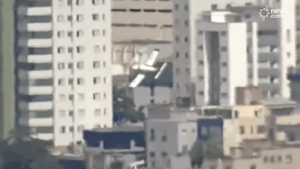
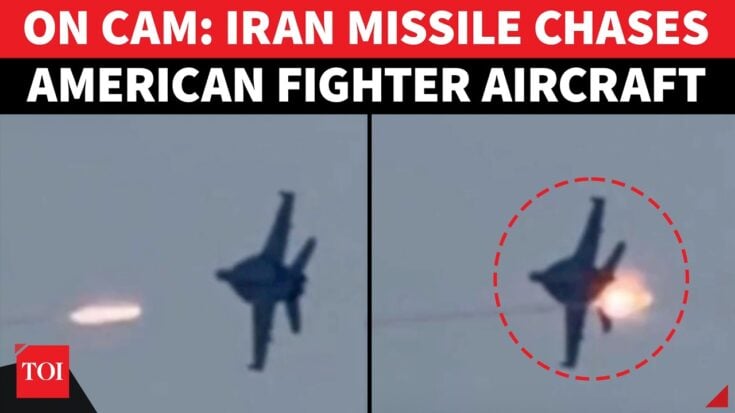
Video footage that emerged online shows a US Navy F/A-18 Super Hornet in a near miss with what appears to be an Iranian missile during a low-altitude strafing run near the port of Chabahar in Iran’s Sistan and Baluchestan Province. The incident, geolocated to the same area where Super Hornets have been repeatedly observed in recent weeks, immediately sparked competing claims from Iran and the United States about what actually happened.

What the Videos Show
The footage shows an F/A-18 conducting a strafing run with its M61 20mm cannon, the exhaust gases from the weapon visible in the video. The aircraft then executes a sharp left-hand break turn before an object passes near the aircraft and detonates. An elongated flame develops along the missile’s trajectory rather than a wider explosion around the airframe, which analysts say is consistent with a proximity fuse detonation that missed the jet rather than a direct hit.

Multiple videos of the engagement exist, including footage from a more frontal perspective. Taken together the available footage most likely shows a near miss rather than a hit. The F/A-18 is seen flying straight and level after the explosion with no visible smoke or damage. No countermeasures such as flares or chaff were deployed before the detonation, raising the question of whether the crew detected the incoming threat before executing the turn or whether the break was a standard post-strafing maneuver.

The break turn itself, if executed in response to the missile, represents textbook defensive flying. A maximum performance high-G turn forces a guided or heat-seeking missile to overshoot by reversing the aircraft’s course faster than the weapon can track.
Whether the weapon was a MANPADS system or a more capable naval air defense missile also remains debated. The video quality and angle, combined with zoom distortion that removes depth perception, make definitive identification from available footage impossible.
Why Super Hornets Are Strafing at Low Altitude
The use of F/A-18s for low-altitude strafing runs over Iranian port areas represents a notable shift from the earlier phases of Operation Epic Fury, when CENTCOM imagery showed Super Hornets primarily delivering stand-off weapons from higher altitude. The move to low-altitude operations over Chabahar indicates the airspace in that area has become sufficiently permissive for closer-range attacks as Iranian air defenses have been degraded.

The choice of the Super Hornet for these missions reflects practical flexibility rather than platform optimization. With A-10 Warthogs currently focused on maritime interdiction against IRGC fast-attack craft in the Strait of Hormuz, carrier-based Super Hornets can be rapidly retasked as priorities shift. The F/A-18 was not designed specifically for sustained strafing, but it is already in theater, already available, and capable of effective gun employment against ground targets once air defenses are suppressed.
The Chabahar incident is the second confirmed near miss involving a US manned aircraft and Iranian fire following the F-35A hit on March 19. It will not be the last as operations continue at low altitude over targets that still have residual defensive capability.