Why the B-25 Mitchell Was One of the Loudest Aircraft of World War II
YouTube / Sporty's Pilot Shop
World War II aircraft were loud by modern standards, but the North American B-25 Mitchell stood out even among its peers. Measurements place cockpit and crew area noise levels near 120 decibels. At that level, even brief exposure could cause permanent hearing damage. For B-25 crews, this was not an occasional problem. It was part of every mission.
The extreme noise was not accidental. It was a direct result of the aircraft’s engine and exhaust design, combined with structural constraints that left few options for sound reduction.
Exhaust Placement and Design Limits
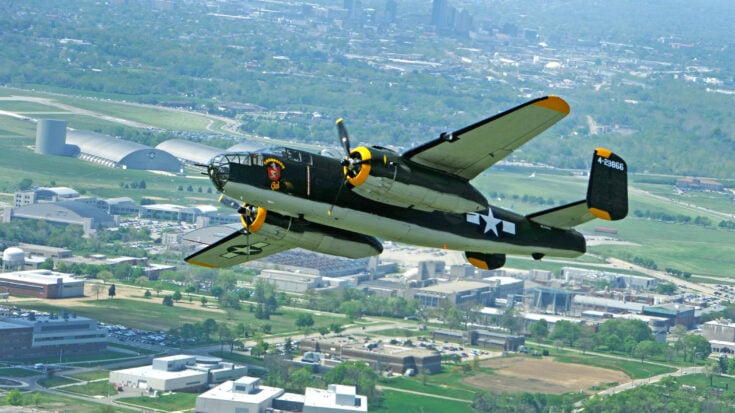
The B-25’s Wright R-2600 radial engines used exhaust stacks that exited directly from the sides of the engine cowlings. These stacks were short and largely unshielded. Instead of being routed away from the fuselage, they directed exhaust noise and pressure waves straight toward the aircraft structure and crew compartments.

Design constraints played a major role. Space inside the nacelles was limited, and routing longer exhaust systems would have added weight, complexity, and maintenance issues. The result was a configuration that prioritized engine cooling, simplicity, and reliability over crew comfort.
How Exhaust Noise Reached the Crew
Unlike later aircraft, the B-25 had minimal sound insulation. Vibrations from the engines and exhaust stacks traveled directly through the airframe. The proximity of the engines to crew stations meant that noise entered through both the structure and the air itself.

In combat, this problem was amplified. High power settings during takeoff, climb, and attack runs increased exhaust velocity and pressure. Crews often operated at these settings for extended periods, exposing them to sustained noise levels that exceeded safe limits by a wide margin.
The Long-Term Cost to Crews
Hearing protection in World War II was basic and inconsistent. Many crewmen flew without effective ear protection, especially in the early years of the war. Over time, this led to widespread hearing loss among bomber crews. For B-25 personnel, the combination of proximity and exhaust layout made the risk even greater