

The Fastest Piston Fighter of WW2 That Allied Pilots Couldn’t Catch
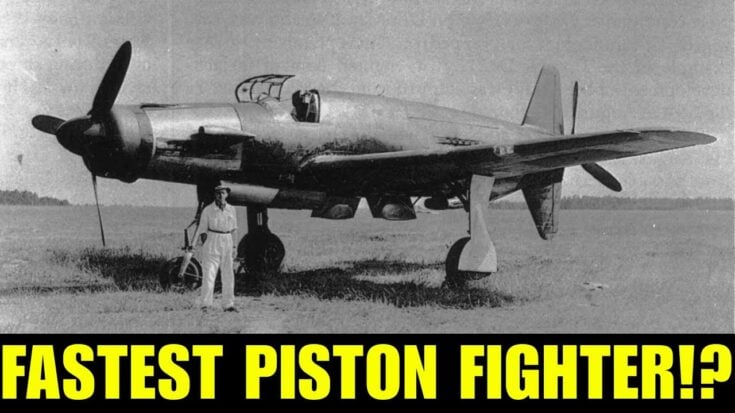
YouTube / World War Made Simple
In April 1945, as the war in Europe neared its end, French ace Pierre Clostermann led a flight of Hawker Tempests over northern Germany. Allied air superiority was complete, and encounters with German aircraft had become rare. Then a single aircraft streaked past below them at treetop height. Clostermann’s Tempests gave chase, engines pushed to their limits. The German aircraft simply pulled away and vanished. What they had seen was the Dornier Do 335 Pfeil.

An Unusual Design with a Clear Purpose
The Do 335 was the fastest piston engine aircraft to fly in combat during World War II. Its performance came from an unconventional push-pull engine layout patented by Claudius Dornier in 1937. One engine sat in the nose pulling the aircraft forward, while a second engine mounted in the rear pushed it from behind. Both engines were aligned along the fuselage centerline, eliminating asymmetric thrust and reducing drag compared to wing mounted engines.

Powered by two Daimler Benz DB 603 engines producing roughly 1,750 horsepower each, the Do 335 achieved speeds of around 470 mph at altitude. That made it faster than the P-51 Mustang, Spitfire, and Tempest in level flight. Even on one engine, it could maintain enough speed to return safely.
Speed Above All Else
By 1943, the Luftwaffe needed speed more than maneuverability. Allied bombers flew deep into Germany with long range fighter escorts, leaving German interceptors struggling to respond. The Do 335 was designed to climb quickly, make a high speed firing pass, and disengage before escorts could react.

Its armament reflected this role. A 30mm cannon fired through the propeller hub, supported by additional nose mounted cannons. The aircraft could also carry bombs internally, allowing it to serve as a fast bomber or reconnaissance platform.
Engineering Strengths and Serious Problems
The Do 335 solved several issues common to twin engine fighters, but it introduced new challenges. The aircraft was large and heavy, stressing its landing gear and making low speed handling difficult. Rear engine cooling proved troublesome, and pilot visibility was limited by the long nose. Emergency escape required one of the earliest operational ejection seat systems, which first jettisoned the rear propeller before firing the pilot clear.

Test pilots praised its stability and control at high speed, but stalls were abrupt and unforgiving. The aircraft demanded experienced pilots and careful handling.
Too Late to Matter
Only about three dozen Do 335s were completed before Germany collapsed. Fuel shortages, bombing, and disrupted production meant few ever flew operationally. The April 1945 encounter with Clostermann’s Tempests remains the only documented combat sighting.

Captured examples were tested by Allied forces after the war, confirming the aircraft’s extraordinary speed. Today, a restored Do 335 hangs in the National Air and Space Museum, marking the final peak of piston engine fighter development. It stands as proof that Allied pilots truly did encounter a plane they could not catch, even if it arrived far too late to change the war.







