

February 19, 1945: Iwo Jima Invasion Begins — Gunnery Sgt. John Basilone Dies in Heroic Battle
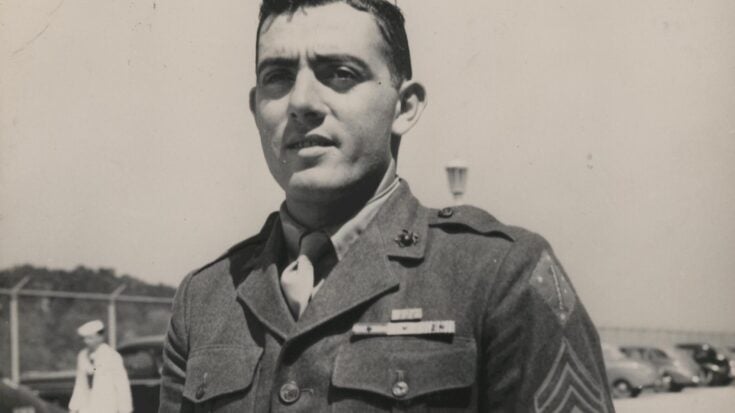
USMC Archives from Quantico, USA, CC BY 2.0, via Wikimedia Commons
On February 19, 1945, one of the most intense battles of the Pacific War began when U.S. Marines landed on the island of Iwo Jima. This volcanic outcrop lay about 650 miles south of mainland Japan and had three airfields that American planners believed were essential for supporting long‑range bombing raids. Capturing these fields would provide a base for fighter escorts and a place where damaged bombers could land after raids over the Japanese home islands.
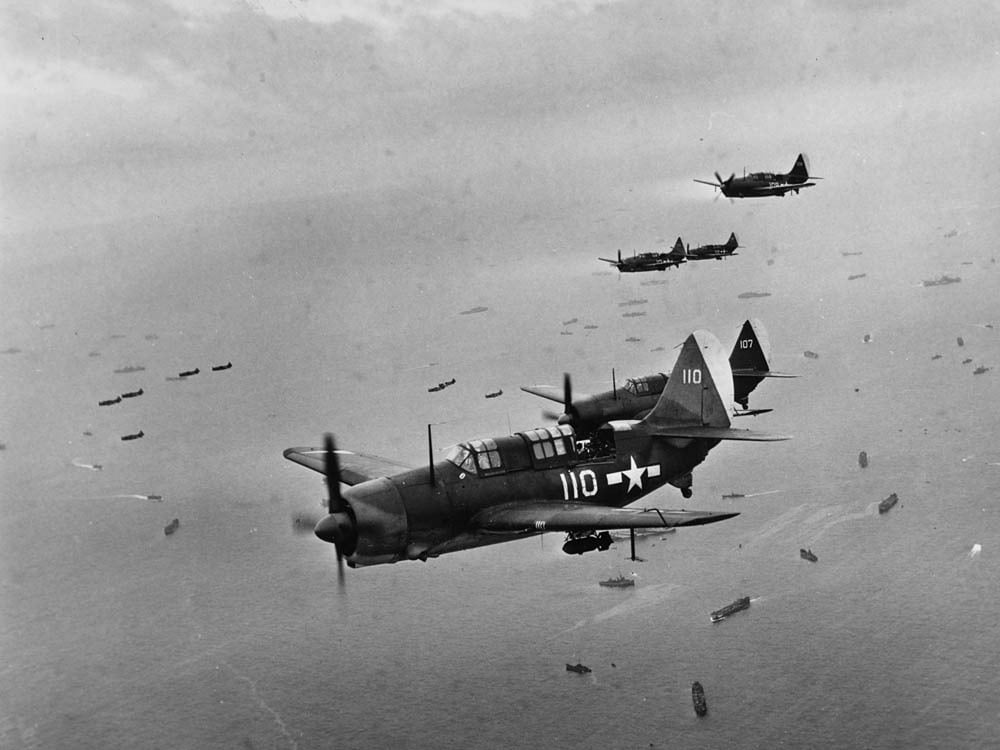
The invasion was the start of a brutal fight that would last over five weeks. American forces knew the defenders had prepared strong defenses, including deep bunkers and interconnected caves. Marines and naval forces prepared for the assault by bombarding the island from the sea and air in the days before the landing. Aircraft from Task Force 58 flew support missions to strike beach defenses and soften the way for the landing troops.
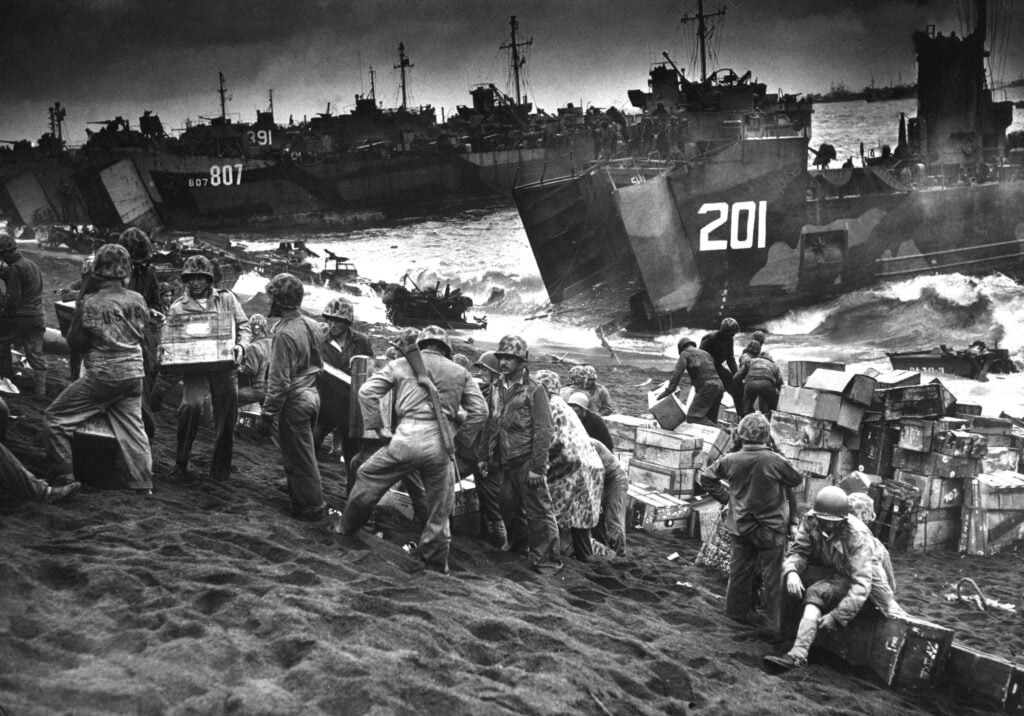
Landing Under Heavy Fire
At about 9:00 a.m., Marines began wading ashore through the surf onto narrow beaches of dark volcanic ash. Hidden Japanese guns and machine‑gun nests opened fire on the approaching landing craft and men. The beach surface, soft and uneven, made it difficult for the troops to move inland quickly. The Japanese defenders used the terrain to their advantage, placing many weapons where they could fire on the exposed Marines from protected positions.
Naval gunfire continued to fall on shore positions, and carrier aircraft strafed known defensive points with machine guns and dropped bombs on bunkers. These planes also flew close support missions to try to cut the volume of enemy fire aimed at advancing troops. Despite this support, progress inland was slow and costly, as Marines faced heavy resistance at almost every step away from the beaches.
John Basilone’s Actions
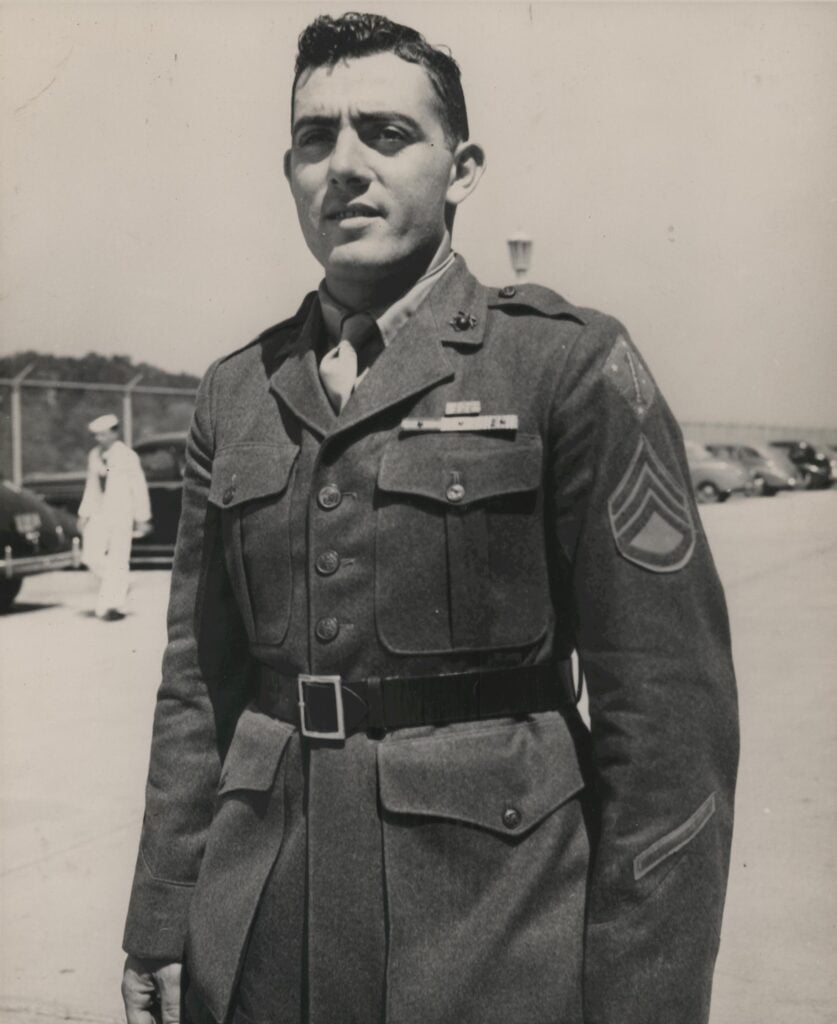
Among the first waves ashore was Gunnery Sergeant John Basilone. He had already earned the Medal of Honor for his actions at Guadalcanal and was serving as a machine‑gun section leader with Company C, 1st Battalion, 27th Marine Regiment, 5th Marine Division. Almost immediately after landing, Basilone’s unit found itself pinned down by withering fire from a fortified blockhouse. Realizing that his men could not advance, he moved around the flank and assaulted the position with grenades and demolitions, destroying the strongpoint and enabling his comrades to move forward.
Basilone’s leadership did not stop there. Later that day, a Marine tank became trapped in a nearby minefield under a heavy barrage of mortar and artillery fire. Despite the danger, Basilone guided the armored vehicle across the hazardous ground to safety, allowing it to continue supporting the advance. His actions were marked by calm and clear decision‑making even under intense enemy fire.
Mortally Wounded on the Airfield Edge
After aiding the tank crew, Basilone continued moving inland with other Marines. As he walked along the edge of Airfield Number 1, Japanese mortar fire exploded nearby. Mortar fragments struck him, and he was seriously wounded. He died later that same day, February 19, having just helped open the way for others to press forward against the island’s defenses. For his actions on Iwo Jima, he was awarded the Navy Cross, the second‑highest U.S. military decoration for bravery in combat.
Basilone’s death was a blow to the Marines who knew him as both a leader and a comrade. His willingness to act decisively under fire helped his unit gain ground in a fight that would become one of the bloodiest battles in the Pacific War. The struggle for Iwo Jima’s airfields continued long after D‑Day, as Marines battled their way across rough terrain and into heavily fortified Japanese positions. Control of the airfields would later allow Allied aircraft, including long‑range bombers, to use the island for emergency landings and fighter escort missions as the air war over Japan intensified.







.jpg)

_off_Iwo_Jima.jpg)