February 23, 1942: Submarine Shelling Sparks the Infamous ‘Battle of Los Angeles’
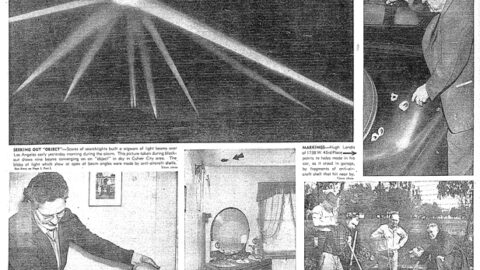
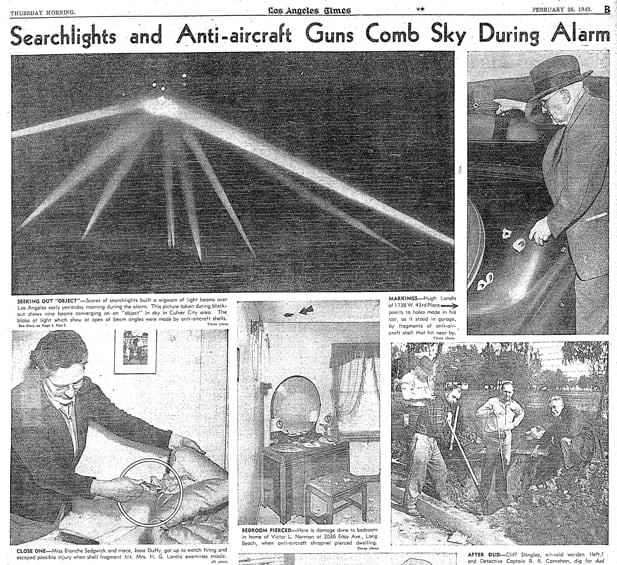
LA Times., Public domain, via Wikimedia Commons
A Rare Attack on the U.S. Mainland
Late on the evening of Feb. 23, 1942, just weeks after the United States entered World War II, an event took place off the California coast that would stoke fear and confusion across the West Coast. A Japanese submarine, identified as the I‑17, surfaced near the Ellwood oil field, roughly twelve miles northwest of Los Angeles and just off the shore near Santa Barbara. Around 7 p.m., the vessel opened fire using its deck gun, sending a series of shells toward oil storage facilities and related targets. This attack was one of the first direct actions by enemy forces on the U.S. mainland during the war.
The submarine was part of a larger group sent to patrol American waters after the Japanese offensive in the Pacific. Commanded by Kozo Nishino, the I‑17 moved slowly into the Santa Barbara Channel and took aim at structures near the Ellwood oil field. Though the crew fired more than a dozen shells during a bombardment that lasted about twenty minutes, most rounds missed their intended targets and caused only minor physical damage.
Early Reactions on the Ground
Workers on duty at the oil field heard loud explosions and initially thought the sounds were related to industrial work. But as shell after shell struck the ground, local law enforcement was alerted, and residents began to look out toward the water. At least one eyewitness reported seeing the submarine on the surface off the coast. Some of the shells landed in empty fields or near infrastructure, but no one on shore was injured. A derrick and a pumping unit suffered damage, and one explosive round was later recovered and safely handed to military personnel for examination.
News of the attack traveled quickly. The shelling was widely reported as the “Bombardment of Ellwood,” and it was described at the time as the first bombing of the continental U.S. since the early 1800s. While physical damage was limited and no casualties were reported, the psychological effect was significant. Many Americans along the Pacific coast feared a broader invasion, and some residents reported seeing lights or signals onshore that they believed were related to enemy forces.
The Next Night: Tensions Flare in Los Angeles
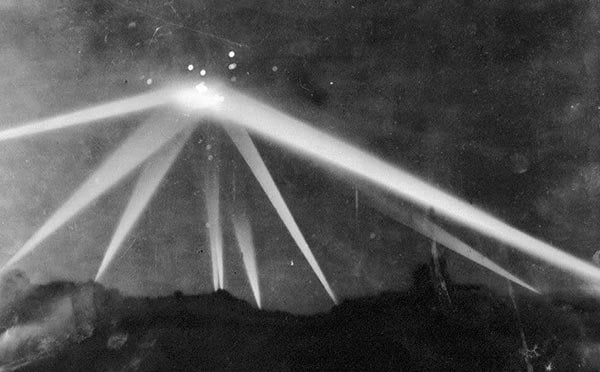
Just one night after the shelling, widespread alarm gripped Los Angeles. Air raid sirens sounded in the dark hours of Feb. 24–25, and military anti‑aircraft units opened fire on targets reported as enemy aircraft. Searchlights crisscrossed the skies, and coastal defense units fired over 1,400 rounds of anti‑aircraft ammunition into the night. Residents were ordered into blackout conditions, and many believed the city was about to be attacked from the air.
Despite the intensity of the anti‑aircraft barrage, no enemy aircraft were ever found, and no bombs were dropped on Los Angeles. By morning, military officials declared that the incident was a false alarm, likely set off by a combination of radar reports, war nerves, and confusion following the previous day’s shootings along the coast. The episode would later be called the “Battle of Los Angeles” or the “Great Los Angeles Air Raid,” though historians now agree that no aircraft engaged the city.
Broader Impact and Fears
The events of Feb. 23–25, 1942, took place in a climate of deep anxiety in the United States. The attack on Pearl Harbor in December 1941 had shocked the nation, and the shelling of Ellwood seemed to bring the war much closer to home. Many Americans on the West Coast feared further strikes, and some newspapers and officials fed those anxieties. Reports of offshore “signal lights” were interpreted as signs of enemy support activity on land, even though no solid evidence ever supported such claims.
These fears helped shape public opinion and government policy in the weeks that followed. Just days after the shelling and air raid scare, President Franklin D. Roosevelt signed executive orders that led to the forced relocation and confinement of more than 120,000 people of Japanese ancestry from the West Coast to inland camps. While this action had many motivations, the sense of threat along the coast played a role in its timing.
Over time, historians have examined the chain of events and the reactions they provoked, noting how fear and uncertainty in wartime can lead to misinterpretation and overreaction. What began as a minor coastal shelling by a lone submarine deepened anxieties across a major American city and left a mark on the collective memory of the war years.