On This Day in 1945: U.S. Marines Raise Flag on Iwo Jima — A Victory Driven by Air Power
The Battle Begins
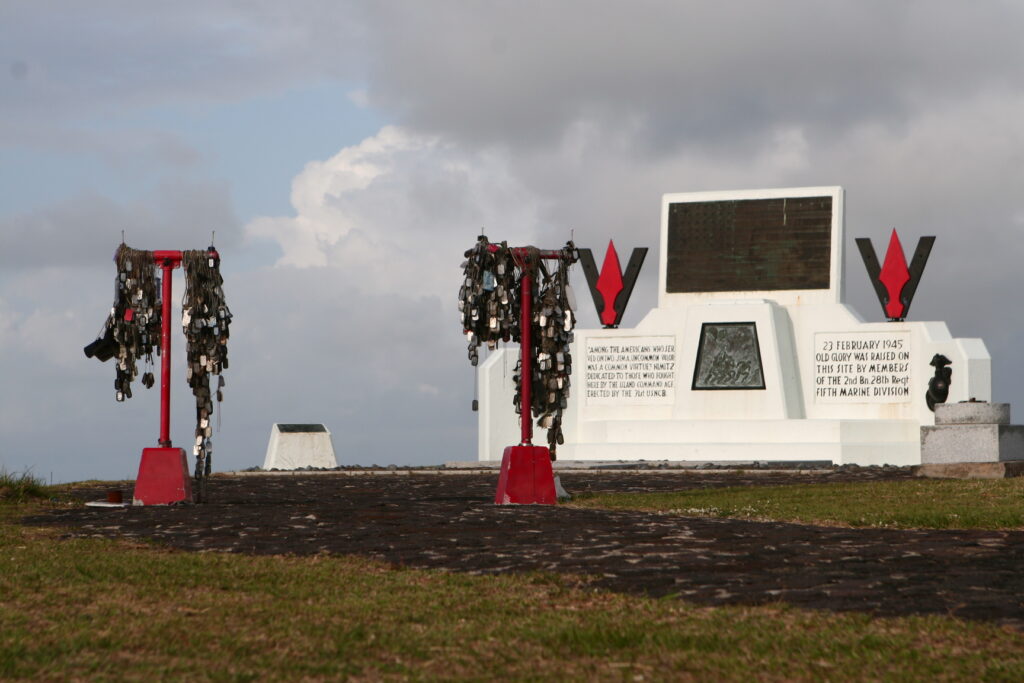
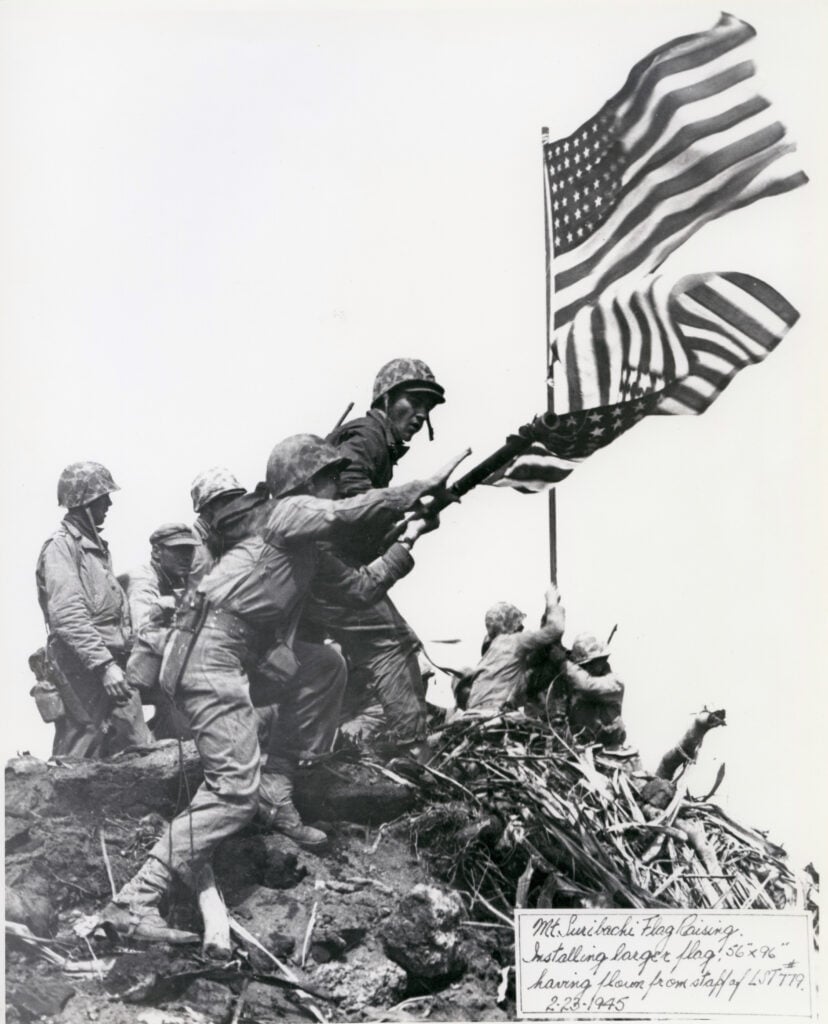
On Feb. 23, 1945, U.S. Marines raised the American flag atop Mount Suribachi during the Battle of Iwo Jima. The image of that moment became one of the most powerful symbols of World War II. But the battle itself was fought not only on land. The campaign was shaped by decisions made in the skies and at sea as military planners fought to secure airfields that would help reach Japan.
The island of Iwo Jima sits in the Pacific roughly halfway between the Mariana Islands and the Japanese mainland. Its capture was seen as strategically important because of its location. American forces believed that airfields on the island could support long-range bombers flying missions against Japan. For months, American planes had been flying from the Marianas to strikes on Japanese cities, but the round-trip was long and dangerous. If airfields were closer, fighter planes could escort the heavy bombers on every leg of their missions.

Preparing for Invasion
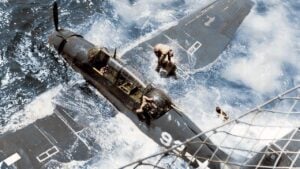
Before troops landed on Feb. 19, Iwo Jima was hit hard by naval bombardment and air attacks. Battleships, cruisers, and destroyers from the U.S. Navy moved into place and fired thousands of shells at known shore positions. At the same time, carrier-based aircraft and land-based bombers dropped thousands of tons of explosives on the island. These attacks were aimed at weakening defenses and destroying the network of caves and bunkers where defenders hid.
American planners expected resistance but did not know how intense it would be. Japanese forces had fortified Iwo Jima with miles of underground tunnels and well-hidden gun positions. During the initial landings, Marines met fierce fire immediately upon stepping onto the beaches. Despite the heavy attacks from the sea and air, defenders fought from prepared positions that were hard to see and harder to destroy.
Mount Suribachi and the Flag Raising
After days of brutal fighting, a group of Marines reached the top of Mount Suribachi, the island’s highest point. On Feb. 23, they raised a U.S. flag, a moment photographed by Joe Rosenthal of the Associated Press. The image captured the attention of people back home and would later be used to help raise support for war bonds. It became a symbol of the effort and sacrifice of all who fought on Iwo Jima.
The flag raising was not the end of the battle. Marines continued moving inland to secure the rest of the island. The fighting remained difficult, with defenders launching attacks from hidden positions. Casualties were high on both sides. More than 6,000 Americans were killed and nearly 20,000 were wounded by the time the island was declared secure in late March.
The Airfields at Iwo Jima
While the flag raising on Mount Suribachi drew public attention, military leaders focused on control of the island’s airfields. Three airstrips already existed when the battle began, and American engineers worked to repair and expand them as soon as areas were taken. Within days of securing parts of the island, U.S. forces began operating fighter and bomber support aircraft from these fields.
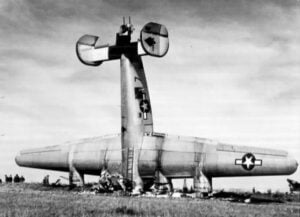
The airfields served several roles. They allowed long-range bombers, such as the B‑29 Superfortress, to have fighter escort for missions over Japan. This reduced losses among the bomber crews and improved mission success rates. The fields also served as emergency landing sites for damaged aircraft returning from long-range missions. Many crews survived because they could land on Iwo Jima instead of crashing at sea.
Legacy of the Battle
In total, the battle lasted 36 days. It was one of the costliest fights in the Pacific war. The high number of casualties reflected the value both sides placed on the island. For American forces, control of Iwo Jima meant safer flights against Japan and a base for further operations. For Japanese defenders, holding the island was seen as a way to slow the Allied advance.
The image of Marines raising the flag on Mount Suribachi remains one of the most lasting reminders of the battle. It represents not just a moment on a volcanic peak but the larger effort to secure strategic locations in the Pacific. While the ground combat was fierce and personal, the broader campaign was shaped by the need to control the skies above and provide support for air operations against Japan’s home islands. Iwo Jima’s capture helped bring those air missions closer to their targets and changed the pace of the Pacific war.