

Fire Trucks Rush to Ryanair Jet After Emergency Landing in Berlin
@berlinblitz / X
Commercial air travel is built on routine, yet even ordinary flights can quickly shift into tense situations when technical concerns arise. Such an incident occurred when a Ryanair Boeing 737-800 approaching Berlin Brandenburg Airport required urgent attention, prompting a large-scale emergency response on arrival. Though the landing was completed safely, the scene on the runway reflected the seriousness with which aviation authorities handle even potential risks.
The flight, operating as FR315 from Bucharest, had followed a standard route across Central Europe. Departing in the late afternoon, the aircraft was nearing the end of its scheduled journey when the crew reported a problem to air traffic control. In modern aviation practice, such communication often leads to a “priority landing,” allowing the aircraft to land ahead of others and ensuring emergency services are ready on the ground as a precaution.
A Controlled Landing Under Watch
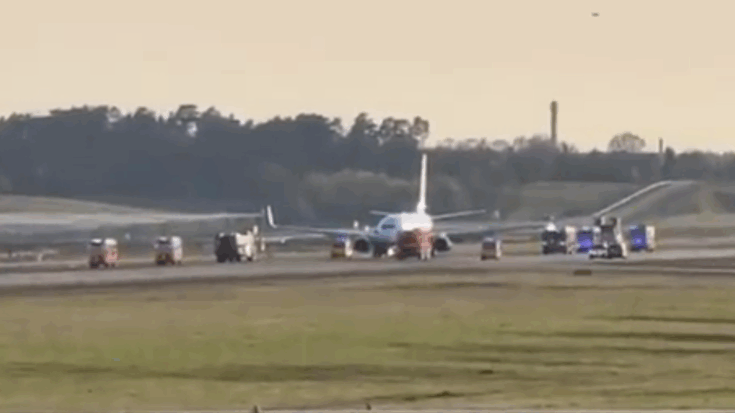
The aircraft touched down on runway 06R at Berlin Brandenburg Airport shortly before sunset. Waiting for it were numerous emergency vehicles, including fire engines and medical teams positioned along the runway. This type of response is common whenever a crew signals uncertainty about onboard systems, even if no visible damage is present. Aviation safety procedures require that all possibilities be treated with caution until confirmed otherwise.
After landing, the Boeing 737 remained stationary on the runway for approximately twenty minutes. During this period, responders approached the aircraft to assess its condition from the outside while maintaining communication with the crew inside. Passengers stayed seated as crews completed their inspection, following standard procedures designed to prevent unnecessary movement until safety could be confirmed.
Safety Systems and Standard Procedures
The Boeing 737-800, one of the most widely used airliners in the world, is equipped with multiple redundant systems intended to manage unexpected situations. Pilots are trained to follow detailed checklists that guide them through system failures, warning indications, or unusual readings. In many cases, issues reported during flight turn out to be precautionary rather than immediately dangerous, but the response on the ground remains thorough regardless of severity.
Airport fire and rescue units are specially trained for rapid intervention. Their presence during such events is part of international aviation regulations, which require airports to maintain readiness for a range of scenarios, from minor technical faults to more serious emergencies. The temporary halt of operations on nearby runways ensures that responders can work without interference and that other aircraft remain at a safe distance.
Aftermath and Ongoing Review
Once the initial inspection was completed, the aircraft was cleared to be moved from the active runway to a remote parking position. This relocation allowed normal airport operations to resume while further technical checks could be conducted away from busy terminal areas. Reports indicated that all passengers and crew remained on board during the initial response and that no injuries were recorded.
At the time of reporting, airline officials had not released detailed information about the cause of the alert. Investigations into such events typically involve reviewing cockpit data, maintenance records, and crew reports. These processes, developed over decades of aviation experience, aim to identify even minor faults and ensure that future flights continue under the highest safety standards.






