

BF 109 Pilot Reveals What It’s Like to Fly It Today
YouTube / Military Aviation History
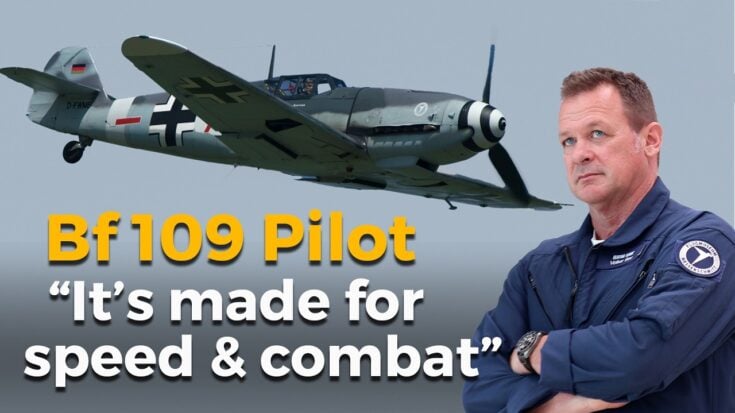
At a hangar in Germany, one of the few airworthy Messerschmitt Bf 109s still takes to the sky. Flown by Volker Bau, a veteran test pilot with thousands of hours, the aircraft offers a rare look into what WWII pilots experienced in one of history’s most important fighters.

A Fighter That Demands Respect
The Bf 109 remains largely original, with only minor upgrades such as modern radios and fuel systems. Its Daimler-Benz engine still produces around 1,400 horsepower, far more than most light aircraft of similar size.

On the ground, that power creates problems. The narrow landing gear and strong engine torque make takeoff a constant balancing act. Too much throttle pulls the aircraft off course, while too little leaves it struggling for stability. Directional control, not speed, defines the challenge.
Once Airborne, A Different Machine
In the air, the Bf 109 reveals its purpose. It was built for combat, and its handling reflects that role. Controls become more responsive at speed, and the aircraft feels stable and precise in basic aerobatic maneuvers such as loops and rolls.

The cockpit is tight, with almost no extra space. Every element was designed around the pilot, leaving little room for comfort. Even so, the engine remains reliable, and pilots typically operate it below maximum power to preserve its lifespan.
Landing the BF 109
Landing requires careful control and planning. Approach speeds remain relatively high, and full flaps are used to stabilize the aircraft before touchdown. As with takeoff, maintaining direction is the primary concern.








