Warthog Unchained: The A-10C Can Now Refuel From C-130 Tankers After Rapid Development Push
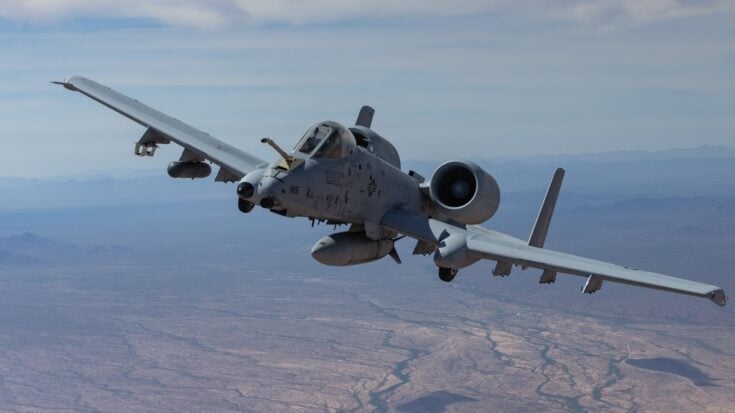
The A-10C Thunderbolt II has quietly received a significant new capability in the middle of an active conflict: a probe and drogue refueling adapter that frees the close air support aircraft from its dependence on a single tanker type and expands its options in a theater where that flexibility has become operationally critical.
The adapter, developed in response to an urgent combatant command requirement, allows the A-10 to refuel from C-130-based tankers including the KC-130J Super Hercules, MC-130J Commando II, and HC-130J Combat King II. Those aircraft were already operating alongside A-10s during the Iran campaign, most visibly in the rescue of the DUDE 44 crew, where HC-130Js were photographed refueling HH-60 helicopters over Iranian airspace. The A-10 can now draw fuel from the same platforms it has been flying combat missions alongside.
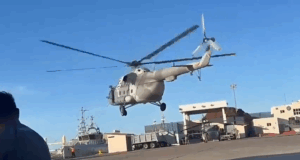
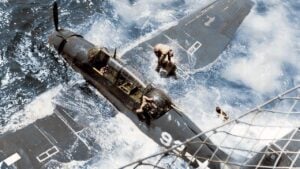
Not AI. Current testing.
Hog on a Droge.
When they start landing in Carriers, I’m out. pic.twitter.com/17quJjBf4M
— COL (Ret) Jeff in 🇦🇹 (@JeffFisch) April 3, 2026
Why This Was Urgently Needed
Until now, the A-10C relied exclusively on the KC-135 Stratotanker for aerial refueling. The KC-10 Extender, which had provided an alternative, was retired from service, and certification testing with the KC-46 Pegasus remains incomplete. That left the Warthog with no redundancy. If a KC-135 was unavailable, missions could be forced to abort.
The KC-46 certification problem stems from a fundamental mismatch in speed. The A-10 refuels at roughly 200 knots, significantly slower than the approximately 300 knots at which most US fighter aircraft take on fuel. The KC-46’s boom system uses a hydraulic actuator to maintain contact during refueling, compensating for the A-10’s inability to generate enough force to stay connected at low speed. Resolving that technical issue has proved difficult and time-consuming.

C-130 tanker variants do not have that problem. They operate comfortably at the lower airspeeds and altitudes that characterize A-10 missions, and their operational profile aligns naturally with close air support and combat search and rescue, the exact environments where the A-10 spends most of its time. The solution was therefore not to keep pushing on the KC-46 problem, but to go in a different direction entirely.
Built Fast, Without Cutting Corners
The adapter was developed through a rapid multi-organization effort. The Air National Guard Air Force Reserve Command Test Center coordinated the program, with an industry partner building the probe itself and the A-10 System Program Office overseeing aircraft integration. ARCWERX, the Air National Guard and Air Force Reserve innovation hub, handled rapid contract acquisition, and Luke Air Force Base fabricated supporting components to accelerate delivery. The 418th Flight Test Squadron provided an HC-130 and crew for the first test refueling.
The probe fits into the existing air refueling receptacle on the nose of the A-10, just forward of the cockpit, converting the aircraft from boom to probe and drogue configuration. Crucially, it is designed to be installed by flight line personnel in a matter of hours, with no depot-level work required. Aircraft can be switched between boom and probe configurations depending on mission requirements.

Lieutenant Colonel Luke Haywas, the A-10 Combined Test Force director, was direct about how the program moved so quickly. “Nothing was shortcut or compromised from a technical or safety standpoint,” he said. “We just accelerated every step we could.”
Colonel Daniel Wittmer, AATC commander, framed the effort as a model for future capability development. “We moved from concept to fielded capability in weeks,” he said. “That’s not a one-time accomplishment. It’s a model for how the Air Force can deliver operationally relevant capabilities to warfighters at the speed that modern conflict demands.”
Given how recently the adapter reached operational units and how compatible it is with aircraft already deployed in the region, it is likely only a matter of time before it appears in imagery from active operations.