Watch Incoming Flight Slams Into Structures During Crash Landing at Miami Airport
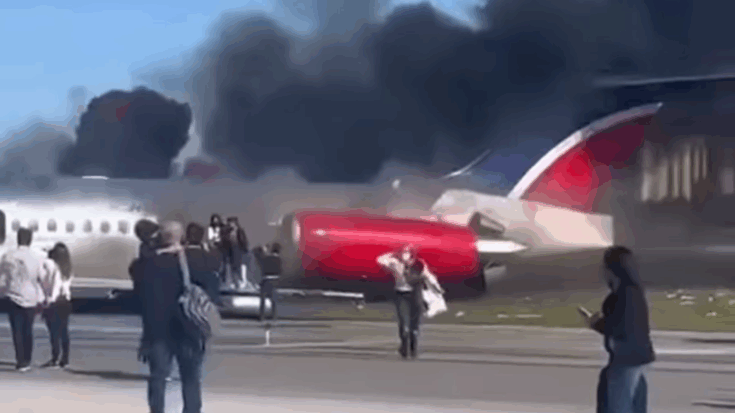
@piloteyes737 / Instagram
A routine international arrival turned into a moment of alarm at Miami International Airport, one of the busiest air travel hubs in the United States. A commercial flight from the Dominican Republic, carrying more than a hundred people, encountered a mechanical failure just as it reached the runway. What followed was a brief but intense sequence of events that drew attention to both the risks of aviation and the systems designed to manage them.
The aircraft, operating as Red Air Flight 203, had departed from Las Américas International Airport earlier that day. As it approached Miami in the late afternoon, conditions appeared normal. Yet within seconds of touchdown, a failure in the landing system changed the course of the arrival.
Mechanical Failure on Landing
The plane involved was a McDonnell Douglas MD-82, part of a family of aircraft introduced in the early 1980s and widely used for short and medium routes. While these jets have a long operational history, their continued service depends heavily on careful maintenance, especially as they age.
As the aircraft made contact with the runway, its left main landing gear collapsed. This structural failure caused the left wing to strike the ground, producing sparks and friction. The jet quickly veered away from the paved surface, sliding into a grassy area between taxiways. During this movement, it struck airport equipment, including a small structure and a communications tower, before coming to a stop.
Fire and Rapid Emergency Action
Moments after the aircraft left the runway, flames appeared along the right side of the fuselage. Investigators later suggested that damaged fuel lines and heat from friction likely contributed to the fire. Thick smoke rose as emergency crews rushed toward the scene.
Teams from Miami-Dade Fire Rescue responded within minutes, deploying foam to suppress the flames and prevent further spread. Images from the site showed the aircraft covered in fire retardant, with responders working to secure the area. Their quick action limited the damage and reduced the risk to those evacuating.
Passengers and crew exited the aircraft using emergency slides, a standard safety feature required on commercial jets. Aviation regulations, shaped by decades of incidents and improvements, have made such evacuations faster and more organized than in earlier eras. In this case, all 140 people on board survived, though several individuals were treated for minor injuries, and a few required further medical checks.
View this post on Instagram