

How the Mosquito Earned Its Reputation as a WWII Nightmare
See page for author, Public domain, via Wikimedia Commons
During the Second World War, air power became a decisive element across Europe, with both sides relying on new aircraft designs to gain advantage. Among Britain’s most unusual contributions was the de Havilland Mosquito, a plane that stood apart from others of its time. Built largely from wood rather than metal, it was first viewed with doubt by officials who questioned its durability and combat value. Yet, as the war progressed, the aircraft proved its worth in ways few had expected.
The Mosquito’s development began before the war, when its designers proposed a fast, lightweight aircraft that would rely on speed instead of heavy defensive guns. At first, this idea was seen as risky, especially when most bombers were built with multiple gun turrets for protection. However, Britain’s need for versatile aircraft grew more urgent after 1940, and the Mosquito was finally approved for production.
Design That Defied Expectations
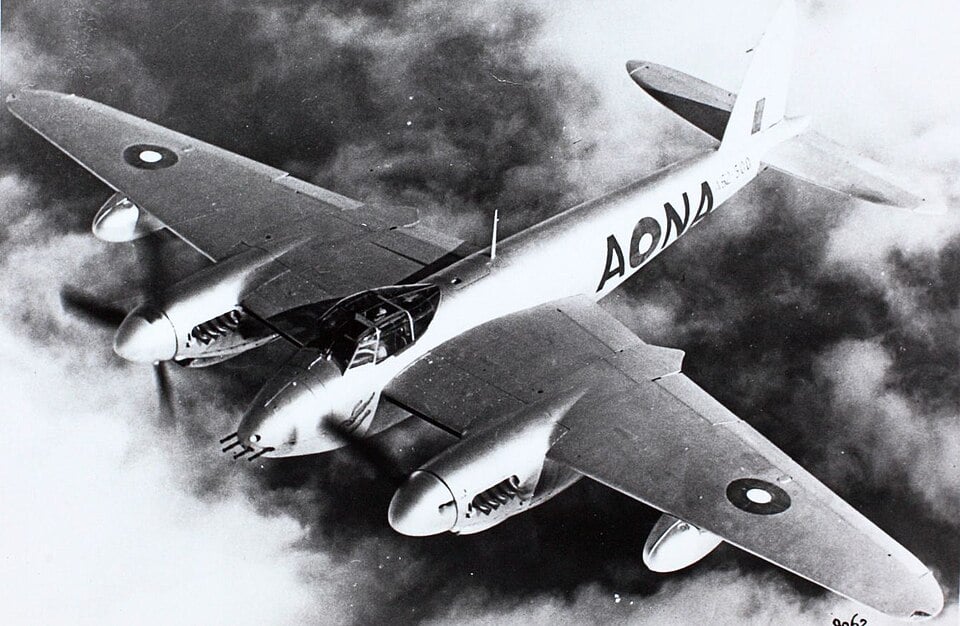
Unlike traditional military aircraft, the Mosquito used layers of wood bonded together to form a strong and smooth airframe. This approach allowed factories not normally involved in aircraft production, such as furniture makers, to contribute to its construction. The result was a plane that could be built quickly and in large numbers without placing extra strain on metal supplies.
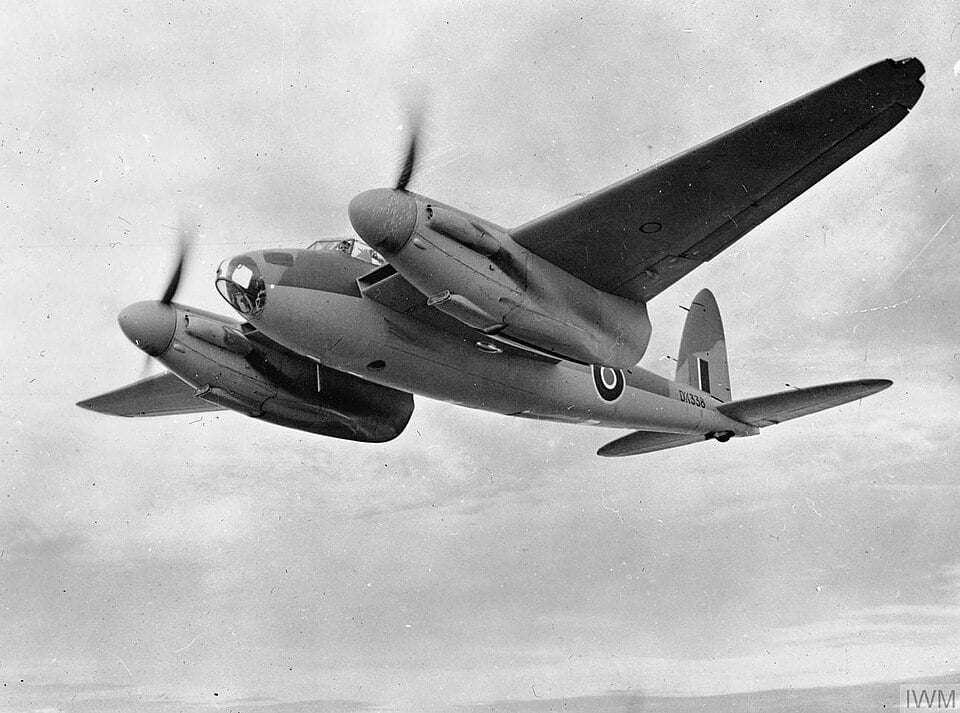
Powered by two Rolls-Royce Merlin engines, the Mosquito achieved speeds that often exceeded those of contemporary fighter aircraft. Its performance made it difficult for German interceptors to catch, allowing it to carry out missions with reduced risk. Crews soon discovered that speed could serve as effective protection, even without heavy armor or large defensive weapon systems.
The Rise of the Intruders
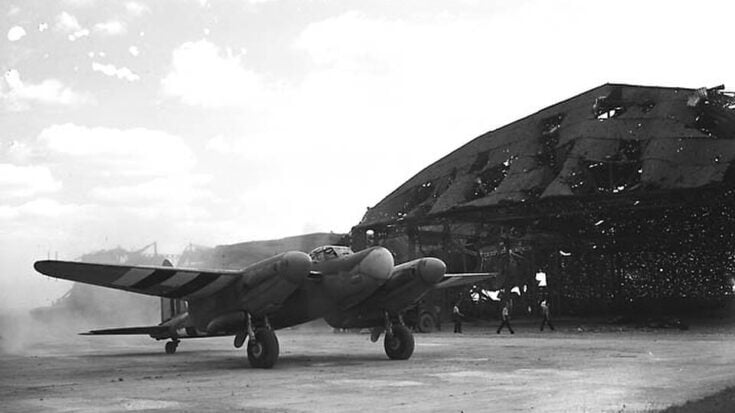
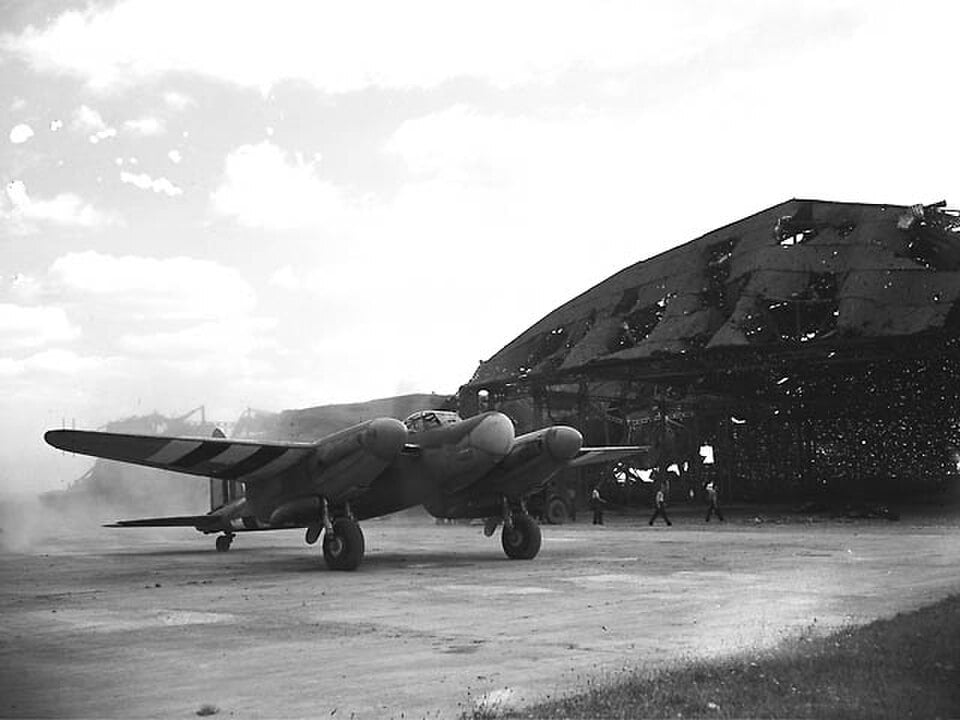
As the Mosquito entered service, it became closely linked with specialized units known for operating over enemy territory at night. These airmen, sometimes referred to as intruders, flew deep into occupied Europe to disrupt German air operations. Their missions included attacking airfields, intercepting enemy aircraft as they attempted to land, and creating confusion behind the front lines.
The aircraft’s range and handling made it well suited for these roles. Pilots could fly low and fast, often avoiding radar detection, while navigators guided them across long distances in darkness. These operations placed constant pressure on German air defenses, forcing them to divert resources to protect their own bases.
Expanding Roles Across the War
Although first used as a bomber, the Mosquito quickly took on many different roles. It served as a pathfinder aircraft, marking targets for larger bomber formations during night raids. It was also used for reconnaissance missions, where its speed allowed it to gather information without being intercepted.
In addition, the Mosquito operated as a fighter-bomber, striking railways, bridges, and supply depots across occupied territory. Its versatility meant that it could adapt to changing needs on the battlefield, making it one of the most flexible aircraft in the Royal Air Force.
Reputation and Impact
German forces came to view the Mosquito as a serious threat due to its ability to appear suddenly and strike with precision. Its speed and range made it difficult to counter, and it became associated with unexpected attacks deep within controlled areas.
By the later stages of the war, the Mosquito had earned a strong reputation among Allied crews. Its combination of speed, adaptability, and innovative design allowed it to carry out tasks that other aircraft struggled to perform, shaping its place in the broader air campaign over Europe.





.jpg)
