How the World’s Largest Boneyard Stores 3,100 Abandoned Planes
YouTube / Business Insider
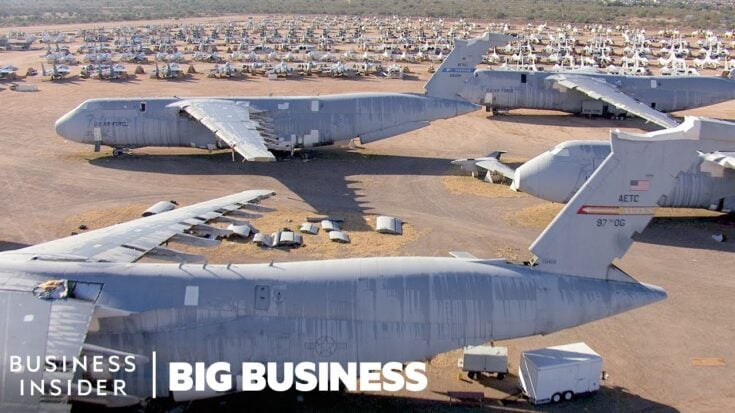
In the Arizona desert outside Tucson sits the 309th Aerospace Maintenance and Regeneration Group, better known as AMARG. Spread across thousands of acres at Davis-Monthan Air Force Base, it holds roughly 3,100 retired military aircraft, making it the largest aircraft storage facility in the world. Despite its nickname as the boneyard, the mission here centers on preservation, recovery, and reuse rather than abandonment.

Why the Desert Matters
AMARG was established in 1946, when the U.S. military needed a place to store surplus aircraft after World War II. Southern Arizona offered ideal conditions. The climate is hot and dry, rainfall is minimal, humidity is low, and the soil is extremely hard. These factors prevent corrosion and stop aircraft from sinking into the ground, allowing airframes to remain structurally sound for decades.

Aircraft arrive from across the U.S. Air Force, Navy, Marine Corps, and Army, representing more than 80 different types. Some remain only briefly before returning to service, while others stay for decades. Each aircraft undergoes a detailed preservation process that includes defueling, oil circulation through the engines, and sealing the airframe with protective coatings. White outer layers reflect heat, helping preserve internal systems.
A Strategic Parts Reservoir
AMARG functions as a massive logistics reserve for the U.S. military. Units around the world routinely request parts that are no longer in standard production. Thousands of components are reclaimed each year, cleaned, inspected, and shipped back into active service. In many cases, AMARG is the only place where certain parts still exist.

Some aircraft go beyond parts recovery and are fully regenerated. Crews strip off protective coatings, restore systems, and prepare airframes for flight. C-130 transports, F-16 fighters, and other aircraft have been returned to service or transferred through foreign military sales programs. The facility also performs structural upgrades, including wing rebuilds that can take tens of thousands of labor hours per aircraft.
Safety Before Flight
Every reclaimed part and regenerated aircraft passes through rigorous inspection. Non-destructive testing methods such as dye penetrant inspections identify cracks that could cause catastrophic failure. Once rebuilt, aircraft complete extensive flight testing to verify performance, handling, and system reliability before reentering service.

When the Story Ends
Not every aircraft is saved. Those marked for disposal are carefully dismantled to ensure sensitive technology does not fall into the wrong hands. Even destruction is tightly controlled and documented.

AMARG stores assets valued between $34 and $35 billion, saving taxpayers significant costs by extending the life of existing aircraft. For the people who work there, the mission is also personal. Many once flew or maintained these aircraft in operational service. Bringing them back to life preserves capability, history, and the stories carried by every airframe in the desert.